How Hot and Humid Weather Could Be Fuelling Influenza Pandemics
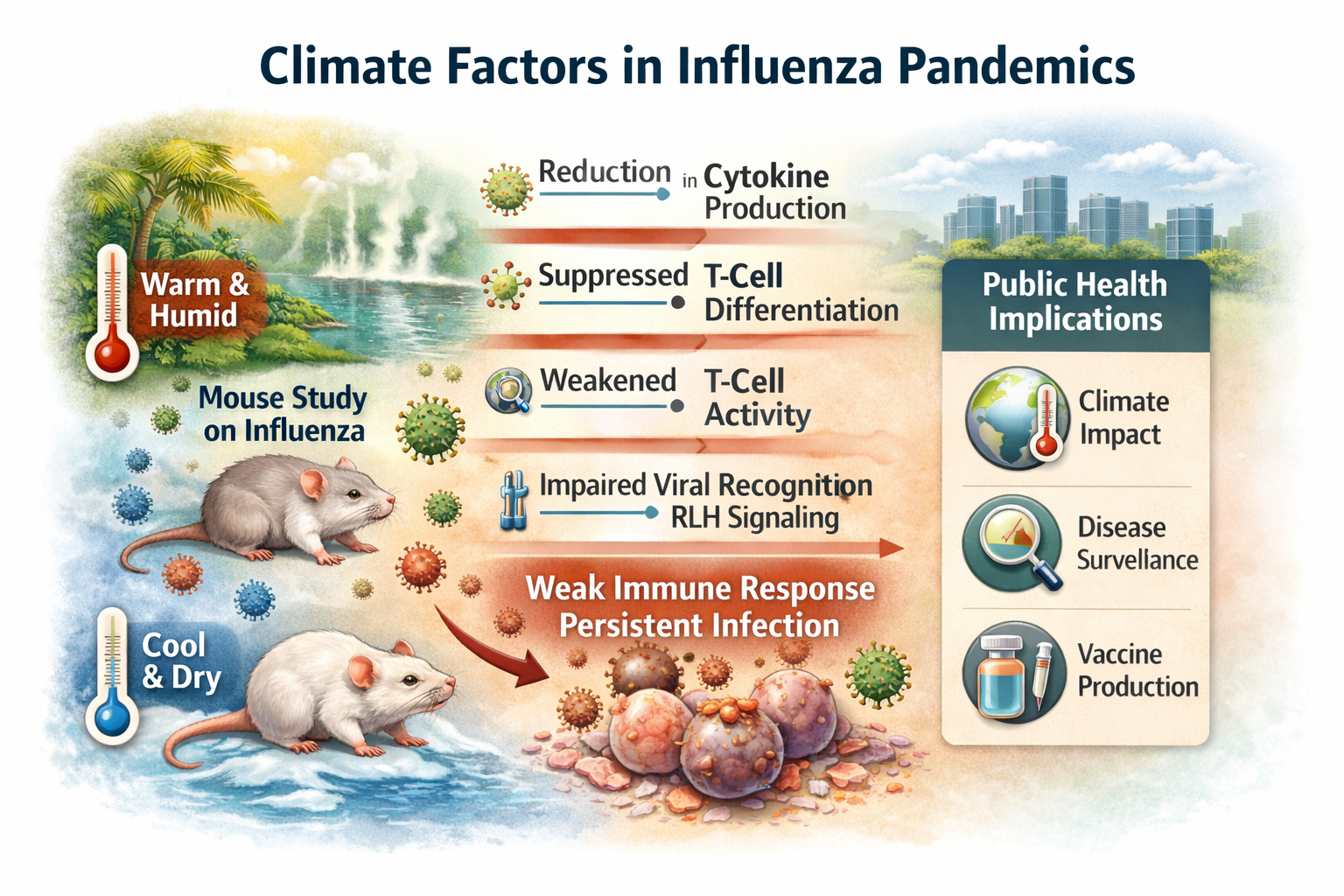
Study conducted on mice at various hydrothermal environments influences influenza H1N1 pandemics. The warm–wet environments supress our immune responses to influenza by reduction in cytokine production, suppressed T-cells differentiation, weakened T-cell activity, and impaired viral recognition RLH signalling pathway. As a result, infected hosts cannot effectively clear the virus, leading to persistent infections. These findings have implication in public health planning, highlighting the need to consider climate factors in disease prediction, surveillance, and early vaccine manufacture, especially in regions prone to warm and humid conditions.
How Hot and Humid Weather Could Be Fuelling Influenza Pandemics Read More »