Bulletins

chatgpt image feb 25, 2026, 07 46 10 pm

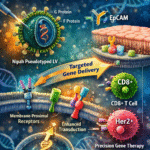
Nipah Virus–Pseudotyped Lentiviral Vectors: A Promising Strategy for Precision Gene Therapy

Engineered Nipah virus glycoproteins pseudotyped onto lentiviral vectors enable highly selective and efficient gene delivery. These vectors achieve up to 10–100-fold higher titers than measles-based systems, resist antibody neutralization, and preferentially target membrane-proximal receptors, significantly enhancing transduction efficiency and demonstrating strong potential for targeted gene therapy applications.


Nipah Virus–Pseudotyped Lentiviral Vectors: A Promising Strategy for Precision Gene Therapy Read More »

chatgpt image feb 3, 2026, 11 36 22 pm

NanoLuc Biosensor Technology Offering a simple & rapid detection of Nipah virus infection

NanoLuc technology developed using a split NanoLuc biosensor, enables simple mix-and-read detection of Nipah virus antibodies. The biosensor is 98.6 sensitive and 100% specific for detecting IgG antibodies in Nipah virus infected patients. The NanoLuc Biosensor thus offers a fast, sensitive, and scalable approach for serological surveillance and retrospective analysis of the deadliest viral infections

NanoLuc Biosensor Technology Offering a simple & rapid detection of Nipah virus infection Read More »

chatgpt image jan 25, 2026, 01 38 48 am

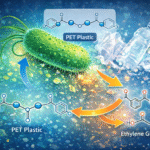
A Bacteria That Destroy Plastics A Sustainable Solution to PET Pollution

Scientists have discovered strains of Ideonella sakaiensis that can degrade polyethylene terephthalate (PET), a plastic commonly used in beverage bottles, packaging containers, and synthetic fibres. These bacteria utilize the enzymes PETase and MHETase to degrade PET as its major energy and carbon source, achieving 100-fold efficiency at room temperatures within approximately 6 weeks.

A Bacteria That Destroy Plastics A Sustainable Solution to PET Pollution Read More »

breath analyser

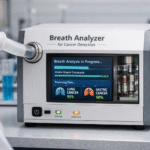
Your Breath Could Reveal Cancer: How AI Is Changing Early Detection

A breath analyzer based on a hierarchical deep convolutional neural network (HD-CNN) framework can detect and classify cancer subtypes with accuracies of 95.1% and 98.1% for lung and gastric cancers, respectively. The sensor array within the device detects volatile organic compounds present in the breath of cancer patients and converts these signals into digital data for analysis.

Your Breath Could Reveal Cancer: How AI Is Changing Early Detection Read More »

tecelra 19 jan 2026

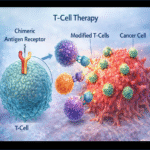
Tecelra and MAGE-A4 TCR Therapy: Engineering Safer, High-Affinity Adoptive T-Cell Immunotherapy

Tecelra, an affinity-enhanced MAGE-A4–specific TCR approved for its efficacy against metastatic synovial sarcoma with minimal off-target risk. The gene therapy showed strong antigen-specific cytokine release, effective tumor cell killing in 2D and 3D models, and dose-dependent tumor regression with complete survival in vivo with manageable alloreactivity and limited cross-reactivity.

Tecelra and MAGE-A4 TCR Therapy: Engineering Safer, High-Affinity Adoptive T-Cell Immunotherapy Read More »

Scroll to Top