Antimicrobial Resistance and Global Antibiotic Use: Trends and Projections Through 2030
Global Antibiotic Consumption Is Rising Again
Antimicrobial resistance (AMR) has become one of the world’s most pressing public health threats. Every unnecessary antibiotic prescription increases the risk of bacteria developing resistance, making common infections increasingly difficult and sometimes impossible to treat. Antibiotic resistance already contributes to millions of deaths worldwide.
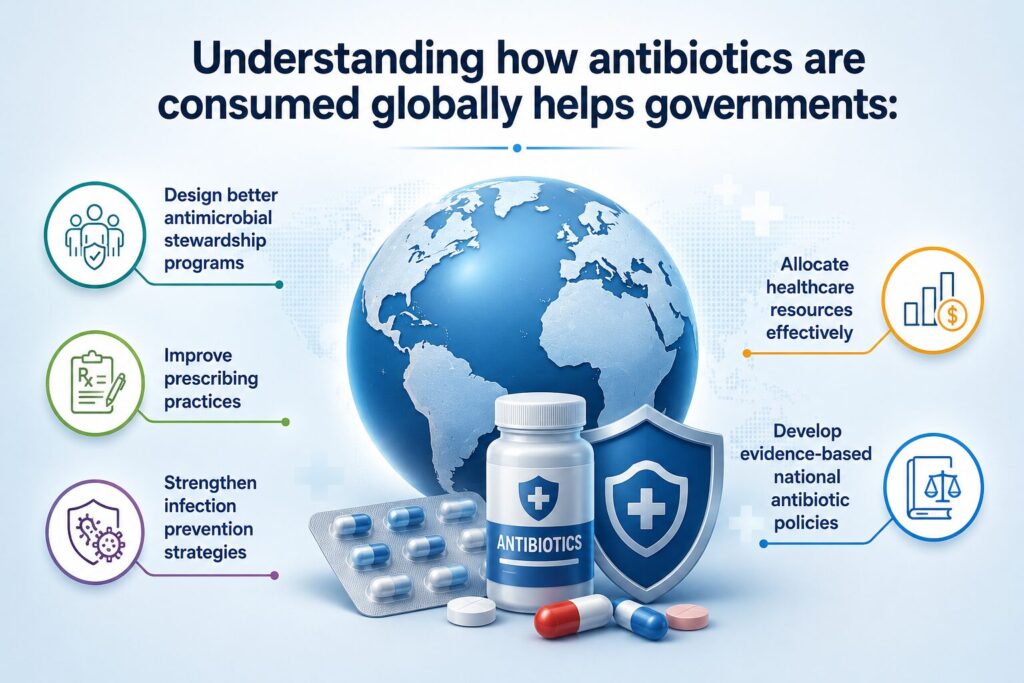
Although antibiotics remain lifesaving medicines, excessive or inappropriate use accelerates the development of resistant bacteria. Understanding how antibiotics are consumed globally helps governments:
- Design better antimicrobial stewardship programs
- Improve prescribing practices
- Strengthen infection prevention strategies
- Allocate healthcare resources effectively
- Develop evidence-based national antibiotic policies
Recently, study by researchers at Johns Hopkins School of Medicine, Baltimore, provides one of the most comprehensive analyses of global antibiotic consumption trends between 2016 and 2023, while also projecting future consumption through 2030. This report offers valuable insights into how the COVID-19 pandemic temporarily changed antibiotic use and why global consumption is expected to rise sharply unless effective interventions are implemented.
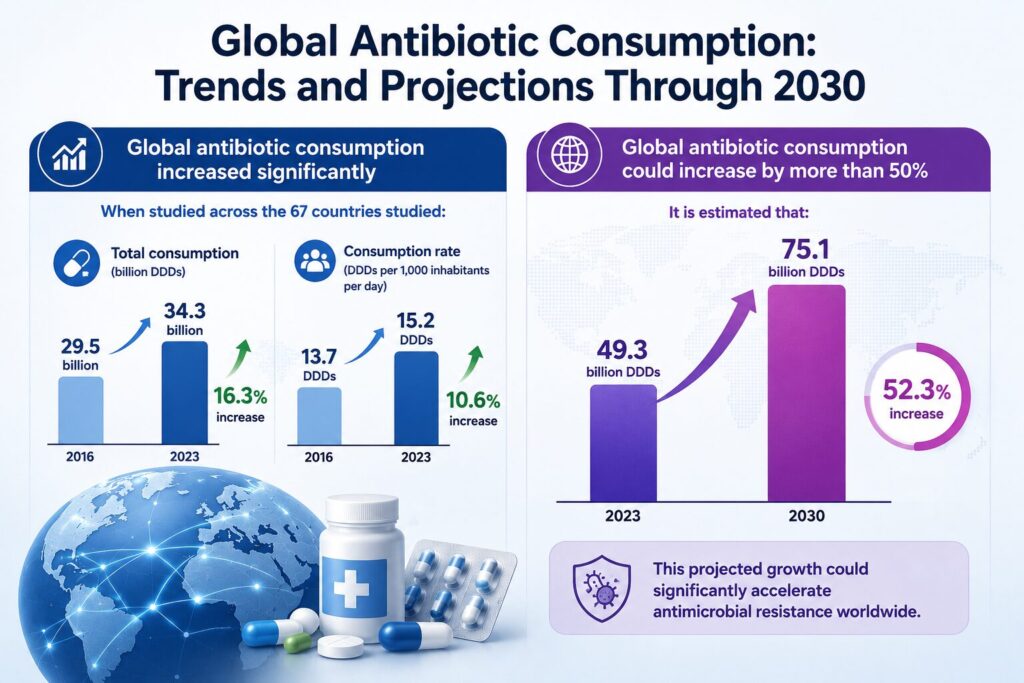
Global antibiotic consumption increased significantly
When studied across the 67 countries studied:
- Antibiotic consumption increased from 29.5 billion DDDs in 2016 to 34.3 billion DDDs in 2023, a 16.3% increase.
- Consumption rates rose from 13.7 to 15.2 DDDs per 1,000 inhabitants per day, representing a 10.6% increase.
This indicates that despite global awareness campaigns, antibiotic use continues to rise.
Covid-19 caused a temporary decline
One of the study’s most interesting findings was the effect of the COVID-19 pandemic.
During 2020:
- Antibiotic consumption declined across all income groups.
- High-income countries experienced the largest reductions.
- However, antibiotic use rebounded rapidly after the pandemic, especially in middle-income countries.
Lockdowns, reduced circulation of respiratory infections, masking, and changes in healthcare utilization likely contributed to this temporary decline.
Middle-income countries are driving future growth
The largest increase in antibiotic resistance occurred in lower- and upper-middle-income countries like Thailand, Vietnam, Malasia, Indonesia, India.
Economic growth, expanding healthcare access, and increased availability of antibiotics contributed to these rising consumption levels.
High-income countries show different trends
While total antibiotic use declined during the pandemic in high-income countries, usage began increasing again after 2021. However, consumption had not fully returned to pre-pandemic levels by the end of 2023, suggesting behavioral changes such as remote working, improved hygiene practices, and reduced respiratory infections temporarily lowered antibiotic demand.
Global antibiotic consumption could increase by more than 50%
It is estimated that:
- Global antibiotic consumption reached 49.3 billion DDDs in 2023.
- Without stronger interventions, consumption could increase to 75.1 billion DDDs by 2030, representing a 52.3% increase.
This projected growth could significantly accelerate antimicrobial resistance worldwide.
What can be done to prevent growth of antibiotic resistance?
Several actionable recommendations are provided that can guide healthcare systems and policymakers.
- Strengthen Antibiotic Stewardship Programs
Hospitals and healthcare organizations should continue implementing evidence-based antibiotic stewardship programs to:
- Reduce unnecessary prescriptions
- Improve prescribing accuracy
- Monitor antibiotic use
- Educate healthcare professionals
These programs remain one of the most effective strategies for slowing antimicrobial resistance.
- Invest in Prevention Instead of Treatment
Reducing infections decreases the need for antibiotics altogether. Investing in:
- Clean water
- Sanitation
- Hygiene infrastructure
- Infection prevention
- Vaccination programs
These public health measures can reduce antibiotic demand while improving overall population health.
- Expand Vaccination Programs
Vaccines indirectly reduce antibiotic use by preventing infections that often lead to unnecessary antibiotic prescribing.
Expanding access to immunization can therefore become an important strategy for combating antimicrobial resistance.
- Improve Diagnostic Testing
Accurate diagnosis enables clinicians to distinguish between:
- Viral infections
- Bacterial infections
Reducing diagnostic uncertainty helps avoid inappropriate antibiotic prescribing.
- Strengthen National Regulatory Systems
In many middle-income countries, antibiotics remain easily accessible without adequate regulation.
Stronger regulation on:
- Over the counter drugs
- Prescription oversight
- Pharmacy monitoring
- Public education campaigns
These measures can reduce misuse while maintaining access for patients who genuinely need antibiotics.
For healthcare leaders, researchers, and policymakers, a clear message is reinforced: combating AMR requires more than reducing prescriptions. It demands coordinated investment in prevention, surveillance, equitable access to essential antibiotics, and sustainable public health infrastructure. These findings provide a practical roadmap for developing policies that preserve antibiotic effectiveness while ensuring patients continue to receive appropriate treatment when it is truly needed.