Rising cases of Type 2 diabetes mellitus
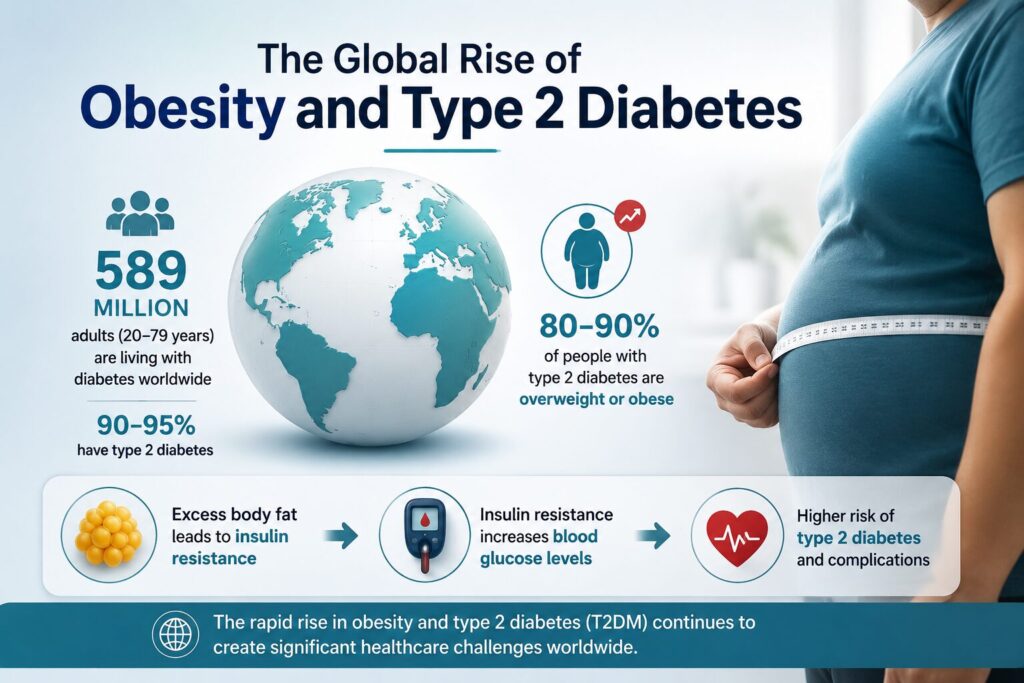
As per International Diabetes Federation (IDF), approximately 589 million adults of age between 20–79 years are living with diabetes worldwide, of which 90–95% have type 2 diabetes. The world is facing a diabetes epidemic where obesity is as one of the strongest risk factors for developing type 2 diabetes mellitus. Research consistently shows that 80–90% of people with type 2 diabetes are overweight or obese because excess body fat contributes to insulin resistance. This rapid rise in obesity and type 2 diabetes mellitus (T2DM) continues to create significant healthcare challenges worldwide.
Recently, scientists from Eccogene and AstraZeneca collaboratively carried out first-in-human Phase I clinical trial, where they investigated AZD5004, a novel once-daily oral small-molecule GLP-1 receptor agonist designed to improve treatment accessibility and patient convenience. The research evaluated the compound through a comprehensive development program that included laboratory experiments, animal studies, long-term safety assessments.
Why targeting GLP-1 receptor is important
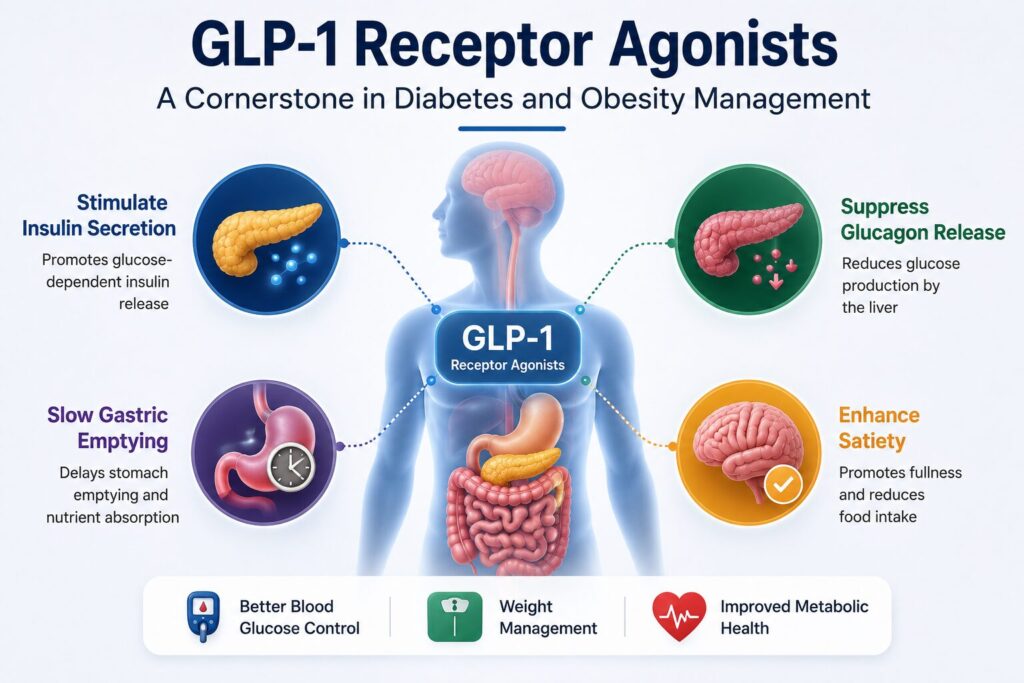
GLP-1 receptor agonists have become a cornerstone of modern diabetes and obesity management because they stimulate insulin secretion, suppress glucagon release, slow gastric emptying, and enhance satiety. While GLP-1 receptor agonists have transformed the treatment landscape by improving glycemic control and promoting weight loss, however, most approved GLP-1 therapies are injectable peptide-based medications that require cold-chain storage and can present adherence challenges. In addition, the current oral options require fasting and have absorption constraints.
In search of more promising therapeutic solution, ECC5004 has been developed as a small-molecule oral GLP-1 receptor agonist that could potentially overcome many of these barriers while maintaining therapeutic effectiveness.
A novel oral anti-diabetic drug AZD5004
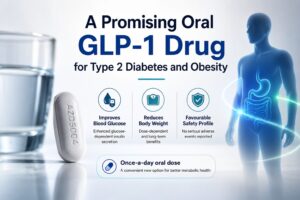
AZD5004 (also known as ECC5004) is a novel, oral small-molecule glucagon-like peptide-1 receptor agonist (GLP-1 RA) being developed for the treatment of type 2 diabetes mellitus (T2DM) and overweight or obesity. It has been developed as an alternative to injectable GLP-1 therapies. One of the primary advantages of this drug is that it is designed for intended once-daily oral administration on once-daily oral administration.
AZD5004 activates the human GLP-1 receptor (GLP-1R), which:
- Enhances glucose-dependent insulin secretion
- Improves glycemic control
- Supports weight reduction through appetite regulation and metabolic effects
Pharmacological characteristics of AZD5004
In addition, pre-clinical findings demonstrated other pharmacological characteristics of the drug:
- GLP-1 receptor binding potency (IC50) of AZD5004 is 2.4 nM
- It demonstrated strong activation of cAMP signaling pathways
- The drug inhibits receptor internalization and recruitment of β-arrestin-2
- It promotes enhanced glucose-stimulated insulin secretion in human beta cells with an EC50 of 5.9 nM in vitro and EC50 of 0.022 nM in vivo.
- In the non-human primates, AZD5004 significantly increased insulin secretion during glucose tolerance testing and improved glucose disposal rates at higher dose levels. Notably, the drug produced dose-dependent reductions in body weight gain by 36.5%, as compared with control animals.
- Notably, AZD5004 imposed no-observed-adverse-effect level (NOAEL) at the highest dose tested in non-human primates.
First-in-Human Phase I Clinical Trial of oral anti-diabetic (AZD5004) drug
The primary objective of this trial was to evaluate safety and tolerability of the oral anti-diabetic (AZD5004) drug, while secondary endpoints included pharmacokinetic and pharmacodynamic outcomes. For this:
- Healthy volunteers received single ascending doses of AZD5004, ranging from 1 mg to 300 mg.
- Type 2 diabetic patients received daily doses of 5 mg, 10 mg, 30 mg, or 50 mg for 28 days.
In these volunteers:
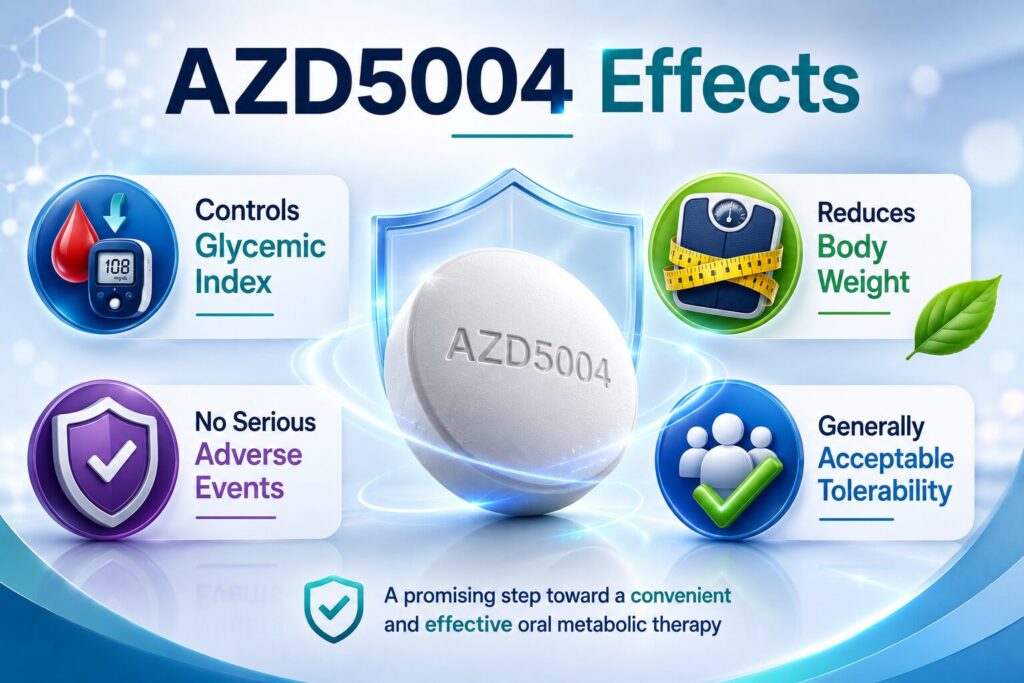
- No serious adverse events
- No deaths
- Generally acceptable tolerability
- Adverse events consistent with the known GLP-1 receptor agonist class, primarily gastrointestinal symptoms
The clinical trial also demonstrated dose-proportional drug exposure at doses of 25 mg and above, an important characteristic for predictable dosing and therapeutic optimization.
Glucose and Weight Reduction Signals
The most important findings of the research were the drug’s glycemic control and weight-loss effects. Patients receiving AZD5004 experienced dose-dependent reductions in both blood glucose levels and body weight during the multiple ascending dose study. These early efficacy signals support the therapeutic potential of AZD5004 for managing both diabetes and obesity.
Future applications of AZD5004 in Type 2 Diabetes and Obesity
The non-clinical and first-in-human evaluation of AZD5004 represents a significant step forward in the development of next-generation oral treatment for Type 2 diabetes mellitus. The drug enhances insulin secretion, reduces blood glucose levels and body weight, while maintaining tolerability and safety in patients.
In the future, AZD5004 could emerge as a convenient oral therapy for patients with type 2 diabetes, offering significant clinical benefits in glycemic control and weight management while expanding treatment options beyond traditional antidiabetic therapies, such as
Improved Patient Accessibility
As a small-molecule oral therapy, AZD5004 could potentially eliminate many barriers associated with injectable GLP-1 receptor agonists. This may improve patient acceptance, adherence, and access to treatment.
Simplified Chronic Disease Management
Patients with type 2 diabetes mellitus and obesity often require lifelong treatment. A once-daily oral medication could offer a more convenient alternative to injectable therapies, potentially enhancing long-term compliance.
Dual Benefits for Diabetes and Obesity
The observed effects on both glucose control and body weight position AZD5004 as a potential dual-purpose therapy, addressing two highly interconnected metabolic conditions simultaneously.
Expansion of Treatment Options
Healthcare providers may benefit from having additional oral GLP-1 receptor agonist options, particularly for patients who are unwilling or unable to use injectable therapies.
Thus, AZD5004 represents a significant advancement in oral diabetes and obesity therapeutics, offering clinically relevant improvements in blood glucose control and weight management while providing the convenience of once-daily oral dosing.