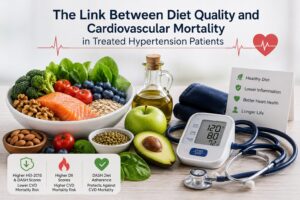
The Link Between Diet Quality and Cardiovascular Mortality in Treated Hypertension Patients
Growing Cardiovascular disease risk among people
Cardiovascular disease (CVD) remains the leading cause of death worldwide, accounting for 10.8 million deaths annually. Hypertension is one of its most significant risk factors of CVD including stroke, kidney disease and premature deaths. Globally, 1.28 billion adults, aged 30-79 years are currently living with hypertension. Out of these, approximately 46% of adults remain unaware of their condition while only about 42% of hypertensive patients are diagnosed and treated. Those who receive timely medications, only about 21% of adults have their blood pressure under control.
Why Diet Matters in Hypertension Management
Although antihypertensive medications play a critical role in controlling blood pressure, emerging evidence suggests that dietary habits can substantially influence long-term cardiovascular outcomes. Diet is particularly important because it influences inflammation, cholesterol levels, metabolic health, and vascular function.
Researchers at the Endoscopic Medical Center and Department of Emergency Medicine of the Central South and South University of China investigated how different diet quality scores affect cardiovascular mortality among individuals undergoing treatment for hypertension. The findings provide valuable insights for healthcare professionals, nutritionists, and patients seeking evidence-based strategies to improve cardiovascular health.
Researchers evaluated three widely recognized dietary assessment tools among 11,310 adults who were actively taking hypertensive medications:
- Healthy Eating Index-2015 (HEI-2015)
- Dietary Inflammatory Index (DII)
- Dietary Approaches to Stop Hypertension (DASH)
The study aimed to determine which dietary patterns were associated with lower cardiovascular mortality among adults already receiving antihypertensive treatment.
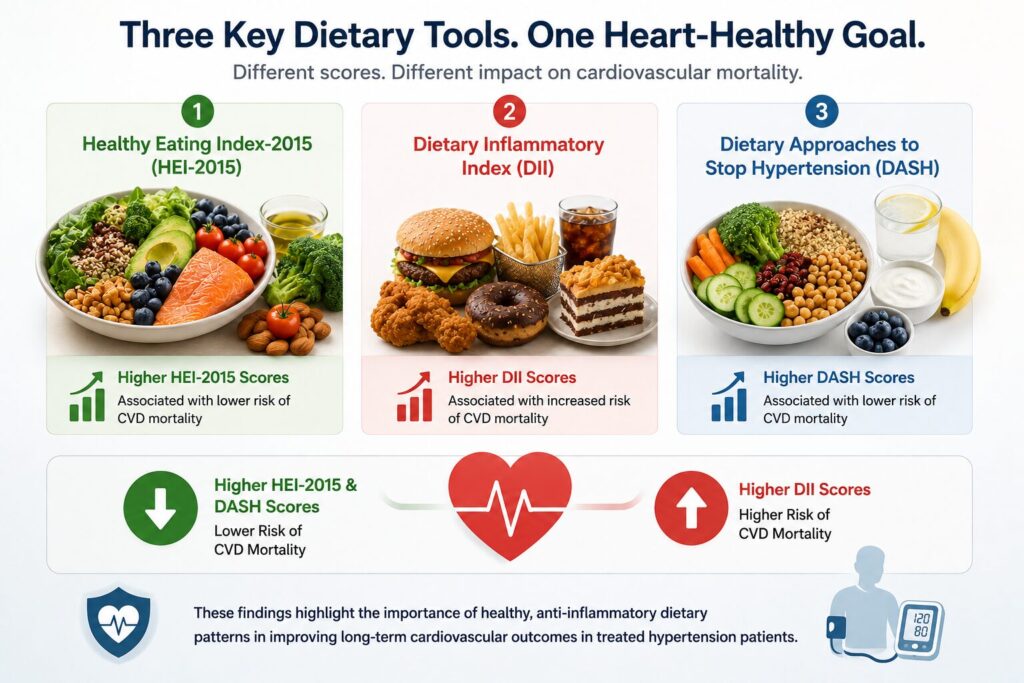
Evaluation of the Dietary Scores
For this, dietary information was collected through standardized 24-hour dietary recalls administered by trained interviewers. Using these data, three diet quality scores were calculated as:
- Healthy Eating Index-2015 (HEI-2015)
The HEI-2015 measures adherence to the Dietary Guidelines, evaluating:
- Fruit intake
- Vegetable consumption
- Whole grains
- Protein sources
- Dairy
- Sodium intake
- Added sugars
- Saturated fats
Scores range from 0 to 100, with higher scores indicating healthier dietary patterns.
Results showed that higher HEI-2015 scores are associated with a statistically significant reduction in cardiovascular mortality risk among treated hypertensive patients. The fully adjusted model showed a hazard ratio of 0.94, indicating lower mortality risk with better diet quality.
- Dietary Inflammatory Index (DII)
The DII assesses the inflammatory potential of a person’s diet. It considers 45 dietary components and categorizes them as pro-inflammatory or anti-inflammatory. Higher DII scores indicate a more inflammatory diet, which has been linked to chronic diseases and adverse health outcomes.
As evaluated, individuals consuming more pro-inflammatory diets experienced a significantly higher risk of cardiovascular death. The study reported a hazard ratio of 1.05, demonstrating that increasing dietary inflammation is associated with increased cardiovascular mortality.
- DASH Diet Score
The DASH diet score evaluates adherence to a dietary pattern specifically designed to lower blood pressure. It incorporates:
- Potassium
- Magnesium
- Calcium
- Fiber
- Protein
- Sodium
- Total fat
- Saturated fat
- Cholesterol
Scores range from 0 to 9, with higher scores reflecting greater adherence to DASH principles.
Trend analyses showed that greater adherence to the DASH diet is associated with lower cardiovascular mortality risk. The beneficial associations between healthier dietary patterns and reduced cardiovascular mortality remained consistent across different age, gender, BMI, smoking status and physical activity level.
Follow-Up and Outcome Measurement
During the study, follow-up was conducted for over 9 years and during this time, 1,324 cardiovascular deaths were recorded. The main causes of cardiovascular disease mortality were heart disease and stroke.
Study outcomes were evaluated using Cox proportional hazards regression models that examines relationships between risk factors and mortality.
How Diet Quality Scores (HEI-2015, DII, and DASH) Support Better Cardiovascular Health
- Focus on Overall Diet Quality
Rather than concentrating on individual nutrients, hypertensive patients should be evaluated for the overall quality of dietary patterns
Patients should prioritize:
- Fruits and vegetables
- Whole grains
- Lean proteins
- Plant-based foods
- Healthy fats
These components contribute positively to HEI-2015 and DASH scores.
- Reduce Dietary Inflammation
Healthcare should primarily focus on lowering dietary inflammation.
Foods commonly associated with lower inflammatory potential include:
- Berries
- Leafy greens
- Nuts
- Olive oil
- Fatty fish
- Legumes
Meanwhile, excessive intake of processed foods, refined carbohydrates, and sugary beverages may increase dietary inflammation.
- Integrate Nutrition into Hypertension Treatment Plans
Medication alone may not be sufficient to optimize cardiovascular outcomes. Dietary counseling should be integrated into hypertension management programs to maximize long-term benefits.
- Encourage Long-Term Dietary Adherence
As found through the extensive study conducted over a decade, sustainable dietary habits are more important than short-term interventions. Healthcare providers should help patients develop realistic eating plans they can maintain over time.
- Use Diet Quality Scores in Clinical Practice
HEI-2015, DII, and DASH scores may serve as practical tools for identifying high-risk patients and monitoring dietary improvements as part of preventive cardiology programs.
Future Insights
The study thus provides compelling evidences that diet quality significantly influences cardiovascular mortality among individuals receiving treatment for hypertension. Emphasising on self-support dietary data, continuous efforts to change the dietary behaviours and recurring recalls may change the long-term eating habits and improve the health of the CVD patients at risk.
Thus, combined effects of blood pressure medication with a high-quality, anti-inflammatory dietary pattern may substantially improve long-term cardiovascular outcomes. By emphasizing nutrient-rich foods, reducing inflammatory dietary choices, and adopting DASH-style eating habits, individuals can take meaningful steps toward reducing their risk of heart disease and premature death.