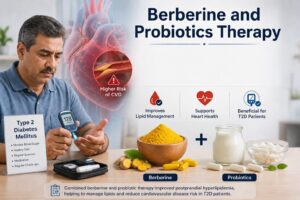
Berberine and Probiotics create a ‘Gut Lipid Sink’ to improve cholesterol profile & prevent CVD risk
Hyperlipidemia in Type 2 Diabetes increase CVD risk
Type 2 diabetes (T2D) is often accompanied by dyslipidemia, significantly increasing the risk of cardiovascular disease (CVD). According to International Diabetes Federation (IDF), approximately 589 million adults of age between 20–79 years are living with diabetes globally, representing about 1 in 9 adults. Of these, 90% of diabetes cases are Type 2 diabetes. In 2024, approximately 3.4 million deaths were recorded due to diabetes and associated health adversities. Studies indicate that 60–80% of people with Type 2 diabetes are associated with dyslipidemia, elevating the blood triglycerides, Low density Lipoproteins (LDL), and postprandial lipids. Adults with T2D and hyperlipidemia are approximately 2–4 times more likely to develop cardiovascular disease than individuals without diabetes accelerating the risk of coronary artery disease, heart attack, stroke and peripheral artery disease due to plaque formation.
While traditional lipid management focuses on fasting cholesterol levels, growing evidence suggests that elevated blood lipids after meals is equally important for cardiovascular risk assessment. Most people spend the majority of their day in a non-fasting state. Elevated post-meal cholesterol and triglyceride levels contribute to atherosclerosis and cardiovascular complications, particularly in individuals with insulin resistance and T2D. Despite its clinical significance, few therapies specifically target postprandial lipid abnormalities.
How berberine with probiotics improve postprandial hyperlipidemia
A clinical study by researchers at the Shanghai Jiao Tong University School of Medicine, China demonstrated that combining berberine (BBR), a plant-derived alkaloid known for its glucose and lipid lowering properties, with probiotics can effectively improve postprandial lipid profiles in patients with newly diagnosed T2D, offering a promising new approach for metabolic and cardiovascular health.
The study was a multicenter, randomized, double-blind, placebo-controlled clinical trial that enrolled 365 newly diagnosed drug naïve T2D patients, aged between 20 and 70 years who had available postprandial lipid measurements. Treatment of these patients with no drug or probiotic, probiotic alone, Berberine alone and combined Berberine-Probiotic therapy were carried for 12 weeks under double-blind conditions. The probiotic formulation contained nine beneficial bacterial strains, including Bifidobacterium breve and Bifidobacterium longum, while berberine was administered at 0.6 g twice daily.
After 120 minutes of consumption of a standardized 100 g carbohydrate meal, following blood parameters were measured:
- Postprandial Total Cholesterol (pTC)
- Postprandial LDL Cholesterol (pLDLc)
- Postprandial Triglycerides (pTG)
- Postprandial HDL Cholesterol (pHDLc)
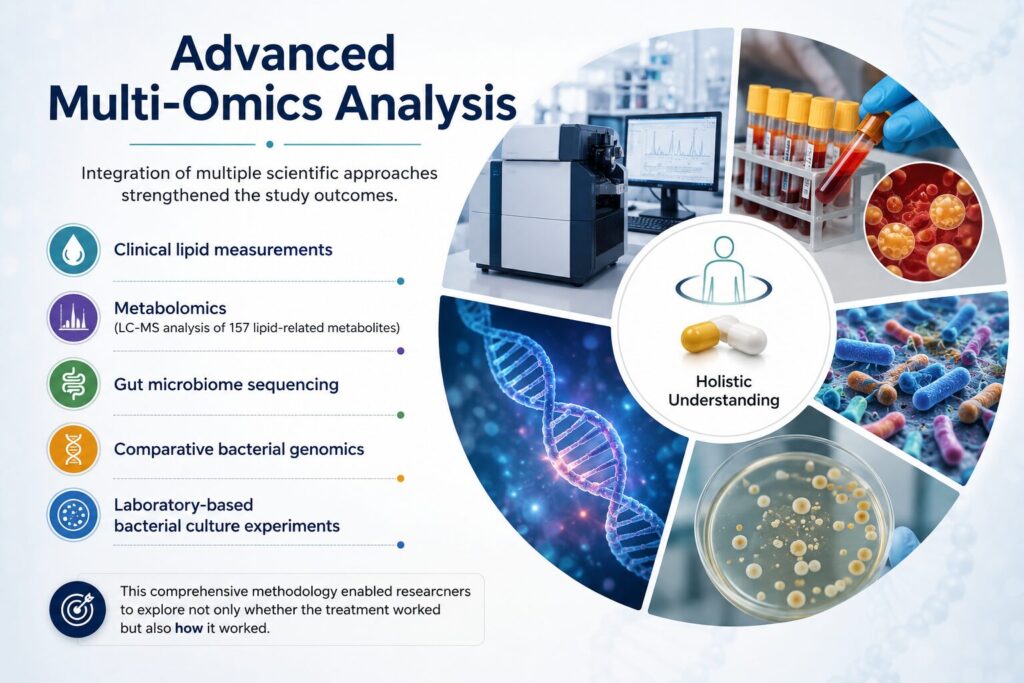
Advanced Multi-Omics Analysis
In addition, integration of multiple scientific approaches strengthened the study outcomes, such as:
- Clinical lipid measurements
- Metabolomics (LC-MS analysis of 157 lipid-related metabolites)
- Gut microbiome sequencing
- Comparative bacterial genomics
- Laboratory-based bacterial culture experiments
This comprehensive methodology enabled researchers to explore not only whether the treatment worked but also how it worked.
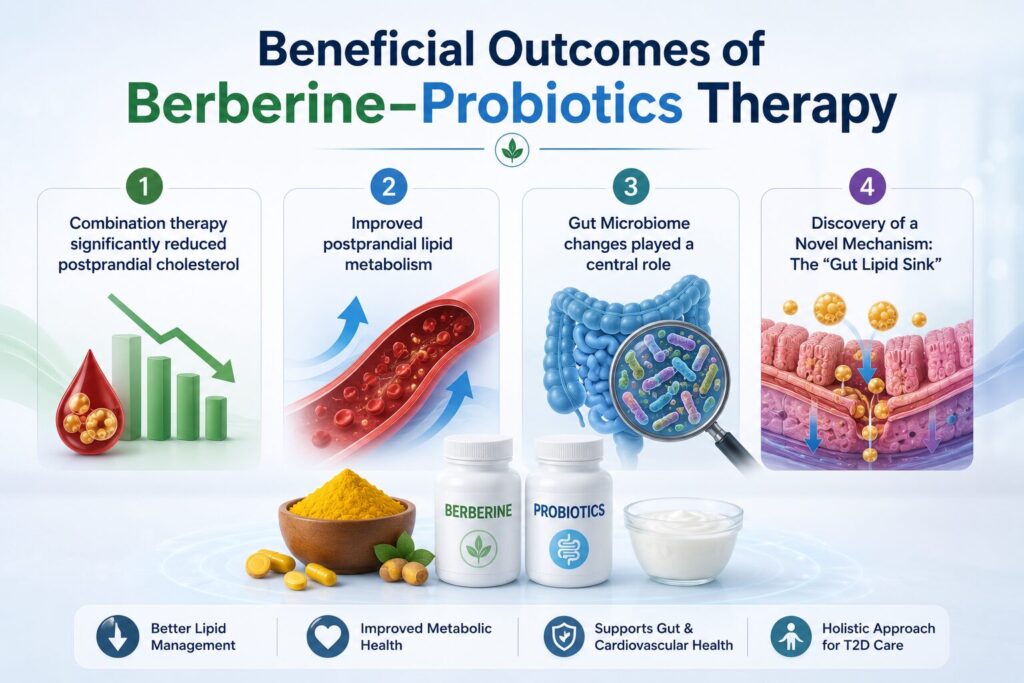
Beneficial outcomes of Berberine-Probiotics therapy
- Combination therapy significantly reduced postprandial cholesterol
As found, Berberine + Probiotics combination outperformed both berberine alone and probiotics alone in reducing postprandial cholesterol levels.
After 12 weeks:
- Postprandial Total Cholesterol decreased significantly in the combination group.
- Postprandial LDL Cholesterol also showed substantial reductions.
- Neither berberine alone nor probiotics alone achieved comparable improvements in postprandial cholesterol.
This demonstrates a clear synergistic effect between berberine and probiotics.
- Improved postprandial lipid metabolism
Metabolomic analysis revealed that the combined therapy produced extensive changes in lipid metabolism. About 31 lipid metabolites were identified that are uniquely altered after berberine -probiotic therapy. In addition, significant reductions were observed in:
- Free fatty acids (FFAs)
- Acyl-carnitines
- Lysophosphatidylcholines (LPCs)
- Phosphatidylethanolamines (PEs)
- Other lipid intermediates associated with cardiovascular risk
Many of these metabolites are strongly associated with reductions in LDL cholesterol and total cholesterol. This indicates that combination therapy improves lipid handling at a metabolic level, not merely through surface-level cholesterol reduction.
- Gut Microbiome changes played a central role
One of the most significant discoveries involved the gut bacterium Bifidobacterium breve.
It was found that:
- Berberine alone reduced the abundance of breve.
- Adding probiotics restored and increased breve levels.
- Higher levels of breve were strongly associated with lower postprandial total cholesterol and LDL cholesterol.
Patients with healthier lipid profiles also exhibited naturally higher levels of Bifidobacterium species. This suggests that maintaining beneficial gut bacteria is critical for maximizing the lipid-lowering benefits of berberine.
- Discovery of a Novel Mechanism: The “Gut Lipid Sink”
Genomic analysis showed that B. breve possesses multiple fadD genes, which encode long-chain acyl-CoA synthetase enzymes involved in fatty acid uptake and metabolism.
Laboratory experiments demonstrated that:
- Berberine activated these fadD genes.
- Activated bacteria absorbed more free fatty acids from their environment.
- The concentration of non-esterified fatty acids in bacterial culture media decreased significantly when berberine was present.
These bacteria effectively act as a “gut lipid sink,” consuming dietary fats before they can be absorbed into the bloodstream. This mechanism may explain the superior postprandial lipid control observed with the combined treatment.
Berberine-Probiotic Therapy may lower the risk of cardiovascular diseases
Better Cardiovascular Risk Management
Postprandial hyperlipidemia is increasingly recognized as a cardiovascular risk factor while therapies that reduce post-meal cholesterol may provide additional protection against heart disease beyond traditional fasting lipid management.
Potential Alternative for Statin-Intolerant Patients
As reported, many patients experience side effects from statins, including muscle-related symptoms and metabolic concerns. The Berberine + Probiotics regimen may offer a complementary or alternative strategy for individuals who cannot tolerate conventional lipid-lowering medications.
Integrating Gut Health into Diabetes Care
This study reinforces the growing understanding that gut microbiota play a crucial role in metabolic health. Supporting beneficial bacteria such as Bifidobacterium breve may become an important component of future diabetes and dyslipidemia management strategies.
Personalized Nutrition and Supplementation
Targeting probiotic supplementation alongside berberine may help optimize lipid metabolism and reduce cardiovascular risk in newly diagnosed T2D patients. Healthcare providers may eventually incorporate microbiome-based interventions into personalized treatment plans.
Thus, the study provides compelling evidences that gut microbiome-targeted therapies can play a major role in managing dyslipidemia and reducing cardiovascular risk. As research continues to evolve, the combination of berberine and probiotics may emerge as a valuable addition to modern diabetes and lipid management strategies.