Placental Health Risks Linked to Aromatic Hydrocarbon Exposure in Pregnancy
Polycyclic aromatic hydrocarbons in the environment
Environmental pollution has become a major public health issue rather than just an ecological concern. Rising pollution has now started affecting pregnancy outcomes and fetal development. Aromatic hydrocarbons, especially polycyclic aromatic hydrocarbons (PAHs), are toxic pollutants commonly released from petrochemical plants, industrial emissions, vehicle exhaust, and fossil fuel combustion. These compounds include phenol and 1-hydroxypyrene, both recognized as biological markers of PAH exposure.
The placenta plays a critical role during pregnancy. It acts as the foetus’s lungs, kidneys, liver, and endocrine system while also supplying oxygen and nutrients essential for fetal development. According to the study, prolonged exposure to aromatic hydrocarbons can interfere with placental endocrine and metabolic functions, potentially affecting fetal growth and maternal health.
Researchers from the University of Humanities and Economics and Department of Gynecological Endocrinology, Poland have provided a valuable insight into the relationship between industrial pollution and maternal-fetal health, with practical implications for healthcare professionals, policymakers, and expecting mothers. They explored how exposure elevated levels of aromatic hydrocarbons influence pregnant women’s placental endocrine and metabolic functions.
How Polycyclic aromatic hydrocarbons affects placental Health
- Higher pollution biomarkers in polluted areas
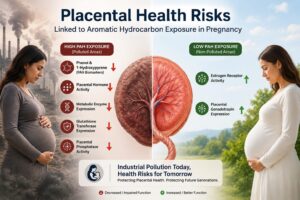
When placental tissues from 100 healthy pregnant women living in petrochemical polluted and non-polluted environments were compared, showed significantly higher urinary levels of phenol and 1-hydroxypyrene, detected by:
- High-performance liquid chromatography (HPLC)
- Gas chromatography (GC)
- Colorimetric testing using 4-aminoantipyrine
- Reduced endocrine activity in polluted areas
When assessed for hormonal activity and the presence of placental gonadotropin (hCG), placental lactogen (hPL), and estrogen receptor activity, placental samples from polluted environments exhibited lower receptor activity and reduced placental gonadotropin expression. These findings indicate impaired endocrine function of the placenta in women exposed to petrochemical pollutants, suggesting that environmental contamination may negatively affect the hormonal regulation essential for healthy fetal development and pregnancy outcomes.
- Lower Metabolic Function in Polluted Placentas
Examination of placental glutathione transferase and alkaline phosphatase—enzymes essential for detoxification and metabolic activity revealed significantly lower enzymatic activity in placental samples from polluted environments. These findings suggest compromised placental metabolism, impaired tissue function, and a reduced ability of the placenta to effectively support fetal development and protect against environmental toxins.
Evidence of Placental Adaptation
Although elevated levels of phenol and 1-hydroxypyrene have been shown to negatively impact placental health, the study also revealed evidence of adaptive compensatory mechanisms within placental tissue exposed to polluted environments. These adaptations included:
- Increased angiogenesis
- Formation of new blood vessels
- Enhanced mesenchymal tissue development
These adaptations may help maintain fetal oxygen and nutrient supply despite toxic environmental exposure.
How placental health be improved amid environmental pollution
The research findings reinforce that environmental health and reproductive health are deeply interconnected. As found, presence aromatic hydrocarbons can impair both endocrine and metabolic activity within the placenta. Even low-level industrial pollution may alter placental physiology in otherwise healthy pregnancies.
While individual actions cannot eliminate exposure completely, awareness, prevention and health monitoring can reduce cumulative risk.
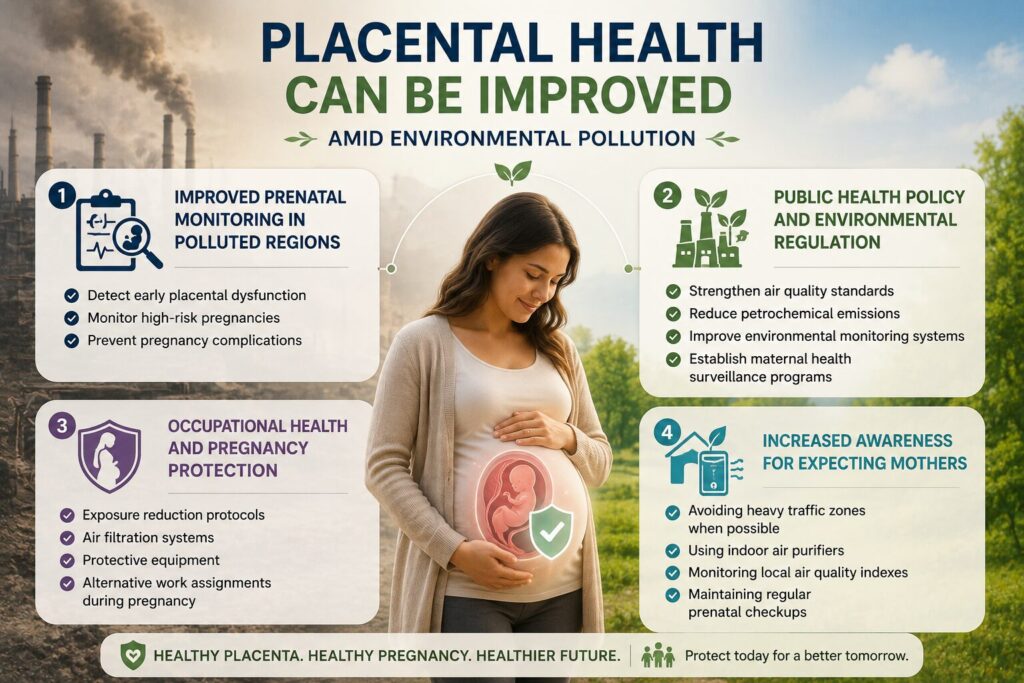
- Improved Prenatal Monitoring in Polluted Regions
Biomarkers such as phenol and 1-hydroxypyrene can be used to identify pregnancies at higher environmental risk.
Routine environmental exposure screening may help:
- Detect early placental dysfunction
- Monitor high-risk pregnancies
- Prevent pregnancy complications
This could become especially important in industrialized cities and regions near petrochemical facilities.
- Public Health Policy and Environmental Regulation
Policymakers should enhance environmental protection measures around residential areas near industrial plants. This would:
- Strengthen air quality standards
- Reduce petrochemical emissions
- Improve environmental monitoring systems
- Establish maternal health surveillance programs
Protecting pregnant women from chronic low-level exposure could improve long-term population health outcomes.
- Occupational Health and Pregnancy Protection
Women working in industries involving petroleum products, chemical manufacturing, or heavy industrial emissions may require additional protections during pregnancy.
Employers and occupational health agencies could implement:
- Exposure reduction protocols
- Air filtration systems
- Protective equipment
- Alternative work assignments during pregnancy
- Increased Awareness for Expecting Mothers
Pregnant women living in polluted urban or industrial areas can take practical precautions, including:
- Avoiding heavy traffic zones when possible
- Using indoor air purifiers
- Monitoring local air quality indexes
- Maintaining regular prenatal checkups
As industrialization and urbanization continue globally, understanding how environmental toxins affect pregnancy and fetal development has become increasingly important. Protecting maternal and fetal health must now include protecting the environments where families live and work.