
Wheatgrass Juice Benefits for Anaemia, Immunity, Digestion, and overall Health
Wheatgrass Juice
Wheatgrass juice (WGJ), prepared from the young shoots of Triticum aestivum, has attracted growing interest as a functional food and natural health product. When studied for its nutritional components, WGJ is rich vitamins, minerals, amino acids, enzymes, flavonoids, phenolic acids, and other bioactive compounds.
Researcher from Department of Yoga and Naturopathy, Under Ministry of Ayush, New Delhi, India have explicitly explored the therapeutic potential of wheatgrass juice and its possible applications in preventive and supportive healthcare. The findings highlight several potential wheatgrass juice benefits, particularly in relation to oxidative stress, anemia, immunity, gastrointestinal health, cardiovascular health, and supportive cancer care, suggesting wheatgrass juice as a promising supportive functional food along with conventional medical treatment.
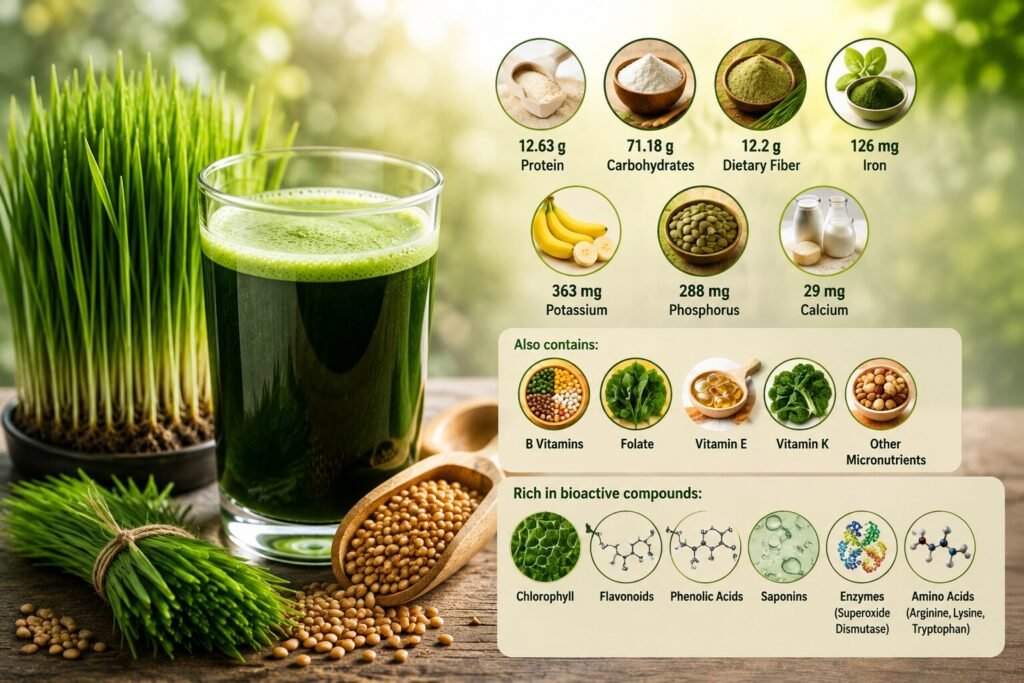
Nutritional Profile of Wheatgrass Juice
When evaluated, it was found that 100 ml of wheatgrass juice was reported to contain approximately 327 kcal, containing:
- 63 g of protein
- 18 g of carbohydrates
- 2 g of dietary fiber
- 126 mg of iron
- 363 mg of potassium
- 288 mg of phosphorus
- 29 mg of calcium
In addition, the juice also contains several B vitamins, folate, vitamin E, vitamin K, and other micronutrients.
It is emphasized that chlorophyll is an important component of wheatgrass juice. It constitutes approximately 70% of its dry weight. Alongside chlorophyll, wheatgrass contains flavonoids, phenolic acids, saponins, enzymes such as superoxide dismutase, and amino acids including arginine, lysine, and tryptophan.
This combination gives wheatgrass juice its potential value as a functional food with antioxidant, anti-inflammatory, antimicrobial, and immune-modulatory properties.
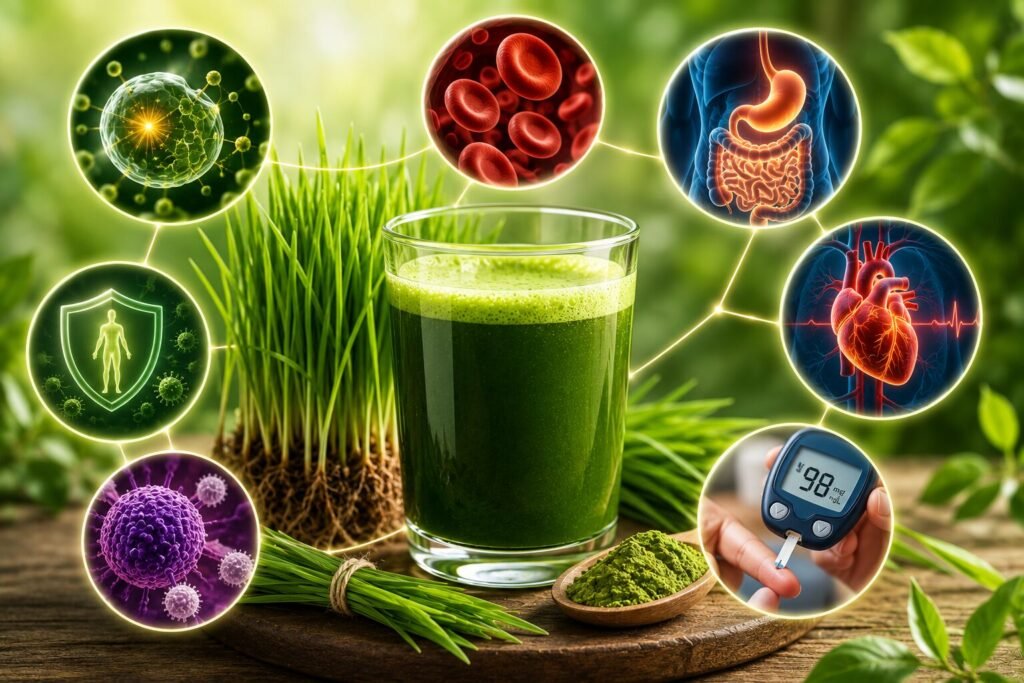
Health Benefits of Wheatgrass Juice
Wheatgrass Juice and Antioxidant Protection
Oxidative stress is associated with cellular damage and has been implicated in several chronic diseases.
Wheatgrass juice is well known for its antioxidant activity. The bioactive compounds such as flavonoids and phenolic acids can neutralize free radicals, while antioxidant enzymes such as superoxide dismutase may contribute to cellular protection.
Wheatgrass juice has been extensively investigated in conditions where oxidative stress may play a role and it can be included as part of nutrient-rich diet.
Potential Role in Anemia Management
Studies indicate the use of wheatgrass in anemia management.
When investigated among individuals with anemia, particularly iron-deficiency anemia, patients taking taking Wheatgrass juice reported improvements in hemoglobin levels, even though at irregular periods. Its iron content and high chlorophyll concentration are discussed as possible contributors to this potential effect.
However, anemia can have multiple causes, including nutritional deficiencies, chronic disease, blood loss, and other medical conditions. Therefore, wheatgrass juice should not be considered a substitute for diagnostic evaluation or prescribed treatment.
Potential Applications in Cancer Support
Studies also identifies wheatgrass juice as a potentially useful adjunct in cancer care.
When Wheatgrass juice was consumed alongside cancer treatment, it can potentially address problems such as fatigue, anemia, and mucositis associated with chemotherapy and radiation. Its antioxidant and anti-inflammatory properties are proposed as possible contributors to these effects.
The nutritional and bioactive properties of WGJ may warrant further investigation as a supportive dietary intervention during cancer treatment.
Further, more rigorous clinical studies may determine appropriate doses, safety, treatment interactions, and measurable patient outcomes.
Cardiovascular and Gastrointestinal Health
Wheatgrass juice is also known to provide potential cardiovascular benefits associated with the anti-inflammatory properties, relieving arterial inflammation and lipid profiles.
For gastrointestinal health, the dietary fiber content of wheatgrass juice may support digestion and help alleviate constipation. In addition, potential detoxifying effects of WGJ may provide support for liver and renal health as well.
Diabetes management and Enhancement of Immunity
Wheatgrass juice also have a potential applications in diabetes management through possible improvements in glycemic control and insulin sensitivity.
The immune-modulatory effects of WGJ is associated with its nutritional and bioactive components. Vitamins, antioxidants, amino acids, and other phytochemicals may collectively contribute to immune support.
Future Insights
Studies strongly highlights that Wheatgrass juice is a promising functional food, rich in nutrients that could complement a balanced diet. Its nutritional composition makes it particularly interesting for research involving micronutrient intake, antioxidant support, digestive health, and supportive nutrition.
In future, studies could evaluate standardized preparations, appropriate doses, long-term safety, interactions with conventional treatments, and clinically meaningful outcomes.
For consumers, the key practical message is moderation and realistic expectations. Wheatgrass juice may provide nutritional benefits as an adjunct, but its use as a standalone therapy for chronic disease is not suggested.
Other practical challenges could be addressed in future, including the short shelf life and strong taste of wheatgrass juice. Excessive consumption may also produce mild adverse effects such as nausea, while sensitive individuals may experience allergic reactions.
Standardization is therefore an important priority for future research.