Managing Diabetes Could Help Reduce Antibiotic Resistance
Diabetes May Be Accelerating Antibiotic Resistance
Antibiotic resistance is one of the world’s fastest-growing public health threats. At the same time, diabetes affects more than 530 million people globally, a number expected to exceed 1.3 billion by 2050.
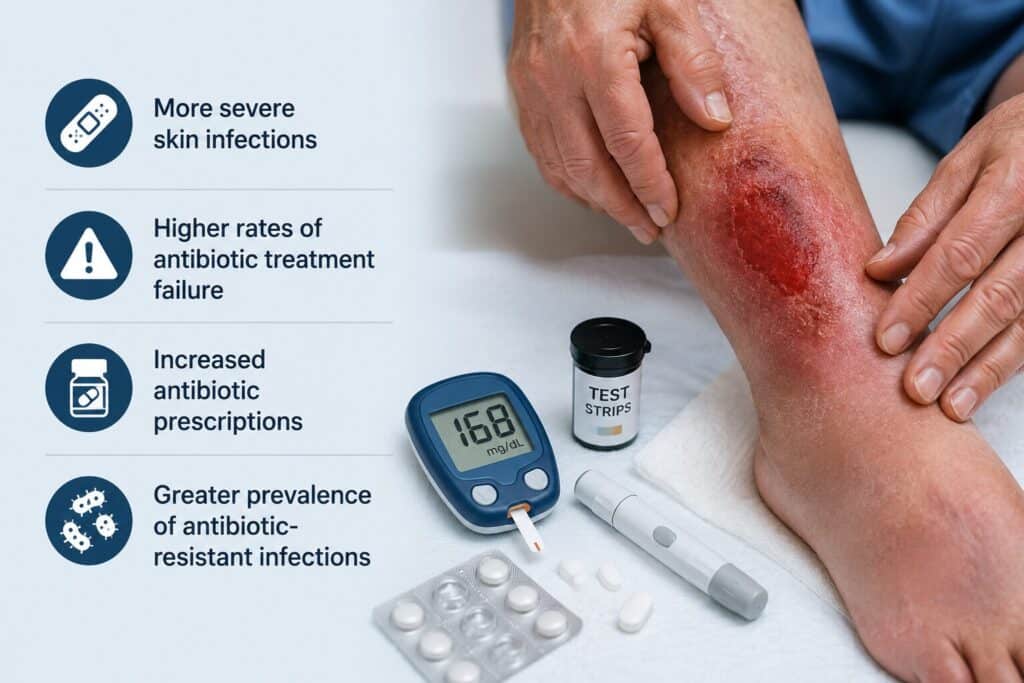
Previous clinical observations had shown that patients with diabetes experience:
- More severe skin infections
- Higher rates of antibiotic treatment failure
- Increased antibiotic prescriptions
- Greater prevalence of antibiotic-resistant infections
Previous studies have found that Staphylococcus aureus (particularly MRSA) is one of the leading causes of skin and soft tissue infections (SSTIs) in people with diabetes. Scientists hypothesize that elevated blood sugar creates an environment where antibiotic-resistant bacteria can rapidly emerge and dominate during treatment. However, the biological mechanism behind these observations remained unclear. This study sought to identify whether diabetes itself promotes antibiotic resistance.
Study published by scientists of University of North Carolina, U.S.A have uncovered an alarming connection between diabetes and emergence of antibiotic-resistant among patients.
Does diabetes increase the likelihood that bacteria develop antibiotic resistance during infection?
The study was experimental design comprising of animal models, genomic sequencing, bacterial genetics, metabolic analysis, and antibiotic treatment experiments.
- Diabetic Mouse Model
Diabetes was induced in healthy mice using streptozotocin (STZ), that destroyed insulin-producing pancreatic cells, creating sustained hyperglycemia. Both diabetic and non-diabetic mice were then infected with methicillin-resistant Staphylococcus aureus (MRSA USA300 JE2 strain) to simulate skin and soft tissue infections commonly seen in diabetic patients.
The most striking finding of this experiment was that rifampicin-resistant S. aureus emerged only in diabetic mice during treatment. In many diabetic animals, resistant bacteria rapidly became the dominant population within just five days, whereas no resistant bacteria were recovered from non-diabetic mice under the same conditions.
- Antibiotic Treatment
Beginning one day after infection, mice received daily doses of rifampicin for four consecutive days. Although rifampicin is not typically used alone in clinical practice because resistance develops easily, it serves as an excellent experimental model for studying how antibiotic resistance emerges.
Researchers measured:
- Total bacterial burden
- Number of antibiotic-resistant bacteria
- Frequency of resistant mutants after treatment
Contrary to expectations, diabetes did not increase bacterial mutation rates.
Instead:
- Larger bacterial populations formed in diabetic tissues.
- High glucose allowed resistant bacteria to multiply much faster.
- Once resistant mutants appeared, they quickly outcompeted susceptible bacteria.
It was concluded that hyperglycemia does not increase mutation frequency and is the primary factor promoting antibiotic resistance.
- Whole-Genome Sequencing
A whole-population genome sequencing was conducted on bacteria, to determine how bacterial resistance developed and allowed to identify genetic mutations responsible for antibiotic resistance and determine whether diabetes increased mutation rates.
Suppressing immune function alone modestly increased resistance but did not reproduce the dramatic expansion observed in diabetic mice indicating that:
- Impaired immunity contributes to resistance.
- Elevated glucose availability is the dominant factor driving resistant bacterial growth.
- Immune Function Experiments
Investigation was conducted to determine whether weakened immunity alone explains resistance. Using rapamycin, immune function was artificially suppressed in non-diabetic mice while maintaining relatively normal glucose levels, separating the effects of immune suppression from high blood glucose levels. Also known rifampicin-resistant bacteria into infections were introduced.
Results showed that diabetic tissue strongly favoured the expansion of resistant strains during antibiotic treatment. In diabetic mice, resistant bacteria frequently represented nearly 100% of the bacterial population after therapy.
- Glucose Metabolism Studies
Various insulin activating and glucose pathways were also evaluated to examine whether excess glucose directly fuel resistant bacteria. The study evaluated whether vancomycin-intermediate Staphylococcus aureus (VISA), is an important clinical concern.
Normally, VISA strains grow more slowly and are less virulent. However, in diabetic mice:
- Growth significantly increased.
- Lesions became substantially larger.
- Virulence was restored.
VISA only was recovered from vancomycin-treated diabetic mice, highlighting diabetes as a favourable environment for clinically relevant resistance.
- Insulin Intervention
Finally, diabetic mice received insulin therapy to lower blood glucose. Assessment was done to find whether improving glycemic control reduces the emergence of antibiotic-resistant bacteria.
Perhaps the most encouraging discovery from this study is that insulin therapy substantially reduced the emergence of resistant bacteria. Even partial improvements in blood glucose significantly lowered the number of resistant S. aureus recovered after treatment, suggesting that effective diabetes management may also reduce the risk of antibiotic resistance.
How to Improve Diabetes and Infection Management?
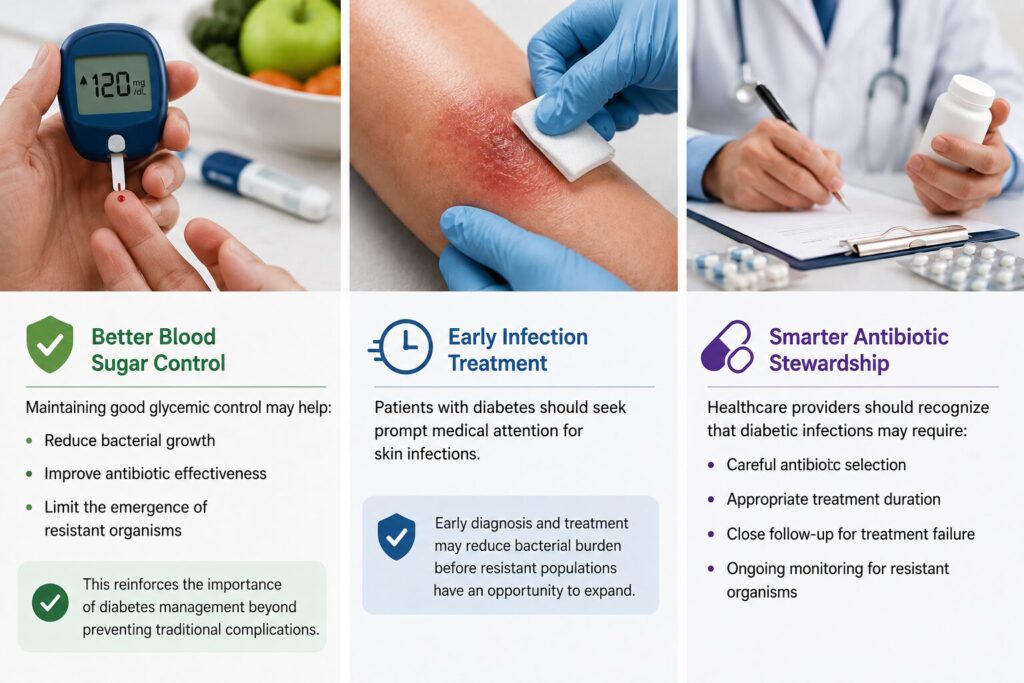
Better Blood Sugar Control
Maintaining good glycemic control may help:
- Reduce bacterial growth
- Improve antibiotic effectiveness
- Limit the emergence of resistant organisms
This reinforces the importance of diabetes management beyond preventing traditional complications.
Early Infection Treatment
Patients with diabetes should seek prompt medical attention for skin infections.
Early diagnosis and treatment may reduce bacterial burden before resistant populations have an opportunity to expand.
Smarter Antibiotic Stewardship
Healthcare providers should recognize that diabetic infections may require:
- Careful antibiotic selection
- Appropriate treatment duration
- Close follow-up for treatment failure
- Ongoing monitoring for resistant organisms
Future Insights
Through this study, it becomes evident that simply making infections more common, diabetes appears to create a biological environment where antibiotic-resistant bacteria can rapidly emerge and thrive. Elevated glucose fuels bacterial growth, allowing resistant mutants to dominate during treatment, while insulin therapy significantly reduces this risk. This identifies bacterial glucose metabolism as a potential therapeutic target. In future, developing treatments that interfere with bacterial glucose utilization could help reduce the emergence of antibiotic resistance in high-glucose environments.
For clinicians, the findings emphasize the importance of integrating diabetes management with infection control and antimicrobial stewardship. For patients, they reinforce a powerful message: keeping blood sugar under control may not only protect long-term health but also improve the success of antibiotic treatment and reduce the likelihood of resistant infections.