First Human Trial of stem cell-derived islet transplant offers new hope for Type 1 Diabetes
Current treatment modalities for Type 1 Diabetes
For decades, people living with Type 1 Diabetes have primarily relied on lifelong insulin therapy to regulate blood glucose levels. While insulin injections and advanced glucose monitoring systems have significantly improved diabetes management, they do not restore the body’s natural ability to produce insulin.
Current treatments for diabetes mainly focus on replacing insulin, maintaining blood glucose within the target range, preventing complications, and improving quality of life. However, permanent cure for Type 1 Diabetes is still not available.
Stem cell Therapy for Type 1 Diabetes
Researchers from China have introduced a promising approach to treat Type 1 Diabetes. They explored whether patient-derived stem cells could be chemically reprogrammed into insulin-producing pancreatic islet cells and transplanted back into the same patient.
Unlike conventional induced pluripotent stem cells (iPSCs), which rely on genetic modification, chemically induced pluripotent stem cells (CiPSCs) are generated using small-molecule compounds. This approach avoids genome integration and offers advantages in standardization, scalability, and manufacturing for future clinical applications.
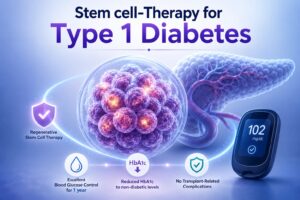
In this first human study, chemically induced pluripotent stem cell-derived islets (CiPSC-islets) have been transplanted into a patient with Type 1 Diabetes, enabling sustained insulin independence and glucose control.
First-in-human Phase I clinical trial
In this first-in-human Phase I clinical trial safety, tolerability, feasibility, and effectiveness of the chemically induced pluripotent stem cell-derived islets has been studied in a 25 year-old women, living with Type 1 Diabetes for 11 years and experienced poor glycemic control despite intensive insulin therapy.
The patient had:
- Undetectable natural insulin production
- Frequent severe hypoglycemia
- Daily insulin requirements of approximately 54 units
- HbA1c levels consistently above recommended targets
- Previous pancreas transplantation failure
These characteristics made her an appropriate candidate for experimental cellular therapy.
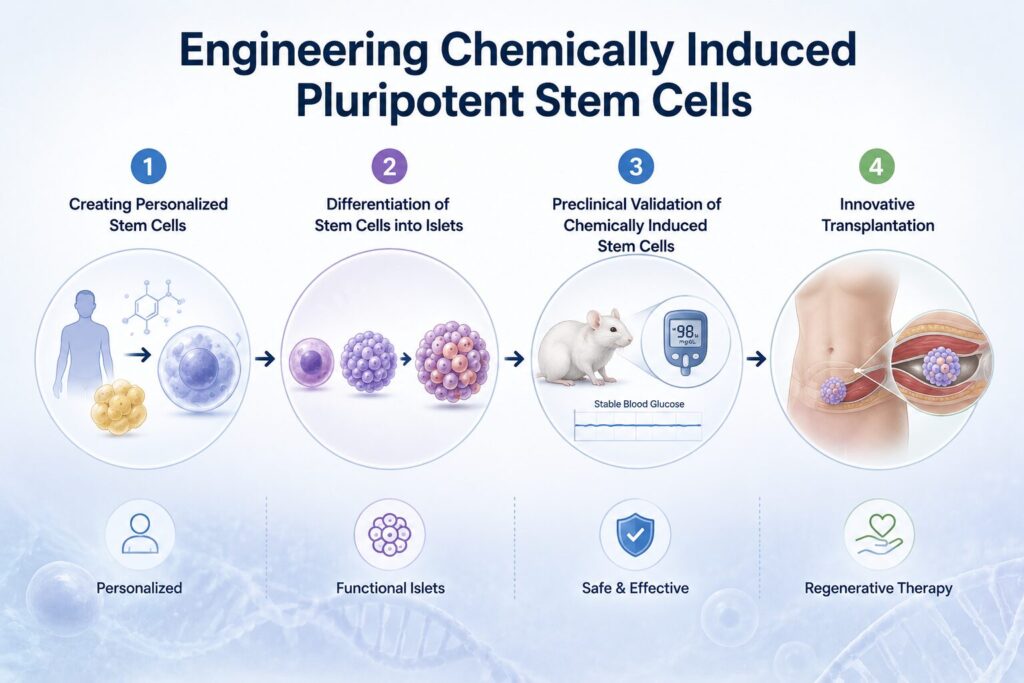
Engineering chemically induced pluripotent stem cells
Creating Personalized Stem Cells
Adipose-derived stromal cells were isolated from the adipose (fat) tissue collected from the patient. These cells were reprogrammed into patient-specific pluripotent stem cells using proprietary small-molecule techniques.
Because the cells originated from the patient herself, the therapy reduced many challenges associated with donor compatibility.
Differentiation of stem cells into islets
The CiPSCs underwent a carefully controlled six-stage differentiation process that transformed them into pancreatic islet-like cells capable of producing insulin.
Quality control testing confirmed that the manufactured islets:
- Closely resembled natural pancreatic islets
- Contained approximately 60% beta cells
- Included alpha and delta endocrine cells
- Demonstrated glucose-responsive insulin secretion
Extensive genomic, microbiological, and functional testing ensured the cells met stringent release criteria before transplantation.
Preclinical Validation of chemically induced stem cells
Before treatment, comprehensive safety evaluations were performed in 244 immunodeficient mice, diabetic mice and non-human primates.
Evaluations confirmed:
- No tumor formation
- Long-term graft survival
- Restoration of glucose regulation
- Stable insulin secretion
These encouraging findings provided the foundation for moving into human clinical trials.
Innovative Transplantation
The site of standard clinical transplantation is liver, however, the chemically induced stem cells were transplanted beneath the abdominal anterior rectus sheath using ultrasound guidance.
This alternative transplantation site offers several advantages:
- Less invasive procedure
- Improved imaging access
- Reduced inflammatory damage
- Better graft survival observed in previous preclinical studies
The patient received approximately 1.49 million islet equivalents during transplantation.
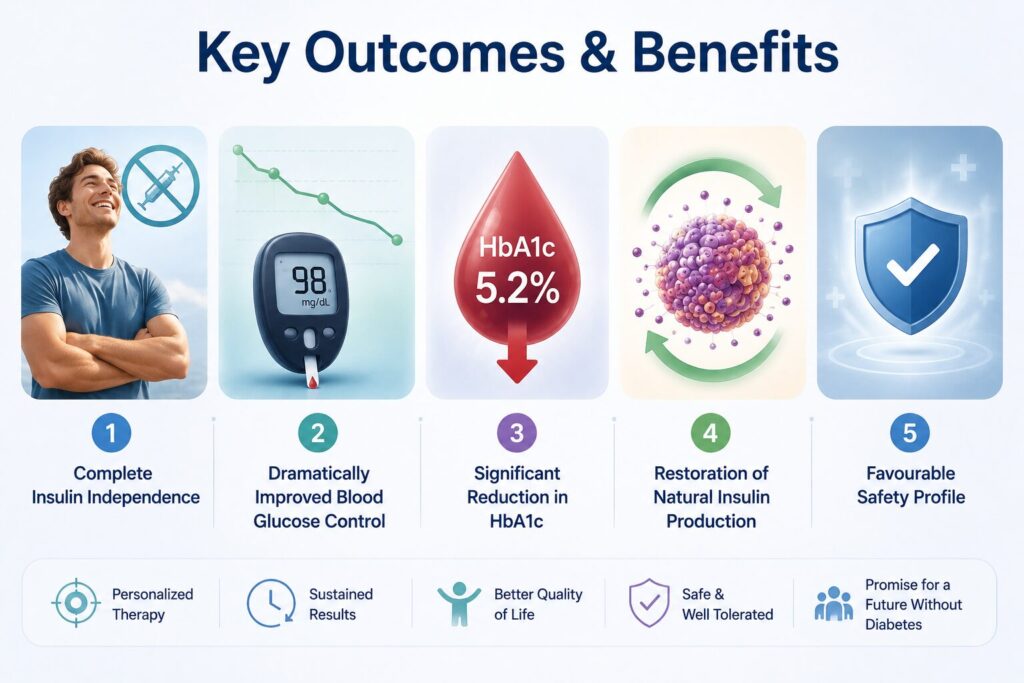
Promising Results from Stem Cell-Derived Islet Transplantation
Astonishingly, the study outcomes were more pronounced than the predefined clinical endpoints established by the trial.
- Complete Insulin Independence
Perhaps the most remarkable finding was that the patient became completely independent of injected insulin 75 days after transplantation. Even more encouraging, she maintained insulin independence throughout the full one-year follow-up period.
- Dramatically Improved Blood Glucose Control
Continuous glucose monitoring revealed major improvements, where continuous glucose stability is rarely achieved in patients with long-standing Type 1 Diabetes.
Before transplantation:
- Time in target glucose range: 43.18%
After transplantation:
- At month 2: 87.18%
- AT month 4: 96.21%
- Maintained above 98% for the final eight months of follow-up.
- Significant Reduction in HbA1c
When HbA1c level was measured, which is a gold standard for measuring long-term blood glucose control, the patient HbA1c improved from 7.57% before treatment to 5.37% at 4-month period and remained within the non-diabetic range throughout the remainder of the study.
- Restoration of Natural Insulin Production
Prior to transplantation, the patient produced virtually no endogenous insulin. However, following transplantation:
- Detectable C-peptide appeared within two weeks.
- C-peptide continued increasing over time.
- Oral glucose tolerance tests demonstrated progressively stronger insulin responses.
These findings confirmed that the transplanted islets were functioning similarly to healthy pancreatic beta cells.
- Favourable Safety Profile
Safety was the primary objective of this Phase I trial. At one-year follow-up, researchers reported:
- No transplant-related abnormalities
- No evidence of tumor formation
- No major safety concerns
- All predefined safety endpoints achieved
While longer follow-up and larger studies are needed, these early safety results are highly encouraging.
A New Direction for Personalized Medicine
Addressing the Donor Organ Shortage
As the stem cells are generated from the patient’s own tissue, personalized cell therapies may reduce dependence on donor organs while potentially minimizing immune compatibility challenges. Laboratory-generated islets could eventually provide a scalable alternative, making advanced diabetes treatment available to many more patients, overcoming the challenges of scarce donor pancreatic islet cells.
Improving Quality of Life
For individuals with severe Type 1 Diabetes, eliminating daily insulin injections while maintaining near-normal glucose control could substantially reduce:
- Hypoglycemia risk
- Glucose variability
- Daily treatment burden
- Long-term diabetes complications
Advancing Regenerative Medicine
The successful use of chemically induced pluripotent stem cells demonstrates how regenerative medicine may move beyond symptom management toward restoring lost organ function.
The chemical reprogramming approach also offers manufacturing advantages because it avoids genetic manipulation and supports standardized production methods.
Future Insights
This research represents remarkable advancements in the regenerative medicine and diabetes care. Study outcomes demonstrated excellent glucose regulation in a patient with long-standing Type 1 Diabetes by combining chemical stem cell reprogramming, rigorous quality control, and an innovative transplantation technique, highlighting the potential of personalized stem cell-based treatments, for one of the greatest unmet needs in diabetes management. In future, continuous clinical research will determine whether this promising approach can become a safe and scalable option for people living with Type 1 Diabetes worldwide.