Computational Antibody Modelling tools are Transforming Modern Drug Development
How Computational Methods Are Transforming Structural Biology
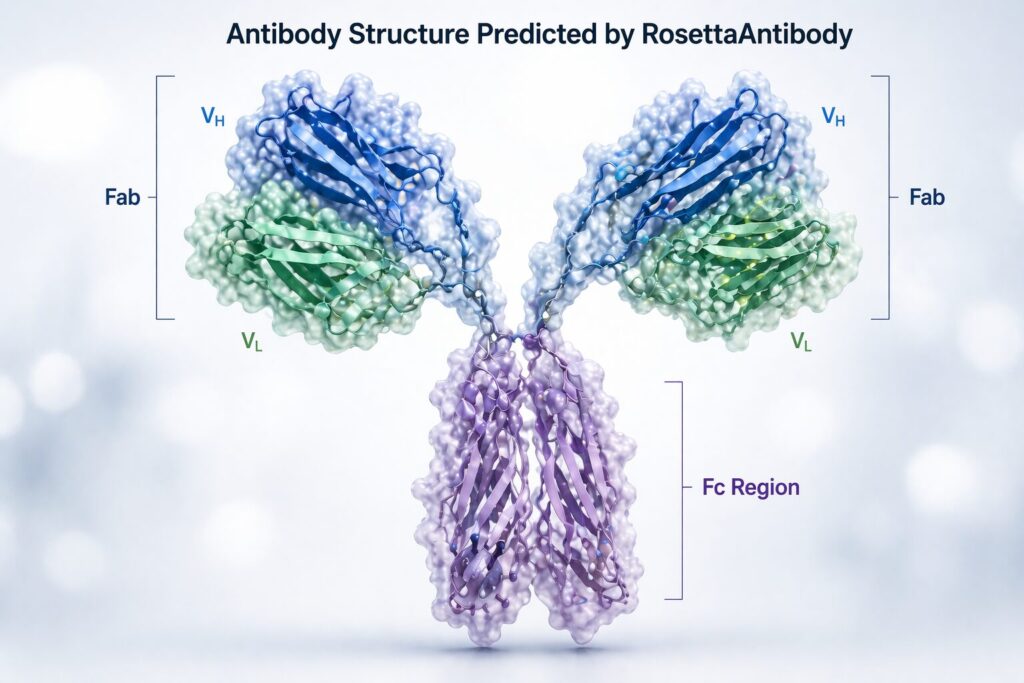
Discoveries of immune receptors have spurred the need for robust antibody engineering for diagnostic, prognostic, and therapeutic purposes. Core knowledge of the unbound and antigen-bound antibody structure is critically significant to tailor the antibody for specific therapeutic or diagnostic purposes. Although sufficient antibody sequence information is available, the determination of antibody structure has always been challenging. Experimental methods like X-ray crystallography are accurate, yet slow and expensive.
At this point, computational methods become the key to a robust and efficient solution.
Several algorithms have been made available to predict the antibody structure from the available sequence information, such as:
- ABodyBuilder3
- PIGSPro
- RosettaAntibody
These models predict the antibody framework regions below 1 Å root-mean-square deviation (RMSD). However, accurate prediction of diverse sequences of the CDR loops is still difficult due to the variety of conformations generated by the algorithm.
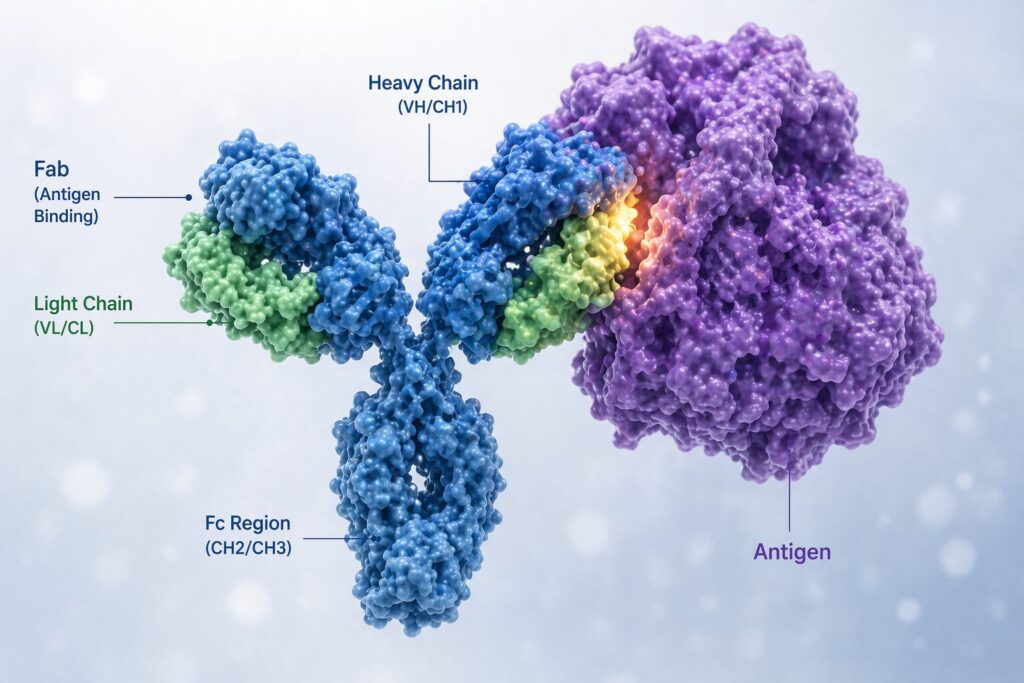
At subsequent steps, determination of Antigen-Antibody binding is crucial for the precise diagnostic and therapeutic applicability of the engineered antibody.
Some of the primary software programs available for antigen-antibody docking include:
- ClusPro
- FRODOCK
- PatchDock
- HADDOCK
- Rosetta SnugDock
Out of these, ClusPro and FRODOCK use fast Fourier transform (FFT)-based algorithms to quickly scan possible binding orientations while PatchDock breaks proteins into geometric “hotspot” patches and uses shape matching techniques to predict interactions. All of these models work globally and rely on rigid-body docking strategies. These work well when the known protein structures are relatively stable; however, to deal with predicted protein models, which are flexible, tools like HADDOCK and SnugDock are the main models of choice.
While HADDOCK combine rigid-body docking with flexibility by using experimental or predicted restraints, followed by refinement steps, SnugDock focuses specifically on antibodies, refining flexible loop regions (called CDR loops) and adjusting how antibody chains orient during binding.
Improvement of the computational tools
Scientists at Johns Hopkins University, Baltimore, USA, have combined algorithm development, dataset expansion, and benchmarking to refine the computational models, RosettaAntibody and Rosetta SnugDock, for antibody structure prediction and antigen-antibody docking to improve their accuracy and efficiency.
- Enhancing Computational Framework
At the first step, the study aimed to:
- Refine structural templates
- Improve loop modelling techniques
- Enhance docking algorithms
- Streamline user workflows
These improvements allowed better template selection with enhanced loop modelling, thereby reducing the errors in critical binding regions and providing structural predictions that are closer to experimentally determined structures.
- Expanding the Template Database
Next, the researchers expanded the template database significantly, which allowed:
- Better matching of antibody sequences to known structures
- Increased diversity in structural references
- Improved accuracy in predicted models
- Improvements in Loop Modelling
To predict loop regions, particularly the complementarity-determining regions (CDRs), the study incorporated:
- Advanced loop sampling
- Improved scoring functions to evaluate loop conformations
- More efficient algorithms to reduce computation time
These changes helped generate more realistic and reliable loop structures.
- Docking Algorithm Optimisation
Docking refers to predicting how an antibody binds to its target antigen. The docking process was refined by:
- Improving conformational sampling
- Enhancing interaction scoring
- Allowing flexibility in both antibody and antigen structures
This resulted in more accurate predictions of interaction sites, binding orientations and increased success rate in docking simulations for studying immune responses and designing targeted therapies.
- Scientific Benchmarking
Extensive benchmarking validated the computational improvements by using standardised datasets. This included:
- Comparing predicted structures against experimentally determined ones
- Measuring accuracy using structural similarity metrics
- Evaluating docking performance across multiple test cases
The benchmarking process ensured that improvements were measurable and reproducible.
Enhanced Computational Efficiency and Broader Applicability
The improved computational models, RosettaAntibody and RosettaSnugDock, has now become more efficient to allow faster modelling workflows at reduced computational cost, making it more accessible for large-scale studies.
The expanded database and improved algorithms allowed the system to handle a wider range of antibodies, including:
- Single-domain antibodies
- Diverse antigen targets
- Complex binding scenarios
The enhanced flexibility of these models increases their usefulness across different research fields.
- Drug Discovery and Development
Researchers and pharmaceutical companies may use improved antibody modelling to optimise the time and cost:
- Explore antibody diversity more effectively
- Engineer novel antibodies
- Predict binding affinity and properties before lab testing
- Design more effective therapeutic antibodies
- Reduce trial-and-error in the development of diagnostic biosensors and early drug development
- Vaccine Design
Accurate antibody-antigen modelling helps researchers to accelerate their research for rapidly evolving pathogens like HIV, COVID-19 and others:
- Understand immune recognition mechanisms
- Identify key binding sites
- Design vaccines that trigger stronger immune responses
- Personalised Medicine
Modelling tools that provide precise prediction of protein structures and their binding interactions make it easier to:
- Predict how specific antibodies will behave
- Tailor antibody treatments to individual patients
- Make the availability of personalised treatment at low cost and affordable prices.
This research marks a meaningful achievement in the improvement of computational antibody modelling. By improving structure prediction, refining docking algorithms, and expanding template databases, the study delivers tools that are both more accurate and more practical.
What stands out most is the balance between scientific rigour and real-world usability. The improvements are not just theoretical. They directly support applications in drug discovery, vaccine development, and biotechnology innovation.
As computational power continues to grow and algorithms become more refined, tools like these will play an even bigger role in shaping the future of medicine.