Anti-BCMA CAR-T Therapy Shows Promise for Progressive Multiple Sclerosis
Multiple Sclerosis and associated challenges
Multiple sclerosis (MS) is a chronic, autoimmune immune disease of the central nervous system (CNS), including brain, spinal cord, and optic nerves. The immune system of the patients suffering from MS, mistakenly attacks myelin, the protective covering surrounding nerve fibers, disrupting the transmission of electrical signals, resulting in a wide range of neurological symptoms.
Common symptoms associated with MS include:
- Fatigue & dizziness
- Muscle weakness
- Muscle stiffness
- Muscle spasms & tremors
- Double vision or blurred vision
- Numbness or tingling in the face, arms, or legs
- Difficulties with balance, coordination, or walking.
- Disturbed bladder or bowel function
- Depression & anxiety
- Cognitive changes, including difficulties with concentration, memory, and information processing. may also occur.
The course and severity of MS vary considerably between individuals, and symptoms may develop gradually or occur as episodes of worsening followed by periods of recovery.
Progressive multiple sclerosis (PMS) remains one of the most difficult forms of multiple sclerosis characterized by continuing neurological deterioration, brain atrophy and cortical demyelination. In progressive forms of MS, neurological disability may gradually worsen over time, affecting mobility, independence, and quality of life.
Treatment of Multiple Sclerosis
Treatment for multiple sclerosis (MS) aims to reduce disease activity, prevent relapses, slow disability progression, and manage symptoms:
Disease-modifying Therapies (DMTs)
These are mainly used for relapsing MS, with options including interferons, fumarates, sphingosine-1-phosphate receptor modulators, monoclonal antibodies, and other immune-modulating medicines. These therapies can reduce relapse frequency and slow disease progression, but they do not cure MS or reverse established neurological damage.
Receptors Modulators
When management of progressive MS is more challenging, Ocrelizumab is the treatment of choice. On the other hand, Siponimod can be used for active secondary progressive MS.
Stem cell Therapy
Hematopoietic stem-cell transplantation (HSCT) may be considered for selected patients, particularly when inflammatory disease activity persists.
Corticosteroids & Improving Quality of Life
For tackling relapses corticosteroids are used. Other approaches include physiotherapy, rehabilitation, exercise, and medicines targeting fatigue, spasticity, pain, bladder problems, and other symptoms—help improve daily functioning and quality of life.
Challenges & alternative solution for Multiple Sclerosis
Although effective for management, these treatments offer challenges such as treatment-related side effects, infection and immune-suppression risks, high costs and access limitations, treatment selection, and variable responses between patients. Most importantly, available DMTs primarily target inflammatory disease activity and have limited effectiveness against non-active progressive MS, where neurodegeneration and disability can continue despite minimal inflammation.
Increasing evidence suggests that B cells and antibody-producing plasma cells within the central nervous system (CNS) contribute to persistent neuroinflammation and neurological damage.
To tackle this, researchers at Huazhong University of Science and Technology, Wuhan, China, investigated whether genetically engineered T cells targeting B-cell maturation antigen (BCMA) could eliminate disease-associated plasma cells, including those residing within the CNS.
This is the first-in-human study treated five people with progressive MS and all the patients showed improvements in neurological measures, plasma cells were depleted across CNS-related compartments, inflammatory signals decreased, and CAR-T cells demonstrated sustained activity in cerebrospinal fluid (CSF).
Importantly, this is a small, early-phase study, not definitive proof of efficacy. Nevertheless, it provides an important proof of concept for using cellular immunotherapy to target the deeper immune mechanisms associated with progressive MS.
Targeting Plasma Cells in Progressive Multiple Sclerosis
In progressive MS, B-cell populations contribute to inflammation inside the CNS by producing antibodies, releasing inflammatory cytokines, presenting antigens and participating in lymphoid structures.
Of particular interest are plasmablasts and plasma cells (PB/PCs). These terminally differentiated B-cell populations can survive for long periods and produce immunoglobulins inside the CNS. Their activity is reflected in biomarkers such as CSF oligoclonal bands (OCBs) and elevated kappa-free light-chain (KFLC) indices.
The available conventional anti-CD20 therapies primarily target CD20-positive B cells but plasma cells generally don’t express CD20, while therapeutic antibodies can also face difficulties accessing immune cells located behind the blood-brain barrier.
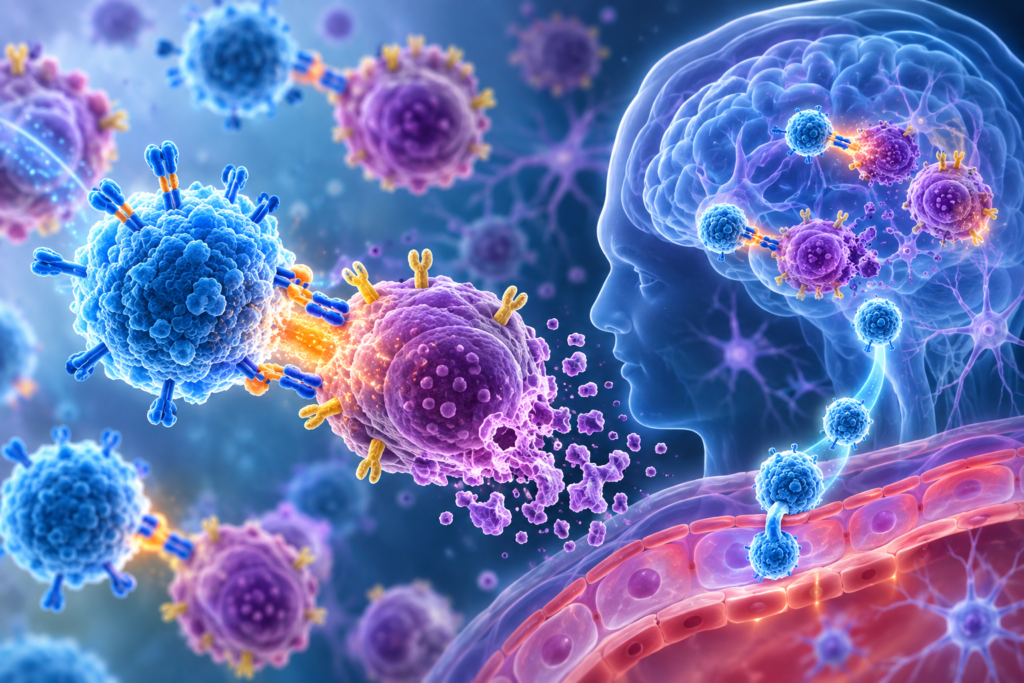
B-cell maturation antigen offers a different target because it is expressed on plasma cells and that raises a potential question: Can anti-BCMA CAR-T cells reach the CNS and eliminate pathogenic plasma cells that conventional B-cell depletion strategies may leave behind?
What Is Anti-BCMA CAR-T Therapy?
CAR-T therapy involves collecting a patient’s own T cells and genetically engineering them to recognize a particular molecular target. In this study, T cells were engineered to target B-cell maturation antigen and expanded before introducing them back in the patient’s body. The CAR on these cells acts like a molecular recognition system, allowing the T cells to identify BCMA-expressing cells and initiate targeted killing. After quality control, 498,114 high-quality cells were obtained, providing a detailed view of immune-cell populations and CAR-T dynamics across different body compartments.
For evaluation of anti-BCMA CAR-T Therapy, five treatment-refractory PMS patients were enrolled, one with primary progressive MS and four with secondary progressive MS. These patients displayed a mean baseline EDSS score was approximately 6.2, indicating substantial disability and received MS-directed treatments, including glucocorticoids, and several had received anti-CD20 therapy.
Before infusion, patients underwent lymphodepletion using fludarabine and cyclophosphamide and anti-BCMA CAR-T cells were then administered at 1.0 × 10⁶ cells/kg while immunosuppressants and steroids, were stopped before treatment.
This approach essentially attempts to create a powerful, living therapy capable of seeking out and eliminating a specific immune-cell population.
Further following clinical assessments were performed to evaluate:
- Expanded Disability Status Scale (EDSS)
- Nine-Hole Peg Test (9HPT) for upper-limb function
- Timed 25-Foot Walk (T25-FW) for lower-limb function
- CSF and serum neurofilament light chain (NfL)
- MRI assessments of disease activity
- TSPO-PET/MR imaging to assess microglial activation
These measurements allowed the researchers to examine both functional outcomes and biological changes.
In addition, cellular and molecular analysis was performed to monitor blood, bone marrow and CSF using:
- Single-cell RNA sequencing (scRNA-seq)
- Single-cell TCR/BCR sequencing
- CITE-seq
- Single-cell ATAC sequencing (scATAC-seq)
- Flow cytometry
- Imaging flow cytometry
- Luminex cytokine analysis
- ddPCR for CAR vector copy numbers
This combination of clinical neurology, cellular immunology and single-cell multi-omics is particularly valuable because it helps connect what happened to the patients with what happened inside their immune systems.
Promising outcomes of Anti-BCMA CAR-T Therapy
CAR-T Cells in the CNS
The anti-BCMA CAR-T cells were detected in blood, bone marrow and CSF, demonstrating their ability to enter the CNS-associated compartment.
Interestingly, CAR-T cells expanded rapidly in peripheral blood and bone marrow, reaching a peak around day 10, displaying a different pattern of limited early expansion followed by greater expansion around 1 month, with continued persistence. These cells were seen to interact CD138-positive plasma cells, providing cellular evidence that the engineered T cells were engaging their intended targets.
Depletion of Plasma Cells in CNS
Within three months of treatment, PB/PC populations were significantly depleted across the analyzed compartments. Subsequently, B-cell populations returned toward normal ranges but showed lower mutation frequencies and other features consistent with normalization of the B-cell lineage.
The treatment was also associated with:
- Sustained reductions in CSF free-light-chain levels
- Partial resolution of oligoclonal bands
- Reduced CSF immunoglobulin levels
Thus, reduction of OCBs and KFLC provides biological evidence that the treatment affected immune activity within the CNS rather than simply reducing peripheral B cells.
Neurological Function Improved
All five patients showed improvement in EDSS scores. However, significant reductions were observed in the time required to complete both the Nine-Hole Peg Test and Timed 25-Foot Walk, suggesting improvements in upper- and lower-limb function.
Notably, CSF NfL levels decreased in four of five patients, providing an additional biological signal associated with reduced neuroaxonal injury while following radiological investigation, no new T1 gadolinium-enhancing lesions or new/enlarging T2 lesions were observed after CAR-T therapy. However, two patients also showed reductions in T2 lesion volume.
Reduction in Microglial Activation
In addition to lymphocytes, microglia are also the resident immune cells of the CNS, and strongly implicated in chronic neuroinflammation and progressive neurological damage. As found, after CAR-T treatment depleted B-cell populations, inflammation-related pathways in microglia-like cells and proinflammatory cytokines levels significantly declined.
TSPO-PET/MR imaging using the radiotracer PBR28, demonstrated reduced lesion-associated microglial activation in 3 patients after treatment, while two had no obvious uptake before or after treatment.
These evidences thus suggest a potential outcome of targeting pathogenic B-cell-to-microglia signaling axis.
Management of Safety Signals
Safety is considered of prime importance, particularly when CAR-T therapy is opted.
Out of the 5 patients, 80% experienced grade 1 cytokine release syndrome (CRS), with a median onset of 7.5 days after infusion, and a median duration of 8.5 days. All grade ≥3 cytopenia occurred within 40 days after infusion, and no grade ≥3 anemia or thrombocytopenia was reported, suggesting a favorable early safety profile in this very small cohort.
However, it is important to note that CAR-T therapy carries potentially serious risks, and a five-person study cannot establish the safety profile for the broader PMS population.
Plausible application of Anti-BCMA CAR-T Therapy
The practical significance goes beyond the possibility of a new treatment.
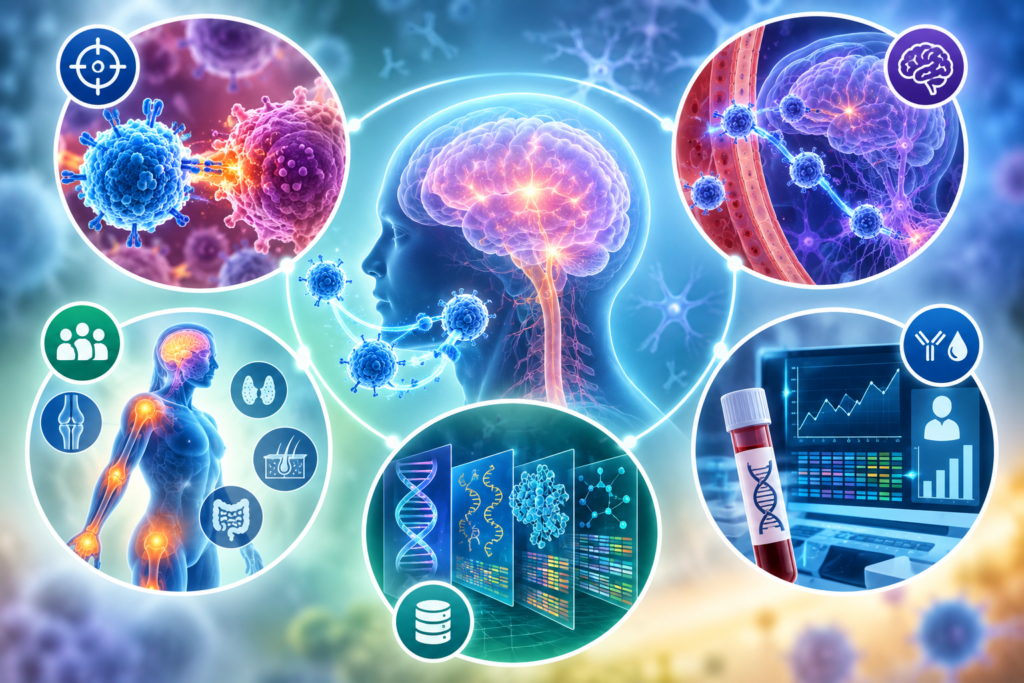
- Targeting a previously difficult immune compartment
Anti-BCMA CAR-T therapy provides a strategy for targeting plasma cells that may be missed by conventional CD20-directed treatment.
- CNS-directed immune modulation
Demonstrating CAR-T cell presence and persistence in CSF is important because progressive MS involves immune activity within the CNS.
- Biomarker-guided monitoring
OCBs, KFLC, NfL and inflammatory cytokines could potentially become useful tools for monitoring biological response in future studies.- Multi-omics can guide therapy development
Single-cell sequencing revealed how CAR-T cells behave differently in blood, bone marrow and CSF. This could help researchers optimize future cellular therapies for CNS autoimmune diseases.
- Potentially broader autoimmune applications
CAR-T cells could be adapted beyond cancer treatment for autoimmune diseases. The researchers had previously investigated anti-BCMA CAR-T therapy in neuromyelitis optica spectrum disorder, providing a broader foundation for this therapeutic strategy.
The Future of CAR-T Therapy in Progressive MS
CAR-T therapy aims to remove specific pathogenic immune-cell populations and potentially reset the immune system. The research on anti-BCMA CAR-T therapy in progressive multiple sclerosis represents an important step in the development of cellular immunotherapy for neurological autoimmune disease.
Anti-BCMA CAR-T cells were successfully engineered to penetrate the blood-brain barrier and targets the plasma cells, decreasing the intrathecal immune markers and microglial activation
If larger clinical trials with larger cohorts, longer follow-up and more detailed mechanistic studies confirm these findings, future research could explore whether anti-BCMA CAR-T therapy can produce durable disease control, reduce disability progression and potentially alter the biology of “smoldering” MS.
Another important consideration is that lymphodepleting chemotherapy may have contributed to short-term effects. This possibility can be acknowledged, although drug-free remission would be unlikely to result from lymphodepletion alone.
For progressive MS, where therapeutic options remain limited, this research opens an intriguing new chapter in precision cellular immunotherapy.