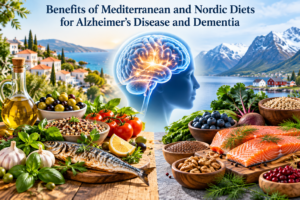
Scientists find Benefits of Mediterranean and Nordic Diets for Alzheimer’s Disease and Dementia
Current statistics on Alzheimer & Dementia
Alzheimer’s disease (AD) is a progressive brain disorder that primarily affects memory, thinking, learning and eventually the ability to perform everyday activities. It is the most common form of dementia, accounting for an estimated 60–70% of dementia cases. Dementia itself is not a single disease; it is an umbrella term describing a group of conditions that damage brain function, including Alzheimer’s disease, vascular dementia and dementia with Lewy bodies.
The World Health Organization (WHO) statistics states that 57 million people were living with dementia worldwide in 2021, with more than 60% living in low- and middle-income countries. Nearly 10 million new cases occur every year, making dementia a major cause of disability and dependency among older adults and the seventh leading cause of death globally.
Alzheimer’s can progressively affect:
- Independence
- Communication
- Decision-making
- Mobility and
- Relationships with dear ones
Early symptoms may include:
- Forgetfulness,
- Difficulty finding words and problems
- Managing familiar daily tasks.
As the disease advances, patients may require assistance with personal care, eating, movement and safety. As the disease progresses, the burden extends beyond patients where families and caregivers often face emotional stress, social isolation, physical demands and financial pressures.
Globally, dementia cost economies an estimated US$1.3 trillion in 2019, with approximately half attributed to informal care provided by family members and friends.
Although genetics and ageing play important roles, researchers are increasingly examining modifiable lifestyle factors, including diet, physical activity and overall dietary patterns, that may influence cognitive health. Among these, the Mediterranean diet (MD) has received considerable scientific attention, while the Nordic diet (ND) is emerging as a potentially relevant dietary pattern for brain health.
Researchers from The Cyprus Institute of Neurology and Genetics, examined evidences published between 2006 and 2024, investigating Mediterranean and Nordic dietary adherence, dietary intake, extra virgin olive oil (EVOO), and their relationships with cognitive function, dementia and Alzheimer’s disease. The Mediterranean diet generally emphasizes vegetables, fruits, nuts, seeds, legumes and whole grains, together with regular fish and seafood. Extra virgin olive oil is a major source of dietary fat, while red meat and confectionery are consumed less frequently.
The Nordic diet shares several characteristics with the Mediterranean pattern. It emphasizes vegetables, fruits and berries, fish and whole grains, particularly rye, oats and barley, while rapeseed oil is an important fat source.
This similarity is important from a practical perspective: the findings suggest that a brain-supportive dietary pattern doesn’t necessarily have to reproduce one geographical cuisine exactly. Different cultures can potentially emphasize comparable principles—more plant foods, whole grains, legumes, nuts and fish and fewer highly processed foods.
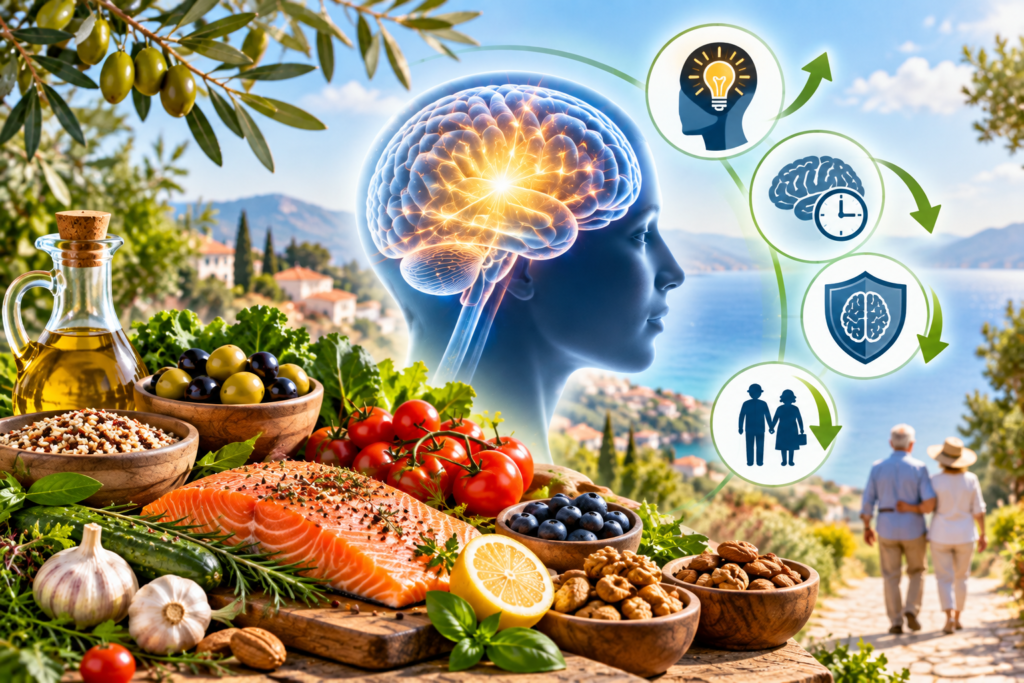
How does Mediterranean and Nordic Diets impact health?
- Mediterranean diet adherence is frequently associated with better cognition
Many studies reported that higher adherence was associated with:
- Better cognitive performance
- Slower cognitive decline
- Lower risk of poor cognition
- Reduced dementia incidence in some populations
A longitudinal study in Greece, showcased that individuals with higher Mediterranean diet adherence had a substantially lower risk of dementia compared with those with lower adherence.
Some studies, however also report no statistically significant association between Mediterranean diet adherence and cognitive outcomes
- Extra virgin olive oil emerged as an important research component
In one of the randomized controlled research, Mediterranean diets supplemented with EVOO were associated with improvements in selected cognitive measures compared with control diets. One long-term intervention also reported better performance in memory and other cognitive tests and lower odds of mild cognitive impairment in the EVOO group. These findings make EVOO particularly interesting for future dietary research. Nevertheless, EVOO cannot be established as a treatment for Alzheimer’s disease.
- Whole foods repeatedly appeared in the evidence
Legumes and nuts: Higher intake is associated with better global cognition and specific cognitive domains.
Fruits and vegetables: Greater consumption is linked with lower risk of cognitive impairment or dementia-related outcomes.
Fish and omega-3 fatty acids: Additional fish intake is reported to improve cognitive scores and increased omega-3-related biomarkers.
Whole grains: Higher consumption is associated with better cognitive performance in some population-based research.
These findings point toward a dietary-pattern approach rather than dependence on a single “brain food.
What About the Nordic Diet?
The Nordic diet is particularly interesting because it shares many characteristics with the Mediterranean diet while using foods traditionally available in Northern Europe.
Studies suggests that Nordic diet adherence may be associated with improved cognitive outcomes.
However, limited number of studies means that stronger conclusions cannot yet be drawn.
More long-term and well-designed Nordic diet studies are needed to determine whether the observed associations are consistent across populations.
Ways to increase consumption of Mediterranean food
The research identifies modifiable dietary patterns that can be investigated and potentially incorporated into healthy ageing strategies.
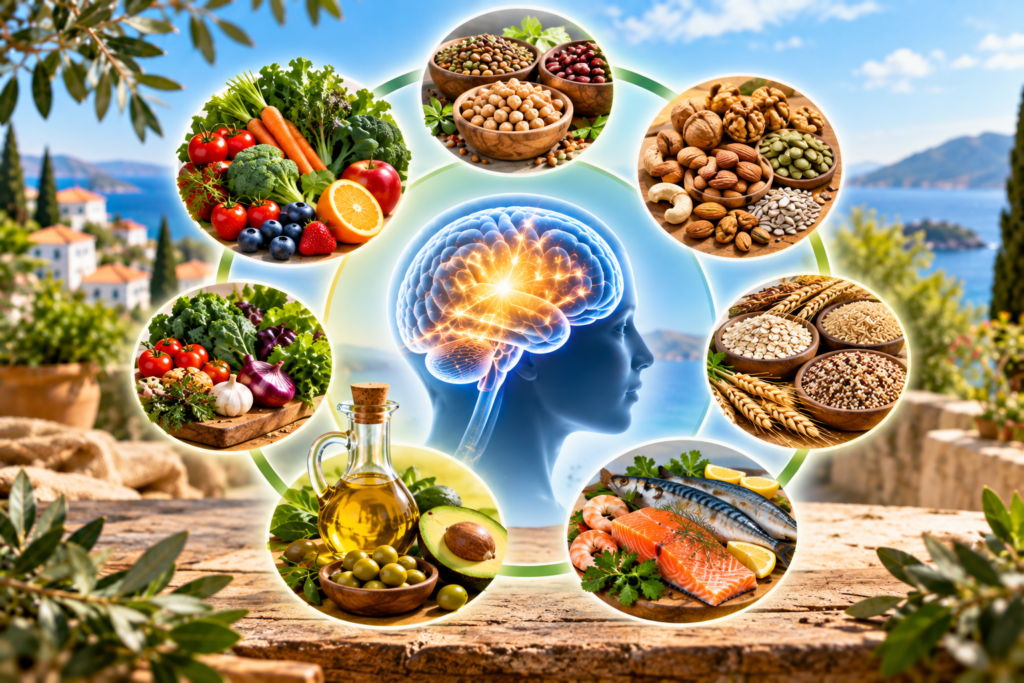
Based on the evidences, practical dietary research should focus on increasing:
- Vegetables and fruits
- Legumes
- Nuts and seeds
- Whole grains
- Fish and seafood
- Minimally processed foods
- Healthy unsaturated fats
At the same time, dietary patterns can be evaluated for their overall balance rather than focusing excessively on individual ingredients.
Five Mediterranean-style recipes adapted for Indian kitchens
Given are the Mediterranean recipes using ingredients that are readily available in India, emphasizing on use of vegetables, legumes, whole grains, nuts, seeds, fish where appropriate, and healthy unsaturated fats such as extra virgin olive oil.
- Mediterranean Moong Dal & Vegetable Bowl
Ingredients:
Moong dal, spinach, tomato, cucumber, carrot, onion, lemon, coriander, cumin, black pepper and extra virgin olive oil.
Method: Cook moong dal until soft. Lightly sauté spinach and tomato in a small amount of olive oil with cumin. Combine with chopped cucumber, carrot and onion. Finish with lemon juice, coriander and black pepper.
Why it fits: Combines legumes and vegetables with healthy olive oil.
- Indian Mediterranean Chickpea Salad
Ingredients:
Boiled chickpeas, cucumber, tomato, bell pepper, onion, parsley/coriander, roasted walnuts, lemon juice and extra virgin olive oil.
Method: Mix all ingredients and dress with lemon juice, olive oil, black pepper and a little cumin.
Tip: Add pumpkin or sunflower seeds for extra texture.
Why it fits: Rich in legumes, vegetables, nuts and healthy fats.
- Vegetable & Barley Khichdi
Ingredients:
Pearl barley, moong dal, carrots, beans, peas, spinach, tomato, turmeric, cumin, garlic and extra virgin olive oil.
Method: Cook barley, dal and vegetables together until soft. Temper lightly with cumin and garlic in olive oil. Keep the consistency slightly moist rather than making it very rich.
Why it fits: Provides whole grains, legumes and vegetables in a familiar Indian format.
- Mediterranean-Style Grilled Fish with Indian Herbs
Ingredients:
Rohu, Indian salmon (rawas) or another locally available fish, lemon, garlic, coriander, black pepper, turmeric and extra virgin olive oil.
Method: Marinate the fish with lemon, garlic, coriander, pepper and a small amount of turmeric. Brush lightly with olive oil and grill or bake. Serve with a large salad of cucumber, tomato, carrots and leafy greens.
Why it fits: Combines fish, vegetables and healthy unsaturated fat.
- Oats, Walnut & Berry Breakfast Bowl
Ingredients:
Rolled oats, unsweetened curd or yogurt, seasonal berries or pomegranate, apple/guava, walnuts, chia or flax seeds and cinnamon.
Method: Mix oats with unsweetened yogurt and allow them to soften. Add chopped fruit, walnuts and seeds before serving.
Indian alternatives: Use guava, pomegranate, papaya or seasonal local fruit instead of imported berries.
Future Insights
Mediterranean and Nordic diets have overlapping principles but different culturally familiar foods and fat sources. This may allow dietary interventions to be adapted to regional food availability and cultural preferences.
For researchers and healthcare systems, the findings could support further investigation into nutrition-based dementia-risk reduction programs, dietary assessment tools, lifestyle interventions and personalized nutrition approaches.
The findings should not be interpreted as evidence that changing diet can prevent, cure or reverse Alzheimer’s disease. However, the healthy dietary patterns rich in plant foods, whole grains, legumes, nuts, fish and unsaturated fats warrant continued investigation as part of broader strategies for healthy ageing and dementia-risk reduction.