Millets as a Dietary Supplement During Chemotherapy: Supporting Digestive and Immune Health
Effects of Chemotherapy
Chemotherapy can be life-saving, but its side effects can make treatment physically and emotionally challenging. Nausea, vomiting, fatigue, gastrointestinal problems, loss of appetite, oral ulcers, immune suppression and changes in bone and metabolic health can affect nutrition and quality of life and in severe cases may interfere with treatment.
A systematic literature study conducted by Tavhare S. D. in the Journal of Ayurveda and Integrative Medicine examined whether millets could serve as a dietary supplement for managing chemotherapy-induced side effects. Rather than proposing millets as a replacement for cancer treatment, the paper explores their nutritional and pharmacological properties as a possible adjuvant dietary strategy.
The findings suggest that incorporating appropriate millet-based foods into a cancer patient’s diet may offer nutritional advantages, although stronger clinical trials are needed to establish their effectiveness specifically against chemotherapy side effects.
Millets as Dietary Supplement During Chemotherapy
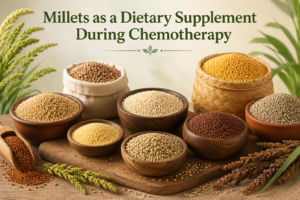
Millets are nutrient-dense grains containing varying amounts of dietary fiber, minerals, vitamins, amino acids and phytochemicals. Millets includes:
- Finger millet
- Foxtail millet
- Pearl millet
- Sorghum
- Barnyard millet
- Little millet
- Kodo millet and others
Evidences highlights properties of millets including antioxidant, anti-inflammatory, gastroprotective, lipid-lowering, hypoglycemic and immunomodulatory potential. These characteristics are potentially relevant during cancer treatment because adequate nutrition is essential when patients are dealing with reduced appetite, gastrointestinal symptoms, muscle loss or altered metabolism.
However, the practical objective should be to use millet as part of an individualized diet, rather than assuming that one grain is appropriate for every patient.
Nutritional and Dietary Benefits of Millets for Cancer Patients
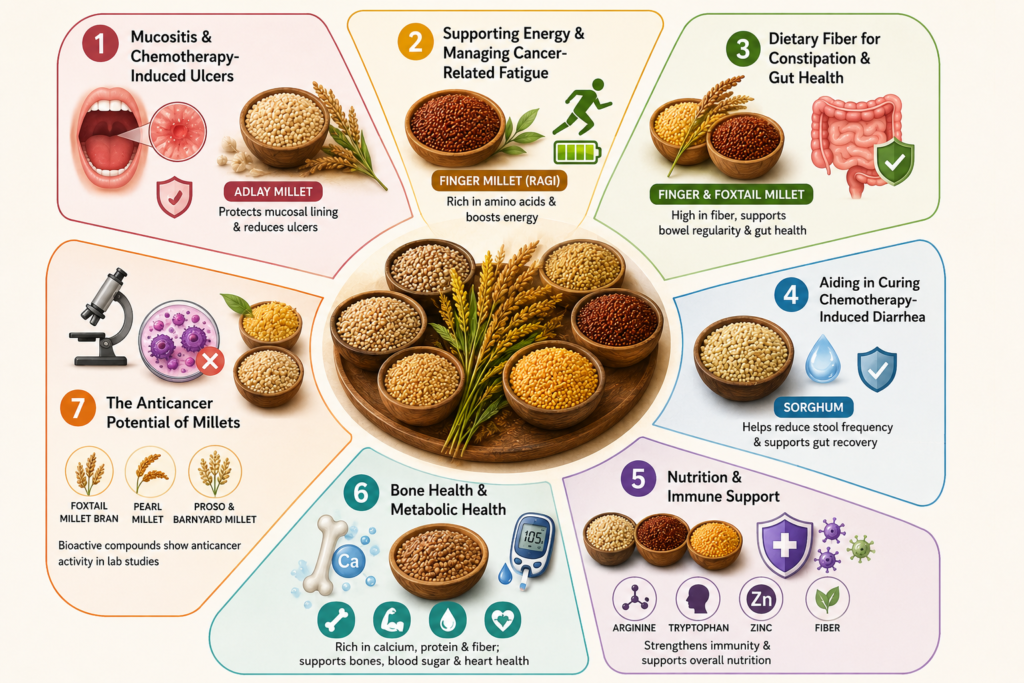
- Mucositis and Chemotherapy-Induced Ulcers
Oral mucositis is a particularly troublesome complication of cancer treatment. Chemotherapy-induces oxidative stress and cellular damage that can contribute to inflammation, ulceration and disruption of the mucosal lining.
Studies identifies potential gastroprotective properties in adlay millet, linked to phenolic antioxidants and other bioactive compounds. Combination supplementation of foxtail millet and adlay are associated with reduced stress-induced ulcers by imparting anti-inflammatory activity due to their polyphenol contents.
- Supporting Energy and Managing Cancer-Related Fatigue
Cancer-related fatigue is more than ordinary tiredness. Chemotherapy-related fatigue causes weakness and loss of skeletal muscle mass and hence require nutritional support.
Finger millet (Ragi) is highlighted for its amino-acid content, including tryptophan, isoleucine, methionine, valine and threonine. Methionine in Ragi is also involved in glutathione production, an important antioxidant system in the body.
- Dietary Fiber for Constipation and Gut Health
Constipation is another common concern during cancer treatment. Because millets are generally fiber-rich, they may help support bowel regularity.
Finger millet and foxtail millet, in particular, is a good source of dietary fibre and millet-based recipes can provide substantial fibre.
Dietary fibre can be fermented by intestinal microbes, producing short-chain fatty acids such as acetate, propionate and butyrate. These compounds have important roles in intestinal physiology.
- Aiding in curing Chemotherapy-Induced Diarrhea
Chemotherapy-induced diarrhoea can cause dehydration and electrolyte disturbances and may interfere with cancer treatment.
Studies finds Sorghum useful for potentially reducing stool frequency. Research suggests that fermentation of millet bran can increase phenolic compounds, flavonoids and soluble dietary fibre.
However, for active diarrhoea, dietary changes should be individualized, particularly because some high-fibre foods may aggravate symptoms in certain patients.
- Nutrition and Immune Support
Chemotherapy can suppress immune function, increasing vulnerability to infection.
Several millet-associated nutrients that may contribute to normal immune function, including arginine, glutamine, tryptophan, zinc and dietary fibre.
Finger millet is described as a source of arginine, while pearl, finger and foxtail millets contain tryptophan. Zinc is found in kodo millet, pearl millet and sorghum. The millet fibres and polyphenols support gut microbiota and intestinal immune function.
Millets can “boost immunity” enough to counter chemotherapy, but that nutrient-dense foods can help patients meet nutritional needs during treatment.
- Bone Health and Metabolic Health
Bone loss can become an important concern for some cancer patients.
Finger millet receives particular attention because of its calcium, phosphorus, protein and amino-acid content.
Millets are also known for their potential metabolic advantages. Their fibre and slowly digestible carbohydrates may help support blood-glucose management, while studies of specific millet varieties have reported favourable effects on glucose and lipid-related measures.
This may be particularly relevant for patients who also have diabetes or metabolic disorders, although dietary plans should be individualized.
- The Anticancer Potential of Millets
Studies demonstrate the anti-carcinogenic effects of Foxtail millet bran in colon cancer cells. In addition, phenolic compounds from pearl millet have shown inhibitory activity against the HT-29 colon cancer cell line, while vanillin extracted from Proso milletand Barnyard millet has demonstrated effects on cancer-cell proliferation and apoptosis in laboratory studies.
However, cell-culture and animal results are not equivalent to evidence that eating millet treats or prevents cancer in humans.
One Millet Does Not Fit Everyone
From an Ayurvedic perspective, considering factors such as digestive capacity, constitution, age, season and other individual characteristics is important. Many millets are relatively high in fibre and may be difficult to digest for some people. Ayurveda suggests that millets are generally Ruksha (dry), recommending their use with foods such as ghee or oil; Finger millet is noted as an exception because it is considered Snigdha (unctuous).
Processing may diminish some of the nutritional advantages of whole or less-refined millet. Dehulling, decortication, grinding and extrusion may reduce fibre, protein and micronutrient content in the millet-based diet.
It is therefore recommended to focus on appropriate variety, preparation method, portion size and individual tolerance rather than simply adding large quantities of millet to the diet.
How to consume Millets?
Many millets are relatively high in fiber and can be difficult to digest. Foxtail, kodo and proso millets are described as comparatively Guru (heavy to digest) in the Ayurvedic framework. Therefore, they may be more appropriate for individuals with good digestive capacity and can be incorporated into daytime meals.
For patients who can tolerate solid foods, appropriately prepared millet-based meals may provide nutrients while contributing potentially beneficial phytochemicals and fibre. However, during active oral mucositis, texture matters. Coarse, dry or abrasive foods can be difficult to tolerate. Therefore, soft preparations such as porridges may be more practical than dry millet products.
For patients experiencing constipation and who can safely increase fibre intake, millet-based foods may be incorporated alongside adequate fluid intake and other dietary recommendations.
However, increasing fibre is not automatically appropriate for every gastrointestinal symptom. Patients with severe diarrhoea, bowel obstruction, significant abdominal symptoms or specific treatment-related dietary restrictions should follow advice from their oncology and nutrition teams.
Practical ways to consume millets
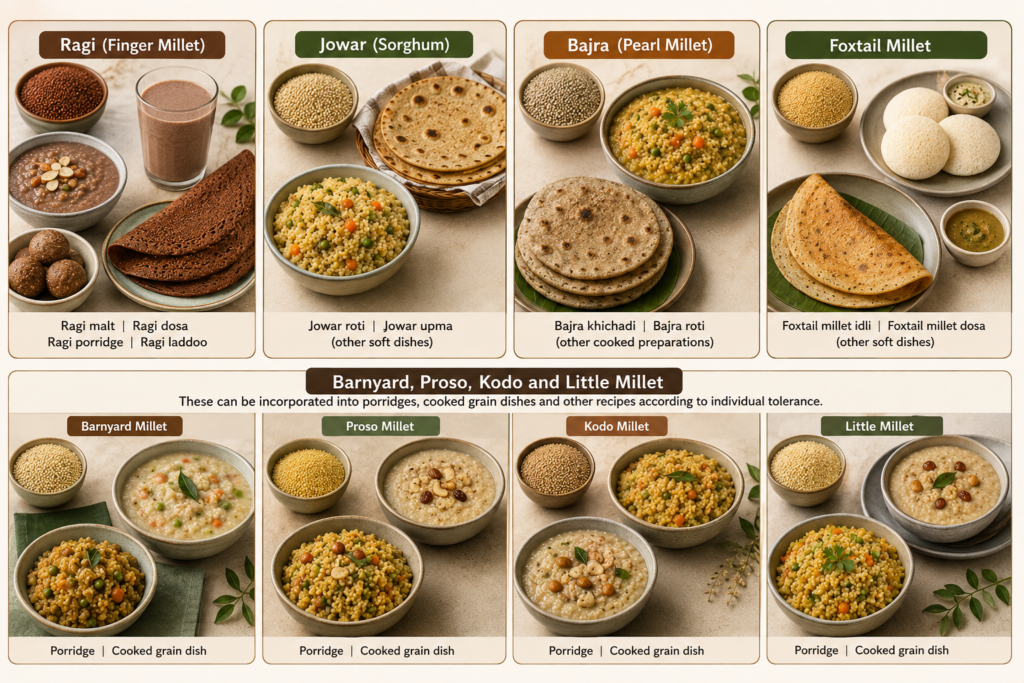
- Ragi (finger millet): Can be consumed as ragi malt, ragi dosa, porridge or laddoo. Ragi is known for its calcium, protein, fibre and amino-acid content, making it nutritionally relevant for patients experiencing fatigue or concerns related to bone health.
- Jowar (sorghum): Can be prepared as roti, upma or other soft dishes. It is rich in dietary fibre and gastrointestinal health.
- Bajra (pearl millet): Can be used in khichadi, roti and other cooked preparations. It provides fibre, minerals and antioxidant compounds.
- Foxtail millet: Can be prepared as idlis or dosa. Foxtail millet is relatively fibre-rich millet and has gastroprotective and antioxidant properties.
- Barnyard, Proso, Kodo and little millet: These can be incorporated into porridges, cooked grain dishes and other recipes according to individual tolerance.
Practical Insights
Millets have promising nutritional and functional properties that make them useful as an adjunct dietary option during chemotherapy. Their fibre, minerals, amino acids and phytochemicals provide plausible nutritional benefits relevant to constipation, fatigue, gastrointestinal health, immune function, bone health and metabolic control.
Evidences strongly suggests that not that millets cure or prevent chemotherapy side effects, but that appropriately selected millet-based foods may be a nutrient-dense component of supportive cancer nutrition.
For patients undergoing chemotherapy, millet should complement but should not replace oncological treatment and professional nutritional care. A registered dietitian or oncology nutrition specialist can help determine whether particular millet foods are appropriate, especially when nausea, mucositis, diarrhoea, constipation, diabetes, kidney problems or swallowing difficulties are present.