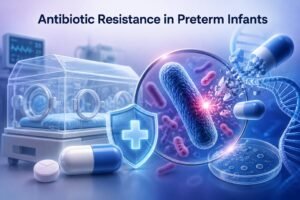
Early Antibiotic use increases Antibiotic Resistance in Preterm Infants
Early use of antibiotics in preterm infants
Preterm infants are particularly vulnerable to infection because their immune systems and intestinal microbiomes are still developing. Early-onset sepsis can occur during the first 72 hours of life due to major risk factors including premature delivery, prolonged rupture of membranes, maternal infection, and Group B Streptococcus colonization.
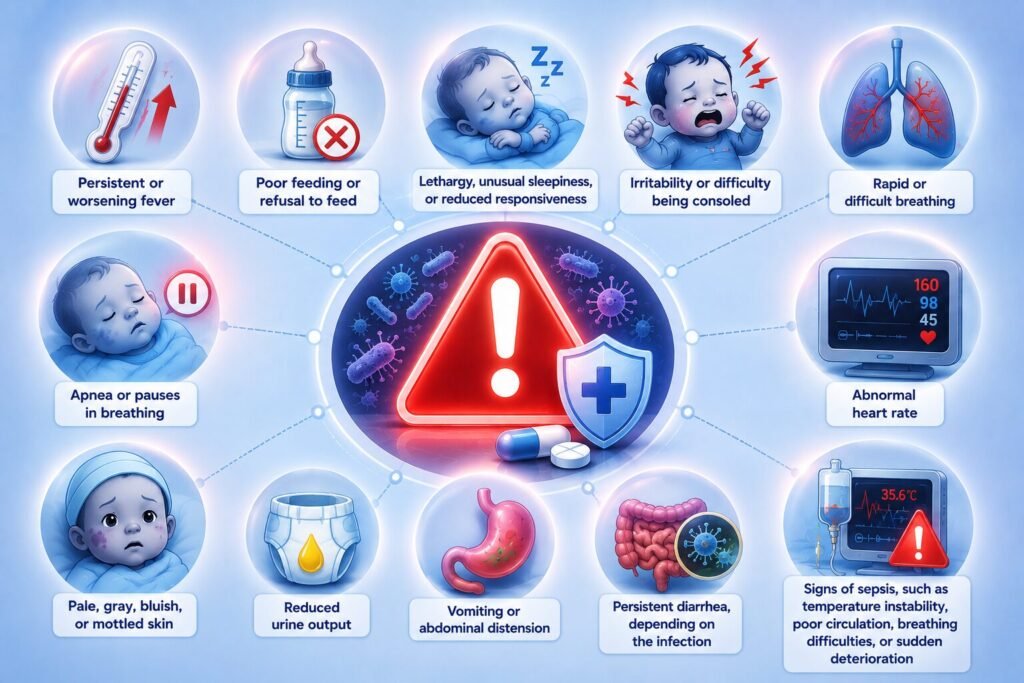
Early potential risk of sepsis in preterm newborns can be difficult to interpret due to overlapping symptoms including:
- Temperature instability — fever or, more commonly in very premature babies, unusually low temperature
- Poor feeding or feeding intolerance
- Lethargy — less active, unusually sleepy, or difficult to wake
- Irritability or changes in behavior
- Apnea — pauses in breathing or increased episodes of apnea
- Rapid, slow, or irregular breathing
- Increased oxygen requirement or worsening respiratory distress
- Abnormal heart rate — unusually fast or slow heart rate
- Pale, gray, bluish, or mottled skin
- Poor circulation or prolonged capillary refill
- Low blood pressure
- Abdominal distension, vomiting, or feeding intolerance
- Reduced urine output
- Hypoglycemia or hyperglycemia
- Sudden clinical deterioration
A serious infected infant may show only subtle changes, the signs such as apnea, feeding problems, temperature instability, and respiratory difficulties can result from prematurity itself and these can occur without sepsis.
To prevent a preterm infant from the fatal sepsis, clinicians frequently use empiric antibiotics when infection is suspected. However, due to this clinical dilemma, a substantial proportion of uninfected newborns also consequently receive the antibiotics.
Although antibiotics can be lifesaving when infection is present, but early exposure of these antibiotics may disrupt beneficial microbial colonization and create conditions favouring antibiotic-resistant organisms, presenting a difficult clinical balance.
Researchers from University of Florida, USA investigated this problem by examining antibiotic resistance genes (ARGs) and microbial communities in preterm infants. Their research found a surprisingly high burden of resistance genes even among infants who had not received direct antibiotic treatment. The findings have important implications for neonatal antibiotic stewardship, NICU practices, maternal health management, and monitoring of preterm infants.
Why Antibiotic Resistance in Preterm Infants Matters
A retrospective metagenomic analysis was conducted with 30 preterm neonates, born at less than 33 weeks of gestation. Out of these 16 infants received antibiotic treatment, while 14 remained antibiotic-free. Samples of these infants were collected at two time points:
- Meconium, representing the earliest intestinal microbial environment after birth
- Stool collected before hospital discharge, representing a later stage of microbiome development
The study used metagenomic sequencing with Oxford Nanopore’s MinION which is a portable next-generation sequencing (NGS) platform capable of generating DNA sequence data in real time.
Post sequencing, antibiotic resistance genes were identified against the Comprehensive Antibiotic Resistance Database (CARD), while microbial taxonomic composition was assessed using NCBI RefSeq-based profiling.
The researchers also used combination of metagenomics, resistome profiling, microbiome analysis, clinical metadata, and statistical modelling, provinding a multidimensional picture of antibiotic resistance in these vulnerable infants.
Identification of antibiotic resistance genes in preterm infants
The study identified 175 unique antibiotic resistance genes across 15 drug classes:
- Beta-lactam resistance was dominant, accounting for 3% of the identified ARGs, followed by tetracycline resistance at 9.7% and aminoglycoside resistance at 6.3%.
- Approximately 4% of the ARGs persisted regardless of direct neonatal or intrapartum antibiotic exposure.
- As observed, among 79 % infants, ARG detection increased as infants aged.
Early antibiotics influenced specific resistance patterns
Although antibiotic treatment did not significantly alter the number of ARGs detected in meconium, it influenced the later stool resistome. Infants receiving antibiotics showed increased abundance of genes, particularly:
- Beta-lactam resistance genes, particularly TEM-4.
- Tetracycline resistance gene tetB(P)
Notably, the genes oqxA and oqxB were detected in 97% of the infants and increased in prevalence and abundance with age.
The results suggest that early antibiotic exposure may not simply increase the number of resistance genes. Instead, it may reshape which resistance mechanisms become more prominent within the developing gut ecosystem.
Antibiotics also change bacterial survival strategies
The study went beyond identifying resistance genes and examined functional changes in microbial metabolism. As observed:
- Antibiotic-treated infants showed greater abundance of pathways associated with cyclic di-GMP turnover, proline synthesis, sugar metabolism, lipoic acid metabolism, and energy generation.
- These pathways contribute to bacterial adaptation, stress tolerance, adhesion, biofilm formation, and survival under unfavourable conditions, interpreting that antibiotic exposure may influence not only which resistance genes are present, but also how bacteria adapt to antibiotic-related stress.
Maternal and Pregnancy Factors Also Matter
Neonatal antibiotic resistance cannot be viewed solely as a consequence of antibiotics administered to the infant.
- Prolonged rupture of membranes (more than 18 hours) is associated with greater ARG diversity in stool. Among infants exposed to prolonged membrane rupture, 99% showed an increase in beta-lactam-associated ARGs.
- Maternal antibiotic exposure during pregnancy and antibiotic administration during delivery also contributed to variations in the infant resistome.
The findings therefore emphasize the importance of considering the mother–infant microbial continuum when addressing neonatal antimicrobial resistance.

Practical Implications for NICUs
The study highlights the need for more precise antibiotic decision-making.
Several practical strategies emerge:
- Strengthen antibiotic stewardship.
Antibiotics should be initiated when clinically justified and reassessed promptly as culture results, clinical status, and infection risk become clearer.
- Consider maternal and intrapartum exposures.
A newborn’s resistance profile may be influenced by antibiotics received before or during delivery.
- Improve antenatal risk assessment.
Prolonged rupture of membranes and uncertain maternal infection status should receive careful attention.
- Strengthen GBS screening.
The researchers observed that many mothers had unknown GBS status, highlighting the value of timely screening and appropriate prevention strategies.
- Monitor the developing microbiome and resistome.
Future neonatal care could increasingly incorporate microbiome-informed approaches to understand how interventions affect microbial development.
- Avoid viewing resistance as an infant-only problem.
Resistance prevention requires coordinated maternal, neonatal, infection-control, and antimicrobial-stewardship strategies.
Future Insights
Antibiotic exposure during the earliest stages of life can have effects extending beyond immediate infection management. The neonatal gut is a rapidly developing ecosystem, and interventions during this period may influence microbial diversity, resistance genes, and bacterial survival mechanisms. In addition, Maternal antibiotic use, prolonged membrane rupture, microbial transmission, and other perinatal factors, can shape the neonatal resistome.
In future, a larger multicenter study may confirm and validate the described association between antibiotic resistance and their use in preterm infants. The finding further reinforces the importance of balancing infection prevention with responsible antibiotic use.
Protecting vulnerable preterm infants requires not only rapid treatment of genuine infections but also careful antibiotic stewardship, improved maternal risk assessment, and continued research into the developing neonatal microbiome and resistome.