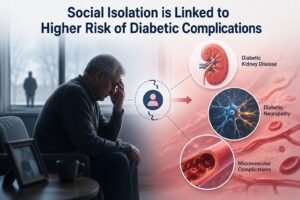
Social isolation is linked to higher risk of complications in patients with Type 2 Diabetes
Social Isolation and Type 2 Diabetes
Management of Type 2 Diabetes Mellitus (T2DM) has traditionally focused on blood sugar control, blood pressure, cholesterol management, healthy eating, and physical activity. However, emerging research suggests social well-being of the diabetic patient as an another important and often overlooked risk factor.
A recent large-scale prospective study by the researchers of Guangzhou Medical University, China have found that people with T2DM who experience social isolation or loneliness have a significantly higher risk of developing diabetic microvascular complications. Even more striking, these social factors were found to be as influential as several traditional lifestyle risk factors, including smoking, physical inactivity, and elevated blood pressure.
The research highlights an important shift in diabetes management, suggesting that strengthening social connections may become an integral part of preventing diabetes-related complications.
Why strong social connections matter more than ever
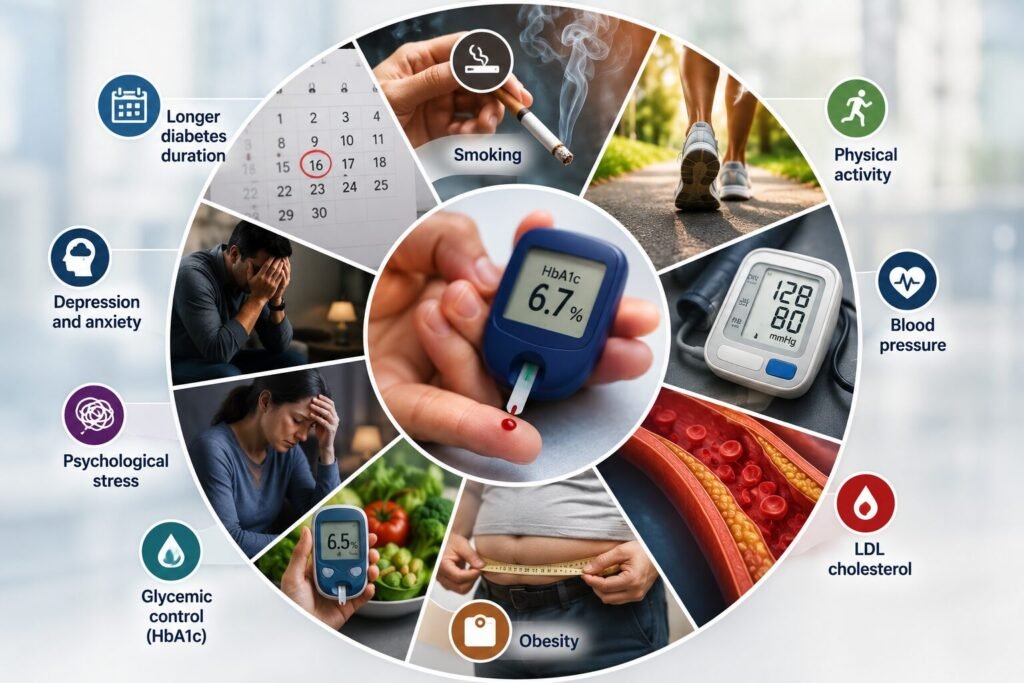
Through the study risk of diabetic microvascular complications (DMCs) among people living with Type 2 Diabetes were studied in relation to social isolation and loneliness. Also, importance of these social factors were compared with conventional diabetes risk factors such as:
- Smoking
- Physical activity
- Blood pressure
- LDL cholesterol
- Obesity
- Glycemic control (HbA1c)
Measuring Social Isolation and Loneliness
Social Isolation
Social isolation was assessed using three questions regarding:
- Household size
- Frequency of visits with family and friends
- Participation in weekly social or leisure activities
On this basis, study participants were categorized into:
- Least isolated
- Moderately isolated
- Most isolated
Loneliness
Loneliness was measured using two questions:
- Do you often feel lonely?
- Do you have someone you can confide in?
Participants meeting the criteria were classified as experiencing loneliness.
Social isolation increased diabetes complication risk
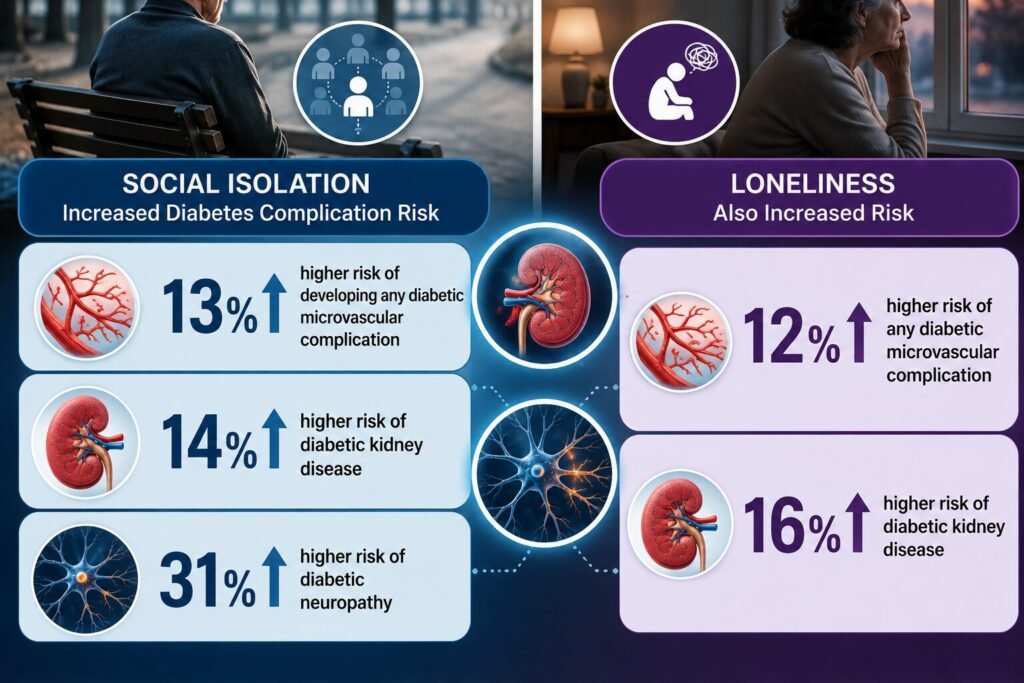
During the study, participants who were recognised to be most socially isolated had:
- 13% higher risk of developing any diabetic microvascular complication
- 14% higher risk of diabetic kidney disease
- 31% higher risk of diabetic neuropathy
Loneliness also increases Diabetes complication risk
On the other hand, people experiencing loneliness had:
- 12% higher risk of any diabetic microvascular complication
- 16% higher risk of diabetic kidney disease
The association between loneliness and diabetic retinopathy or neuropathy was found to be weaker after full adjustment, but the overall relationship with diabetic complications remained significant.
Social factors were comparable to traditional risk factors
Most importantly, social isolation and loneliness contributed to diabetes complication risk at levels comparable to established clinical and lifestyle factors, including smoking, physical activity and elevated systolic blood pressure. These outcomes concluded that social isolation deserves recognition as a potentially modifiable risk factor alongside traditional diabetes management priorities.
Why do social isolation and loneliness increase risk?
Unhealthy lifestyle behaviours explain a substantial proportion of the increased risk.
People experiencing social isolation are more likely to:
- Smoke
- Spend more time watching television
- Sleep less
- Engage in less physical activity
- Have poorer dietary habits
Progressing with these conditions, people experience loneliness adding to:
- Psychological stress
- Depression and anxiety
- Longer diabetes duration
- Poorer glycemic control
These interconnected behavioural and psychological pathways likely contribute to worsening vascular health over time.
Importance of monitoring and counselling for social wellbeing of Diabetic patients
- Screen for social isolation
Healthcare professionals should routinely ask patients with Type 2 Diabetes about:
- Living arrangements
- Social support
- Feelings of loneliness
- Opportunities for regular social interaction
Simple screening questionnaires could help identify high-risk individuals.
- Expand diabetes care beyond medical management
Current diabetes care often emphasizes medication, blood glucose monitoring, diet, and exercise. However, as per the study findings, incorporating psychosocial assessments and support into routine diabetes management may improve long-term outcomes.
- Encourage community-based interventions
Implementation of programs that reduce social isolation may complement traditional diabetes care. Examples include:
- Peer support groups
- Diabetes education classes
- Community exercise programs
- Volunteer activities
- Social prescribing initiatives
Such interventions can improve both emotional well-being and diabetes self-management.
- 4. Focus on Lifestyle Behaviors
Interventions promoting physical activity, healthy eating, smoking cessation, and better sleep may be particularly beneficial for socially isolated individuals.
Future Insights
Diabetes care must extend beyond glucose control to include assessment of social well-being. By identifying and addressing social isolation alongside established risk factors, healthcare providers may improve patient outcomes and help reduce the long-term burden of diabetes-related complications. Through this study, it is evident that strengthening social connections represents a promising and potentially modifiable strategy for reducing the risk of diabetic microvascular disease.