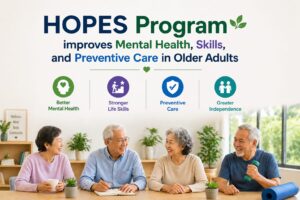
HOPES Program Improves Mental Health Skills and Preventive Care in Older Adults: What the Study Found?
Older adults living with severe mental illness often face challenges that extend beyond psychiatric symptoms. At an older age, the vulnerability increases due to extreme environmental conditions. In addition, difficulties with social interaction, independent living, community participation, and managing physical health can affect their long-term well-being and ability to live independently.
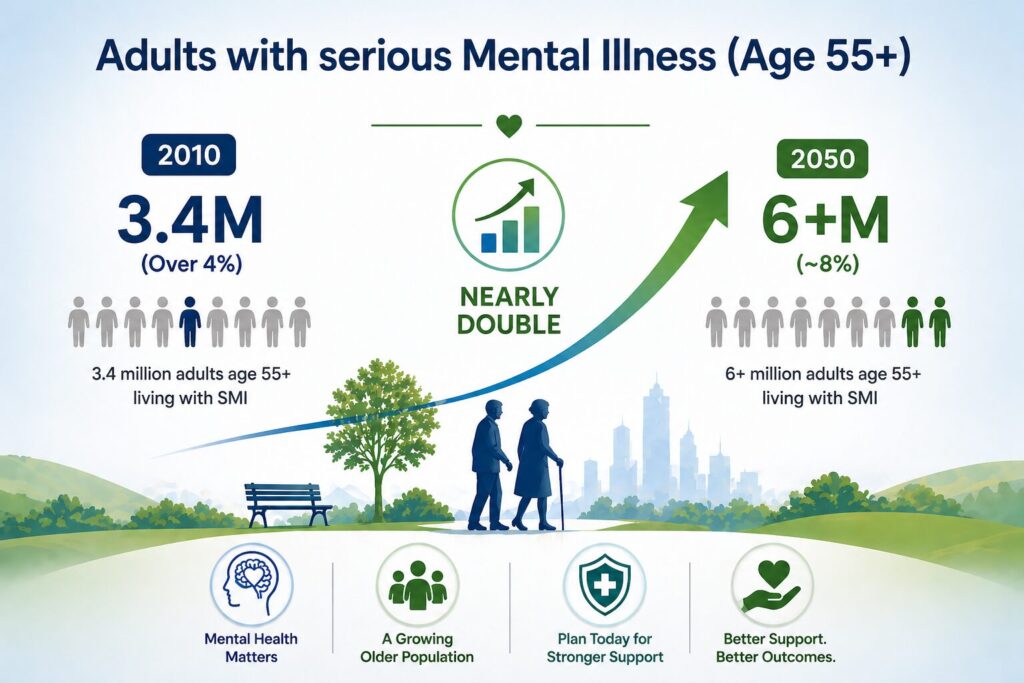
Health care systems are facing challenges because of the ageing global population with severe mental illness. Reports suggest that about 3.4 million adults suffer from serious mental illness, and these numbers are projected to double in the coming couple of decades.
The major questions that need addressal is, how to effectively support older adults living with serious mental illness (SMI)? Researchers from the Department of Psychiatry at New Hampshire developed the Helping Older People Experience Success (HOPES) program to combine psychosocial skills training with preventive healthcare management. They conducted a randomised trial to study the long-term outcomes of Integrated Skills Training and Preventive Health Care in older patients. Their findings provide valuable insights into a promising approach known as the HOPES program.
What Is the HOPES Program?
HOPES (Helping Older People Experience Success) is an integrated intervention designed to improve both psychosocial functioning and preventive healthcare engagement among adults aged 50 and older with serious mental illness.
The effectiveness of the HOPES program was evaluated in a randomized controlled trial involving 183 adults aged 50 years and older with severe schizophrenia-spectrum disorders and severe mood disorders.
The traditional approaches, like combined cognitive behavioural therapy and social skills training (CBSST) and functional adaptation skills training (FAST), treat mental and physical health separately. HOPES, on the other hand, is a more efficient method that combines:
- Social and life skills training
- Community-based practice activities
- Nurse-led preventive healthcare coordination
This dual approach addresses the real-world challenges older adults face daily.
Participants were assessed at baseline and during follow-up to determine whether the intervention improved social skills, psychosocial and community functioning, self-efficacy, psychiatric symptoms, and aspects of preventive healthcare.
HOPES Programme structure
HOPES programme consists of 12 months of weekly skill-training classes, twice-monthly community practice trips, and monthly nurse preventive health care visits, followed by a 1-year maintenance phase of monthly sessions that use role-play and real-life simulations. The training session accommodates 8-10 participants who attend two sessions on the same day, a 90-minute morning session focused on a specific skill and a 60-minute afternoon review session to consolidate the selected skill using role-play exercises, with a lunch break in between, encouraging socialization.
- Skills Training Component
The sessions are organised in seven modules that cover:
- Communication skills
- Building relationships
- Healthy Living
- Taking out Leisure Time
- Medication management
- Navigating healthcare systems
- Regular visits to the Health Care systems
- Preventive Healthcare Component
This component consists of monthly meetings with a nurse who evaluates patients’ health care needs, which focuses on:
- Health screenings (e.g., vision, hearing, cancer)
- Advance care planning
- Doctor’s visits
- Maintenance Phase
- Monthly booster sessions during the second year
- Reinforced learned skills and behaviours
- Usual treatment
Participants continue to receive routine mental health services at all the sites, including:
- Pharmacotherapy
- Individual therapy
- Outreach by non-nurse clinicians
- access to rehabilitation services (eg, groups and psychoeducation)
Outcomes of HOPES Programme
Participants receiving HOPES showed greater improvements in several areas compared with those receiving treatment as usual:
- Improved Daily Living Skills
Participants in the HOPES program showed significant improvements in independent living skills, and these were persistent even after three years of the programme
- Increased Self-Efficacy
The participants, particularly suffering from mood disorders, reported confidence in the management of symptoms, handling social situations and living independently.
- Reduced Psychiatric Symptoms
HOPES intervention lowered negative symptoms, reduced overall psychiatric symptom severity, and showed a trend towards reduced depression.
- Better Preventive Healthcare Engagement
The participants were more likely to receive preventive healthcare assessments like eye exams, hearing tests, mammograms and PAP smears.
- Reduced Emergency and Hospital Use
HOPES Participants experienced fewer hospitalizations and reduced emergency room visits.
What Did Participants Receive Through the HOPES Program?
The HOPES intervention combined mental health skills training with healthcare management.
Participants received support in areas such as:
- Communication skills – learning strategies for effective social interaction.
- Building and maintaining relationships – developing skills for making and keeping friends.
- Leisure and community participation – encouraging engagement in meaningful social and recreational activities.
- Healthy living – addressing lifestyle behaviours relevant to physical and mental well-being.
- Medication management – improving skills related to the effective use of prescribed medications.
- Healthcare communication – helping participants prepare for and make the most of healthcare visits.
- Preventive healthcare and chronic disease management – working with healthcare professionals to identify health needs and set goals.
The intervention also included structured skills practice, role-playing, homework assignments, community-based activities, and individual health-management support.
The intensive phase involved regular skills training and healthcare management, followed by a maintenance phase designed to support continued use of these skills.
The HOPES program may be particularly relevant for older adults living with severe mental illness who experience difficulties with social functioning, community participation, health management, or independent living.
Its integrated approach may also be useful in community mental health settings where there is a need to address both psychiatric and physical health concerns.
However, the findings should not be generalized to all older adults. The study specifically evaluated people aged 50 years and older with severe mental illness, including schizophrenia-spectrum and severe mood disorders.
In addition, HOPES is a relatively intensive, structured intervention that requires trained staff and coordination between psychosocial rehabilitation and healthcare management. Future research and implementation studies can help determine how easily the program can be adapted to different healthcare systems and community settings.