Plant-Made Proteins: The Future of Sustainable Biopharmaceutical Production
A Sustainable Revolution in Biopharmaceutical Production
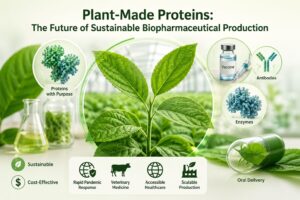
The pharmaceutical industry is constantly searching for faster, safer, and more cost-effective methods of producing therapeutic proteins. Plant-made proteins offer one of the most promising innovations as biological factories to manufacture high-value proteins for vaccines, antibodies, enzymes, and other pharmaceutical products.
Understanding Plant-Made Proteins
Plant-made proteins are recombinant proteins produced inside genetically engineered plants instead of traditional microbial or mammalian cell cultures.
These proteins include:
- Therapeutic antibodies
- Vaccines
- Growth factors
- Industrial enzymes
- Diagnostic proteins
- Veterinary medicines
Plants such as tobacco, rice, carrots, barley, maize, lettuce, and bananas are increasingly being engineered to produce these valuable biological products efficiently and safely.
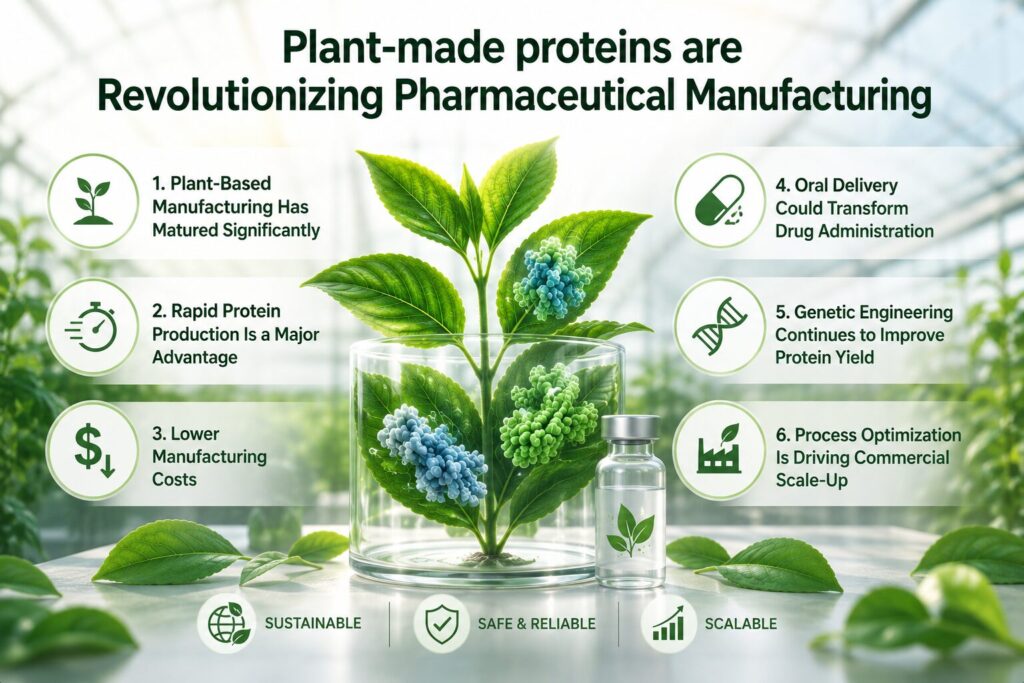
Plant-made proteins are Revolutionizing Pharmaceutical Manufacturing
- Plant-Based Manufacturing Has Matured Significantly
Plant-made pharmaceuticals have moved beyond experimental research into commercial reality. Several products have already reached clinical trials, while others have received regulatory approval.
Examples include:
- Elelyso® (taliglucerase alfa) for Gaucher disease
- Plant-produced influenza vaccines
- Ebola antibody therapies (ZMapp)
- Veterinary pharmaceuticals
- Research-grade recombinant proteins
These examples demonstrate that plant systems are no longer theoretical alternatives but commercially viable production platforms.
- Rapid Protein Production Is a Major Advantage
One of the most significant benefits identified is speed. Transient expression systems using Nicotiana benthamiana can produce gram-scale quantities of recombinant proteins within weeks, making them particularly valuable during disease outbreaks and public health emergencies. ZMapp, the experimental Ebola antibody cocktail, is a high-profile example of this rapid-response capability.
This rapid production cycle is difficult to match with conventional mammalian cell culture systems.
- Lower Manufacturing Costs
Plant-made proteins require:
- Lower capital investment
- Less expensive infrastructure
- Simpler cultivation methods
- Reduced contamination risks
- Lower operating costs
These advantages make plant-based manufacturing especially attractive for developing countries, where establishing traditional biopharmaceutical facilities can be prohibitively expensive.
- Oral Delivery Could Transform Drug Administration
One of the most innovative applications of plant-made proteins is bioencapsulation. Instead of purifying proteins into injectable drugs, therapeutic proteins can remain protected within plant cells. The plant cell wall acts as a natural capsule that shields proteins from degradation in the digestive system until they reach the gut.
Potential applications include:
- Oral vaccines
- Autoimmune disease therapies
- Allergy treatments
- Passive immunization
- Veterinary medicines
This approach could reduce manufacturing costs by minimizing downstream purification while improving patient convenience.
- Genetic Engineering Continues to Improve Protein Yield
Several strategies enhance recombinant protein production in plants, including:
- Host genome engineering
- CRISPR/Cas9 genome editing
- Protein storage optimization
- Reduction of endogenous storage proteins
- Improved glycosylation pathways
- Suppression of protein degradation
These advances increase protein yield, improve stability, and enhance the quality of plant-derived therapeutics.
- Process Optimization Is Driving Commercial Scale-Up
For successful commercialization of plant-made proteins, more advances are required, including:
- Design of Experiments (DoE)
- Process Analytical Technology (PAT)
- Scale-down process models
- Automation
- Continuous manufacturing
- Improved downstream purification
- Cost modelling
Together, these tools improve manufacturing efficiency and support the transition from laboratory research to large-scale pharmaceutical production.
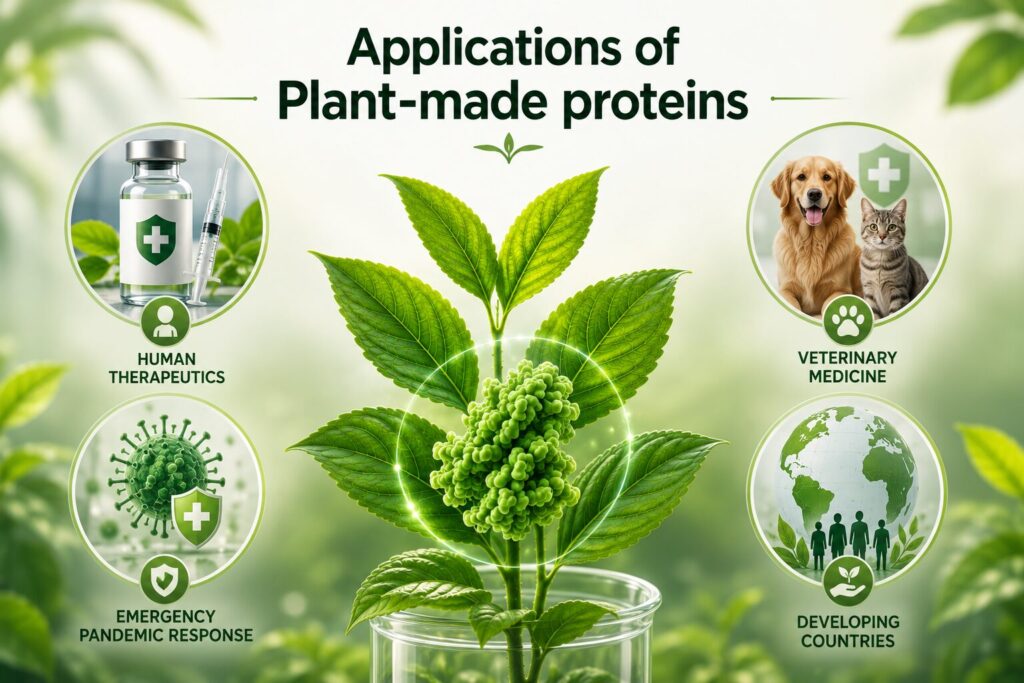
Applications of Plant-made proteins
Human Therapeutics
Plant-produced proteins are already being developed for:
- Gaucher disease enzyme replacement therapy
- Fabry disease
- Inflammatory bowel disease
- Influenza vaccines
- HIV antibodies
- Ebola treatments
Several candidates have progressed through clinical development, with some already approved or authorized for emergency use.
Veterinary Medicine
Plant-based systems also offer cost-effective solutions for animal health, including vaccines and oral antibody formulations. These approaches support efforts to reduce antibiotic use in livestock and align with the One Health initiative.
Emergency Pandemic Response
Because plants can rapidly produce recombinant proteins, they provide an important manufacturing platform during outbreaks of emerging infectious diseases.
This capability has already been demonstrated during influenza preparedness efforts and the Ebola outbreak.
Developing Countries
Plant-based manufacturing requires lower infrastructure investment than conventional biopharmaceutical facilities.
This opens opportunities for local production of medicines in resource-limited regions, improving access while reducing dependence on centralized manufacturing.
Challenges in application of plant-made proteins
Despite impressive progress, several barriers remain:
- Limited global manufacturing capacity
- Regulatory complexity
- Need for additional GMP-certified production facilities
- Standardization across plant production platforms
- Product-specific economic considerations
Addressing these challenges will be essential for broader adoption of plant-made pharmaceuticals.
Future Insights
With the continued advances in genome editing, protein engineering, manufacturing optimization, and regulatory acceptance are expected to accelerate commercialization. Technology has expanded the use of minimally processed plant tissues for oral and topical therapies, alongside conventional purified biopharmaceuticals, creating new opportunities for scalable and accessible medicine production.
By combining rapid production, lower infrastructure costs, scalable manufacturing, and novel delivery options such as bioencapsulation, plants offer a compelling alternative to traditional microbial and mammalian cell systems. As technological and regulatory advances continue, plant-based biopharmaceutical production is well positioned to play an increasingly important role in global healthcare and future pandemic preparedness.