Psilocybin-Assisted Therapy Delivers Lasting Mental Health Benefits for Cancer Patients
Cancer-Related Depression
Cancer affects more than physical health. The disease often takes a significant toll on mental well-being. Research has shown that approximately one in four cancer patients experiences depression. Depression and anxiety in cancer is associated with reduced quality of life, increased symptom burden, and potentially poorer treatment outcomes. While conventional antidepressants can provide some relief, their effectiveness in cancer populations has often been limited and may require long-term medication use. Despite the prevalence of these challenges, treatment options remain limited.
A 2-year study conducted by Sunstone Therapies in collaboration with Aquilino Cancer Center and University of Pennsylvania, evaluate whether a single therapeutic dose of psilocybin could produce sustained mental health benefits over a two-year period.
Psilocybin-assisted therapy
In the study psilocybin was integrated into a structured psychotherapeutic process. The patients who received the therapy had undergone:
- Group psychotherapy sessions
- Individual preparation sessions
- Dedicated therapist support using a 1:1 therapist-to-patient ratio
Among the participants who received single 25 mg dose of psilocybin received 2 group and 2 individual integration sessions over a period of 8 weeks.
These patients were assessed using Montgomery-Åsberg Depression Rating Scale (MADRS) to measure depression severity and Hamilton Anxiety Rating Scale (HAM-A) to evaluate anxiety symptoms.
Outcomes of Psilocybin-assisted therapy
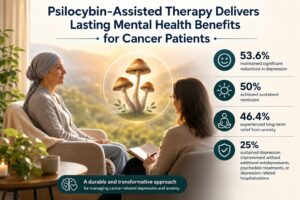
Upon follow-up for 2, 18 and 24 months, cancer patients suffering from major depressive disorder (MDD) displayed significant improvements, where:
- 3% of participants experienced significant reductions in depression symptoms after 2 months of treatment.
- Notably, the average depression scores decreased by 20 points from the baseline.
At the 24 months follow-up assessment, about:
- 6% of patients maintained significant reductions in depression symptoms
- MADRS scores remained 15 points below baseline levels.
- About 50% of participants achieved both sustained improvement and remission from depression.
Lasting benefits without additional medication
Perhaps most noteworthy observation was that:
- 25% of participants continued depression improvement for two years after only one psilocybin session.
- These individuals did not require additional antidepressants or psychedelic treatments.
This suggests that psilocybin-assisted psychotherapy may create durable psychological changes that persist long after treatment.
Anxiety improvements were also significant
Depression was not the only mental health outcome to improve. After 2 months of therapy:
- 6% of patients experienced significant reductions in anxiety symptoms,
- The average anxiety scores decreased by 17 points.
In the long term (after 2 years):
- 4% maintained significant reductions in anxiety.
- Average HAM-A cores remained 13.9 points below baseline.
- 9% experienced sustained anxiety improvement
These findings indicate that the benefits of psilocybin-assisted therapy extend beyond depression and may help address broader psychological distress associated with cancer.
In addition, the study reported that:
- No patients were hospitalized for depression during the two-year follow-up period.
- 7% did not require psychiatric medications.
- 7% did not use additional psychedelic substances.
- 4% reported reduced alcohol consumption after treatment.
These observations suggest potential broader behavioral and lifestyle benefits that warrant further investigation.
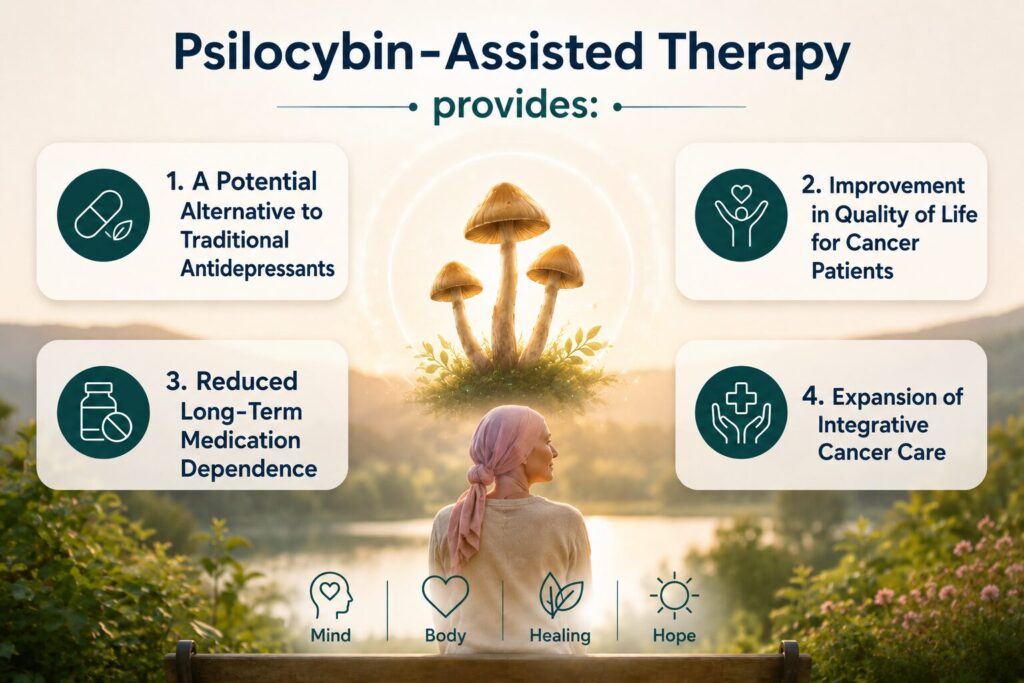
How Psilocybin be used in Oncology and Mental Health Care
- A Potential Alternative to Traditional Antidepressants
Conventional antidepressants often require daily use, weeks to achieve therapeutic effects, and may produce unwanted side effects. However, a single psilocybin treatment session combined with psychotherapy may provide meaningful and long-lasting relief for some patients.
- Improvement in Quality of Life for Cancer Patients
Mental health challenges frequently affect treatment adherence, social relationships, and overall well-being. Sustained reductions in depression and anxiety may help patients:
- Better cope with diagnosis and treatment
- Improve emotional resilience
- Enhance overall quality of life
- Reduced Long-Term Medication Dependence
Many cancer participants display improvements without ongoing psychiatric medication raises the possibility of reducing medication burden for certain patients.
- Expansion of Integrative Cancer Care
Cancer centers increasingly recognize the importance of holistic care models.
Psilocybin-assisted therapy may eventually become part of comprehensive supportive oncology programs that address both physical and psychological needs.
Future Insights
Psilocybin-assisted therapy has shown promising outcomes among cancer patients. Although promising, the study can be further be continued with larger sample size, multi-centre and larger randomized controlled trials with placebo controls across larger demographic populations.
Additionally, some important points of discussion can be explored, such as:
- What psychotherapy approaches work best alongside psilocybin?
- Would additional psilocybin doses improve outcomes for non-responders?
- Can psilocybin be safely combined with traditional antidepressants?
- Which cancer populations benefit most from treatment?