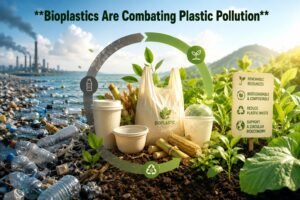
How Bioplastics Are Combating Plastic Pollution in the Anthropocene Era
Anthropocene and the Plastic Age
We as humans have been living in the Holocene epoch, thriving on the Earth’s ecosystem since 1,700 years after the last ice age. Since the industrial revolution and commercialisation, we have now left the Holocene and are in the transition to the Anthropocene Era, where human activities in turn have started impacting the Earth’s ecosystem. This Era, also termed as the Anthropocene Epoch, is described as an unofficial unit of geologic time in the Earth’s history when human activities have started to impact on the planet’s climate and ecosystems.
From the middle of the last century, plastics have taken over as our most essential commodity and drastically transformed the modern society. From healthcare and transportation to food preservation and consumer products, plastics have enabled technological progress on an unprecedented scale. However, this convenience has come at a significant environmental cost.
The plastics are being found in:
- Oceans
- Rivers
- Agricultural soils
- Polar regions
- Deep-sea environments
- Mountain ecosystems
Marine pollution is particularly concerning. Plastics account for a substantial proportion of marine litter, and millions of tonnes enter oceans annually. Physical weathering gradually breaks larger debris into microplastics and nanoplastics, which can enter food chains and affect aquatic organisms.
Global Plastic Production
Since last century:
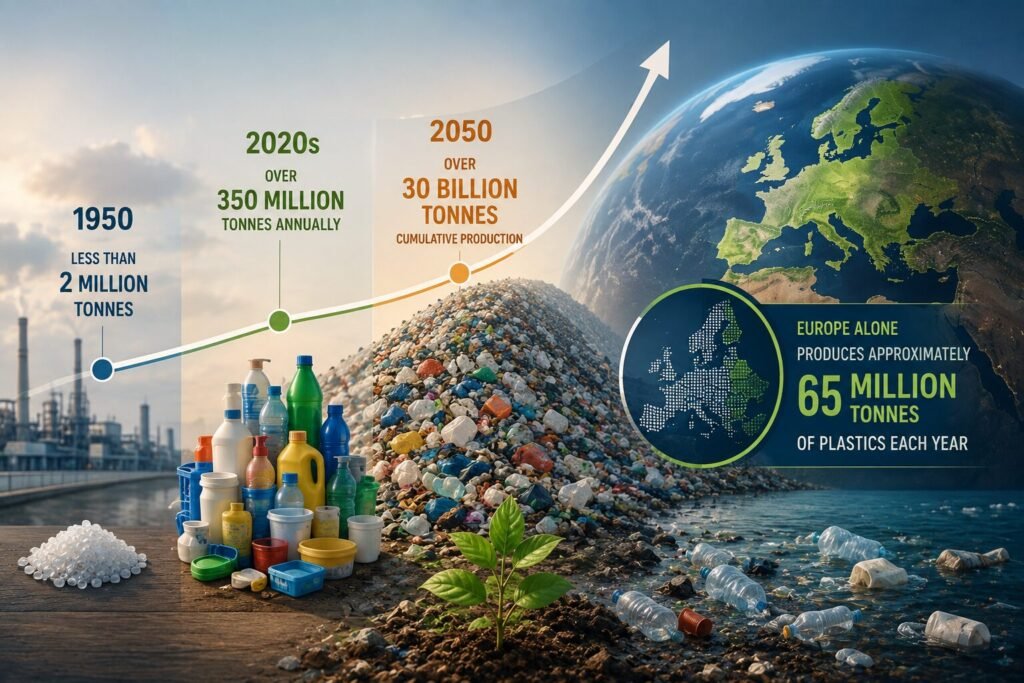
- Global plastic production increased from less than 2 million tonnes in 1950 to over 350 million tonnes annually.
- If current consumption continues, cumulative plastic production could exceed 30 billion tonnes by 2050.
- Europe alone produces approximately 65 million tonnes of plastics each year.
These figures demonstrate that waste management systems are struggling to keep pace with growing demand.
Recycling Alone Cannot Solve the Problem
One of the thought effective solutions adopted since last three decades is recycling the non-biodegradable plastic materials. Although essential, recycling has many drawbacks and limitations.
One of the most essential part of recycling is improved waste collection and recycling systems that must be combined with broader strategies to reduce plastic production and increase the use of sustainable alternatives.
Many thermoplastics can technically be recycled, but different polymer types require separation before processing. Thermosetting plastics present even greater challenges because they cannot simply be melted and reshaped.
The Future of Sustainable Plastics
To counteract this alarming phenomenon of growing plastic pollution and adverse Anthropocene, several practical solutions have been adopted like reducing unnecessary plastic consumption, improving recycling infrastructure, developing biodegradable materials, and adopting circular bioeconomy principles that transform agricultural and food waste into valuable resources.
Transition to Bioplastics
Currently, human population is driving the technology towards production of sustainable and environment friendly bioplastics.
Biodegradable and bio-based plastics as promising alternatives to conventional petroleum-derived materials. These can be readily used in:
- Sustainable food packaging
- Agricultural films
- Disposable food-service products
- Medical materials
- Consumer packaging
However, the developed bioplastics must be carefully evaluated for performance, environmental impact, and economic feasibility before widespread adoption.
Circular Bioeconomy
Studies strongly supports the concept of a circular bioeconomy, where renewable biological resources replace fossil-based raw materials.
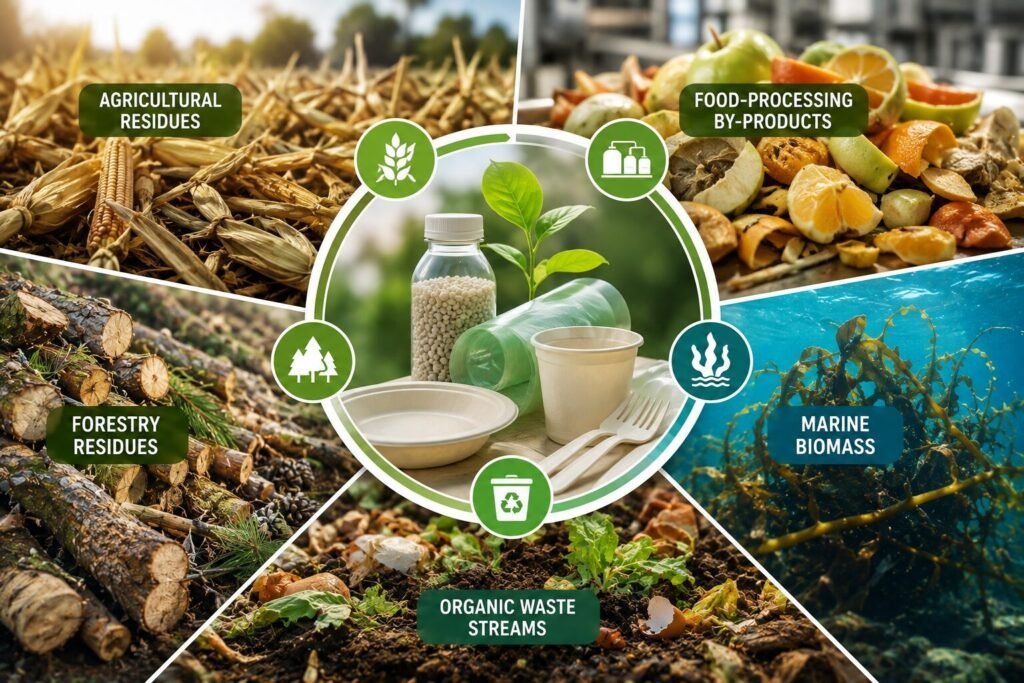
Instead of relying on virgin petroleum, Bioplastics are being engineered from:
- Agricultural residues
- Food-processing by-products
- Marine biomass
- Organic waste streams
- Forestry residues
This approach reduces waste while creating additional value from materials that would otherwise be discarded.
Waste-to-Resource Innovation
Since years food and marine waste are being used as feedstocks for next-generation bioplastics.
Potential benefits include:
- Reduced landfill waste
- Lower greenhouse gas emissions
- Less competition with food production
- Increased resource efficiency
- New business opportunities within the bioeconomy
This strategy aligns with global sustainability goals by converting waste into valuable industrial products.
Importance for Industry and Policymakers
Solving plastic pollution requires collaboration across multiple sectors.
Industries can apply these findings by:
- Designing products for recyclability.
- Investing in biodegradable materials.
- Incorporating renewable feedstocks into manufacturing.
- Supporting closed-loop recycling systems.
Meanwhile, policymakers can strengthen progress by:
- Encouraging separate waste collection.
- Restricting unnecessary single-use plastics.
- Funding bioplastics research.
- Promoting sustainable manufacturing through incentives and regulations.
The bottom lines lie in the fact that no single solution will eliminate plastic pollution. Instead, coordinated efforts among scientists, governments, businesses, and consumers are essential.
Future Insights
Sustainable progress of the human race depends on integrating scientific research, industrial development, environmental policy, and consumer behaviour into a unified strategy. Through continued investment in biotechnology, renewable feedstocks, and circular production systems, society can move toward reducing plastic pollution while maintaining the benefits that modern materials provide.
Several priorities for future development of bioplastics involve:
- Developing biodegradable materials with performance comparable to traditional plastics.
- Improving industrial composting technologies.
- Understanding the long-term ecological impacts of microplastics and nanoplastics.
- Evaluating the economic viability of large-scale bioplastic production.
- Optimizing the conversion of agricultural and marine waste into high-performance polymers.
As industries worldwide seek sustainable alternatives, balancing environmental responsibility with technological advancement is an essential step toward a cleaner and more resilient future.