CRISPR Gene Editing Reveals New Targets for Powerful CAR-NK Cancer Therapy
Powerful CAR-NK Cancer Immunotherapy
Cancer immunotherapy is a breakthrough development in modern oncology where it helps the body’s immune system find, recognise and destroy cancer cells more effectively. Unlike conventional treatments that primarily target cancer cells directly, immunotherapy works by harnessing, strengthening, redirecting, or restoring the body’s own immune system to recognize and attack cancer cells.
It has changed the way scientists approach cancer treatment, however, there remains significant challenges, particularly for patients with treatment-resistant cancers and solid tumors.
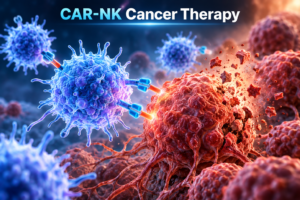
Natural killer (NK) cell therapy is an immunotherapy where NK cells can recognize and destroy cancer cells through their innate immune functions. When NK cells are genetically engineered, they work as a therapeutic tool to improve their ability to recognize and eliminate cancer cells. If they are further engineered to express chimeric antigen receptors (CARs), their tumor-targeting capacity can be further enhanced.
However, CAR-NK cells can lose effectiveness when exposed repeatedly to cancer cells or to the hostile tumor microenvironment (TME). Patients may experience hypoxia, acidity, immunosuppressive cytokines, metabolic stress and prolonged tumor exposure can impair immune-cell persistence and cytotoxicity.
To address these problems, scientists from Department of Stem Cell Transplantation and Cellular Therapy, University of Texas, performed genome-wide CRISPR screening in primary human NK cells. The researchers identified three previously underrecognized regulators—MED12, ARIH2 and CCNC whose disruption enhanced NK-cell and CAR-NK-cell antitumor activity.
The findings provide a potential framework for developing next-generation CAR-NK cell therapy with improved activity against difficult-to-treat malignancies.
Why CAR-NK therapy needs further improvement?
CAR-NK therapy is the amalgamation of the natural tumor-killing capabilities of NK cells and genetic engineering that enables recognition of specific cancer-associated targets.
Although engineered NK cells have shown encouraging activity, their therapeutic potential can be restricted by limited persistence, functional exhaustion and immunosuppressive signals within tumor. These challenges are particularly important in solid cancers, where immune cells must function in environments characterized by low oxygen, altered metabolism and inhibitory signaling.
So instead of testing one or two candidate genes, the whole genome was broadly examined to identify genetic changes capable of improving NK-cell fitness and antitumor function.
CRISPR gene editing can be used not only to modify therapeutic cells but also to discover the biological mechanisms that determine whether those cells succeed or fail.
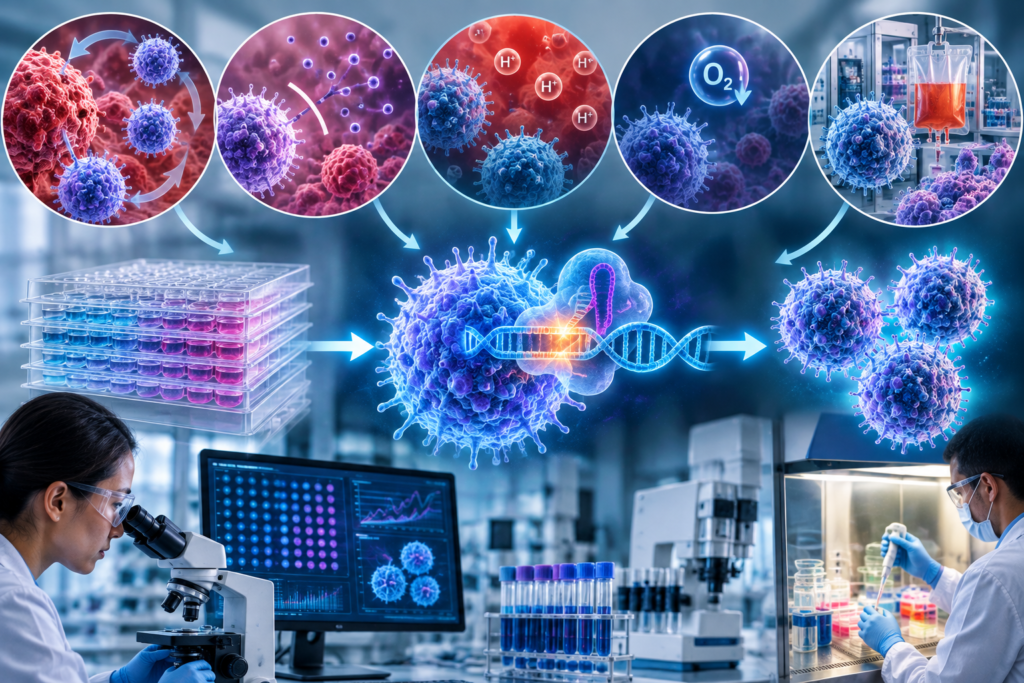
A genome-wide search for NK-cell regulators
A central achievement of utilizing CRISPR technology is the development of a genome-wide CRISPR screening platform optimized for primary human NK cells.
For this, a genome-wide single-guide RNA library containing 77,736 sgRNAs targeting 19,281 genes, together with 500 non-targeting controls was used. This enabled systematic interrogation of thousands of genes rather than limiting the investigation to previously suspected pathways.
A multiple complementary CRISPR screens were designed under conditions to reproduce clinically relevant barriers to NK-cell activity.
These included:
- Repeated exposure to tumor cells;
- TGF-β-mediated immunosuppression;
- Lactic-acid-associated acidity;
- Hypoxia; and
- Conditions relevant to NK-cell fitness and manufacturing.
This multi-condition methodology is particularly valuable because a gene that improves NK-cell function in a standard laboratory environment may not provide the same benefit inside a tumor.
Modelling NK-cell exhaustion
To reproduce the effects of repeated tumor exposure, primary human NK cells were challenged three times with Capan-1 pancreatic cancer cells at a 1:1 effector-to-target ratio.
Notably, following repeated challenges, the NK cells demonstrated a substantial loss of tumor-control capability, consistent with severe functional exhaustion. Multiparameter spectral-flow cytometry showed changes in NK-cell populations, including expansion of dysfunctional populations and disappearance of functional subsets characterized by markers such as CD16, DNAM-1 and NKG2D.
Then CRISPR screening was used to determine which genetic perturbations allowed NK cells to retain greater fitness and functional activity under this pressure.
This approach could closely solve the challenge of overcoming the functional loss of NK anti-cancer activity upon repeated exposure to cancer cells and may allow the therapeutic cells need to continue working after repeated exposure to cancer.
Investigating the tumor microenvironment
When NK cells were examined against several features of the tumor microenvironment. The findings were impressive:
TGF-β suppression
TGF-β is a major immunosuppressive factor in many tumors and thenamely, individual TGF-β receptor components provided only partial advantages, reflecting redundancy within the pathway.
In contrast, disruption of downstream signaling components such as SMAD2 and SMAD4 produced stronger enrichment, suggesting that downstream pathway targeting may offer a more effective strategy for overcoming TGF-β-mediated suppression.
Tumor acidity
Cancer cells can produce lactic acid, contributing to an acidic tumor environment that can impair immune-cell activity.
The researchers performed CRISPR screens in NK cells exposed to 5 mM L(+)-lactic acid and identified genes GPI, TOLLIP, ITGB2 and BHLHE40, involved in acidity sensing and metabolic regulation.
The findings reinforce the importance of metabolic adaptation in maintaining NK-cell function within tumors.
Hypoxia
Genome-wide CRISPR screening at 4% oxygen was performed to investigate the region within solid tumors with reduced oxygen availability.
The screen identified genes associated with metabolism, apoptosis and cell migration, including UCP3, CASP3, FASLG, FADD, ITGAL, ITGB2 and ICAM1.
Together, these experiments generated a broader map of genetic mechanisms influencing NK-cell resilience under tumor-associated stress.
Selection of the most promising targets for CAR-NK Therapy?
Moving ahead with the finding of some key molecular markers involved in enhanced functions of tumor micro-environment, five genome-wide CRISPR screens were integrated.
Rather than selecting candidates simply because they appeared in one experiment, a weighted scoring strategy was adopted, incorporating screen overlap, known NK-cell biology and the likelihood that a particular gene could improve fitness under clinically relevant stress conditions.
Genes appearing repeatedly across screens received greater weight, while certain tumor-suppressor genes received additional weighting because their disruption could potentially provide a fitness advantage.
This systematic approach resulted in three leading candidates: MED12, ARIH2 and CCNC.
These genes were subsequently validated using targeted CRISPR ribonucleoprotein editing in primary human NK cells.
MED12 knockout enhances NK-cell antitumor activity
Interestingly, one of the major finding of the study is: MED12 disruption enhanced NK-cell cytotoxicity.
MED12-deficient NK cells demonstrated increased killing against several treatment-resistant cancer models, including pancreatic cancer, multiple myeloma, acute myeloid leukemia and lymphoma.
The effect was not limited to conventional NK cells. MED12 knockout also increased the activity of IL-15-armored CAR-NK cells targeting TROP2 and CD70.
This is particularly significant from a translational perspective because it suggests that genetic modification of an intracellular regulatory pathway can potentially strengthen already engineered CAR-NK cells.
ARIH2 and CCNC reveal the importance of metabolic fitness
CRISPR screens also identified ARIH2 and CCNC as important regulators of NK-cell function.
Individual or combined knockout of these genes improved NK-cell killing against resistant cancer targets, including pancreatic cancer and T-cell lymphoma models. Enhanced activity was also observed in CAR-NK cells targeting TROP2 or CD70 and in three-dimensional tumor spheroid cultures.
These improvements were likely linked to enhanced metabolic fitness. ARIH2/CCNC-edited NK cells demonstrated higher basal, maximal and spare oxygen-consumption rates, indicating greater metabolic capacity.
Interestingly, the genetic modifications did not simply increase proliferation. Instead, the cells appeared better equipped to maintain functional activity under stress.
This finding has practical implications for solid-tumor immunotherapy, where immune cells must function despite metabolic constraints.
Dual ARIH2 and CCNC editing produces stronger effects
One of the most notable outcomes were from the effect of simultaneously disrupting ARIH2 and CCNC.
The dual knockout enhanced cytotoxicity more strongly than individual gene disruption in repeated tumor-challenge experiments. It also promoted activated and proliferative NK-cell populations while reducing quiescent or inhibitory populations.
Single-cell RNA sequencing provided additional mechanistic evidence. Dual-edited cells showed enrichment of pathways associated with interferon-γ signaling, interleukin signaling, cell-cycle activity, mTORC1 and DNA repair, concluding that ARIH2 and CCNC work cooperatively to reprogram NK cells into a more metabolically fit and highly activated state.
Evidence from animal models
Progressing towards implementation of the research towards animal models, it became intriguingly mandatory to determine whether the improved NK-cell characteristics translated into stronger antitumor effects.
In an orthotopic systemic myeloma and pancreatic cancer mouse models with CCNC knockout and ARIH2/CCNC dual knockout improved NK-cell expansion and prolonged survival. These increased circulating CAR-NK-cell numbers and enhanced tumor infiltration. Tumor-infiltrating NK cells demonstrated higher granzyme B expression, while dual knockout significantly reduced tumor burden due to NK-cell expansion and prolonged survival.
The engineered CAR-NK cells were also reported to be well tolerated in these experimental models, with no observed impact on body weight.
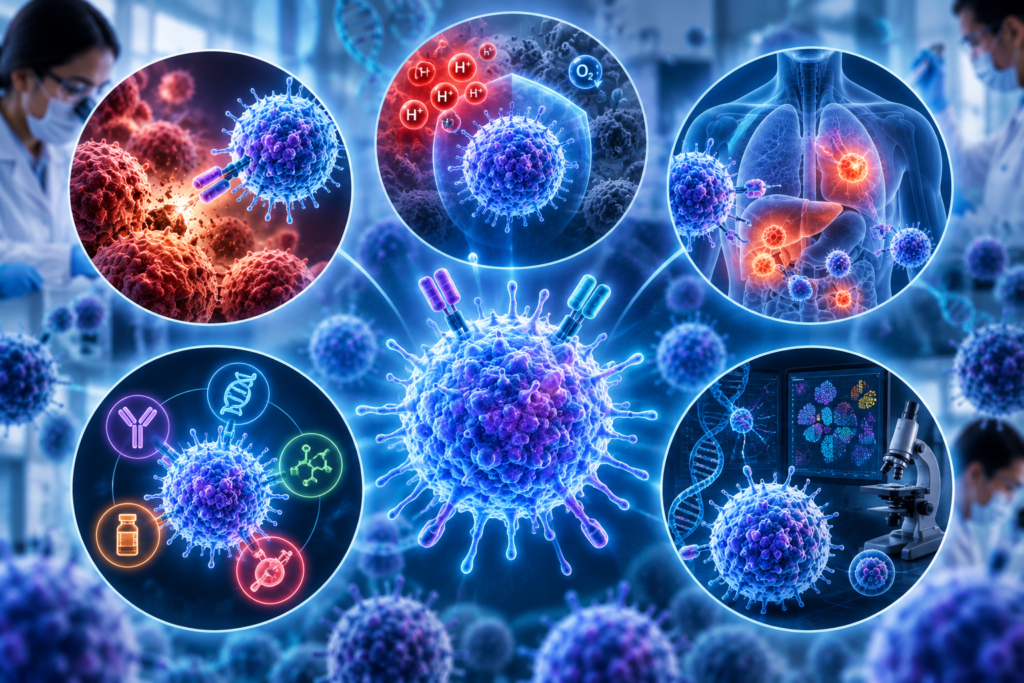
Therapeutic Applications of Cancer Immunotherapy
CRISPR Gene Editing have found some of the promising genetic targets that enhances the power of immunotherapies.
- Stronger CAR-NK cells: MED12, ARIH2 and CCNC provide potential genetic targets for engineering more potent therapeutic NK cells.
- Better resistance to tumor stress: The results suggest that modifying metabolic and regulatory pathways may help immune cells remain functional in hostile tumor environments.
- Improved solid-tumor therapy: Enhanced tumor infiltration, metabolic fitness and cytotoxicity could be particularly relevant to cancers where conventional immune-cell therapies struggle.
- Combination engineering: The ARIH2/CCNC findings demonstrate that combinations of genetic edits may outperform single-gene modifications.
- Improved understanding of NK biology: Addition regulatory pathways can be further identified that influence NK-cell persistence, activation and antitumor activity.
Thus, CRISPR screening has provided a foundation for engineering next-generation NK-cell therapies against both hematologic and solid tumors.
What remains before clinical application?
Despite these promising findings, the research remains primarily preclinical. Results from cell cultures and mouse models do not automatically predict outcomes in human patients.
Further studies will need to evaluate the safety, durability, manufacturing feasibility and clinical effectiveness of these gene-edited CAR-NK products.
Some of the biological complexities that still needs to be addressed. For example, ARIH2 knockout alone increased an inhibitory NK-cell cluster, whereas combining ARIH2 deletion with CCNC deletion reversed that effect. This highlights why gene-editing strategies must be carefully evaluated rather than assuming that every potentially beneficial knockout will work independently.
The future of CRISPR-engineered cancer immunotherapy
Integrating CRISPR Technology with immunotherapy provides an important step toward precision engineering of immune-cell therapies.
Its major contribution is the combination of genome-wide CRISPR discovery with functional validation, metabolic analysis, single-cell profiling and animal testing. Instead of simply asking how to make NK cells recognize cancer, the research asks a broader question: How can therapeutic NK cells be engineered to remain active, metabolically fit and resilient inside tumors?
The identification of MED12, ARIH2 and CCNC provides potential answers.
For now, these targets remain investigational. But the research demonstrates how genome-wide CRISPR screening can systematically uncover biological “brakes” on immune-cell function and provide new strategies for developing more powerful CAR-NK cancer immunotherapy.
The ultimate goal is not merely to create immune cells that can kill cancer cells in a laboratory dish. But to develop potent therapeutic cells capable of surviving the complex conditions of real tumors and maintaining their antitumor activity long enough to make a meaningful clinical difference.