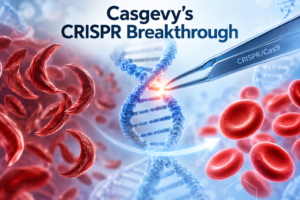
How CASGEVY Uses CRISPR to Fight Sickle Cell Disease?
Sickle Cell Disease & its challenges
Sickle cell disease (SCD) is an inherited blood disorder caused by a mutation affecting the β-globin chain of haemoglobin. This produces abnormal haemoglobin S (HbS), which can polymerize under low-oxygen conditions and cause red blood cells to become rigid and sickle-shaped. These damaged cells can obstruct small blood vessels, leading to vaso-occlusive crises and synmptoms like:
- Severe pain
- Anaemia
- Nephropathy
- Retinopathy
- Priapism
- Leg ulcers
- Stroke and
- Avascular necrosis
- Acute chest syndrome
- Progressive organ damage.
As a result, SCD requires lifelong disease management and can substantially affect patients’ quality of life.
Available Treatment options of Sickle Cell Disease
For the management of SCD, several treatment modalities are available, including:
1) Hydroxyurea (HU) is an established disease-modifying therapy and by increasing fetal hemoglobin (HbF), thereby reducing sickling-related complications. It is recommended for children with SCD from 9 months of age and that dose intensification in older children can improve clinical and laboratory outcomes. However, concerns about long-term effects, including fertility and reproductive health, remain.
Adverse effects can include gastrointestinal discomfort, skin or nail darkening and, less commonly, hair thinning.
2) Glutamine protects sickled red blood cells against oxidative injury and has been associated with modest reductions in acute sickle cell crises and hospitalizations. However, uncertainty remains regarding optimal dosing, laboratory monitoring, cost and availability, as well as limited safety information in patients with hepatic or renal impairment.
3) Crizanlizumab targets P-selectin to reduce vaso-occlusive crises.
4) Voxelotor is a hemoglobin S polymerization inhibitor.
5) Blood transfusions are also important in specific situations, including stroke, acute chest syndrome, splenic sequestration and selected surgical procedures.
6) Hematopoietic stem cell transplantation (HSCT) offers potentially curative treatment for some eligible patients.
However, its widespread use is constrained by donor availability and transplant-related risks. As reported, fewer than 20% of individuals with SCD have a matched sibling donor. HSCT can also cause acute or chronic graft-versus-host disease (GVHD), which provides no therapeutic benefit in SCD.
Development of CASGEVY & How it works?
To overcome these unsolved challenges of SCD, scientists from Vertex Pharmaceuticals and CRISPR Therapeutics developed CASGEVY, the first FDA-approved CRISPR/Cas9 gene therapy.
The practical importance of CASGEVY lies in its approach to the underlying biology of sickle cell disease.
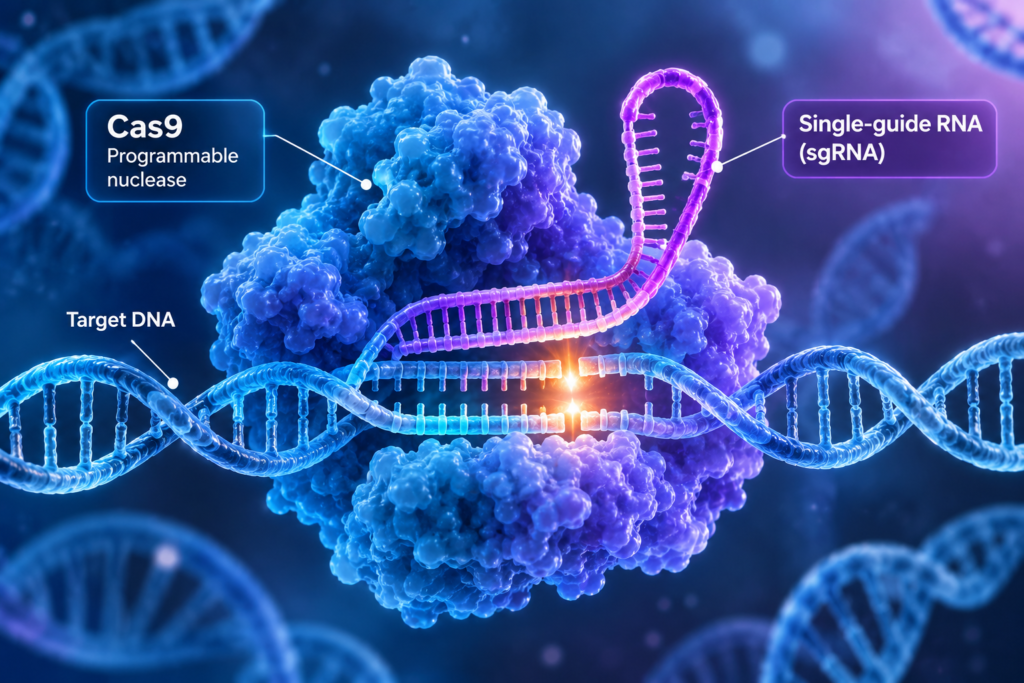
The CRISPR/Cas9 uses two key components:
- The Cas9: A programmable nuclease
- sgRNA: A single-guide RNA
Together, they direct genome editing to a specific DNA location.
For CASGEVY, the approach targets the erythroid-specific enhancer region of the BCL11A gene in hematopoietic stem and progenitor cells. Reducing BCL11A expression in erythroid cells promotes increase production of γ-globin and, consequently, fetal hemoglobin (HbF).
Why does this matter?
Higher HbF can help prevent the polymerization of HbS, which is central to the sickling process. While genetic modification using CASGEVY is known to increase HbF and a reduce vaso-occlusive events.
This mechanism is a major shift from simply managing symptoms to modifying a biological pathway responsible for the disease’s consequences.
Outcomes of using CASGEVY for Sickle Cell Disease
- The most important outcomes of the therapy are elevated fetal hemoglobin levels and significant reductions in vaso-occlusive events following the CRISPR-based genetic modification.
Vaso-occlusive events are among the defining and most painful complications of SCD. Reducing their frequency has direct practical implications for patients because recurrent crises can result in emergency visits, hospitalization, chronic organ damage, and substantial disruption to everyday life.
- The therapy offers a potential benefit to reduce or eliminate dependence on recurrent blood transfusions. This has important implications for patients who require repeated transfusion support.
- CASGEVY also offers as an alternative treatment to conventional HSCT which is limited to only few eligible patients and limited to donor availability and transplant-related risks.

CASGVEY for patients and healthcare systems
The potential practical value of CASGEVY extends beyond laboratory measurements.
- Fewer treatment related complications
- Improved Quality of Life
For patients, successful gene therapy could mean fewer vaso-occlusive crises, less dependence on transfusions, and potentially fewer treatment-related disruptions. The authors associate these benefits with meaningful improvements in quality of life.
- A breakthrough precision medicine
For healthcare professionals, CASGEVY represents a move toward precision medicine, where treatment is designed around a patient’s underlying genetic disease mechanism rather than solely addressing symptoms.
Safety and ethical considerations remain critical
For healthcare systems, however, implementation requires more than demonstrating biological effectiveness. Gene-editing therapies require specialized infrastructure, careful patient selection, sophisticated cell-handling procedures, monitoring, and long-term follow-up.
To discuss further,
- Potential off-target effects and mosaicism remain important safety concerns requiring continued investigation.
- Long-term safety and efficacy are the major concerns. Because gene editing can produce lasting genetic changes, sustained research and follow-up are essential to understand outcomes over time.
- Ethics is equally important because the promise of therapeutic genome editing differs from the broader ethical concerns surrounding human germline editing. Heritable genetic changes raise particularly serious questions, and the need for ethical scrutiny and robust regulatory frameworks is important.
- Cost and equitable access are also major concerns. A one-time gene-editing treatment may offer transformative benefits, but its availability cannot be considered independently of healthcare inequalities and affordability. This calls for attention to societal equity and distributive justice as CRISPR-based therapies advance.
Future Insights
CASGEVY represents a potential paradigm shift in sickle cell disease management. Its importance lies not simply in being a new treatment, but in demonstrating how CRISPR/Cas9 can be translated into an approved therapeutic approach for a serious inherited disorder.
The practical lesson is equally important: promising gene therapy must be accompanied by rigorous safety evaluation, long-term evidence, ethical oversight, interdisciplinary collaboration, and strategies that support equitable access.
CASGEVY therefore marks an important milestone—but not the end of the SCD treatment journey. Continued research will be necessary to determine its long-term effectiveness, safety, accessibility, and potential role alongside combination therapies.
For people living with SCD, however, the development represents a powerful change in what treatment may ultimately achieve: moving from repeated management of complications toward the possibility of addressing the disease at its genetic foundation.