Monsoon season increases the risk of parasitic eye infection
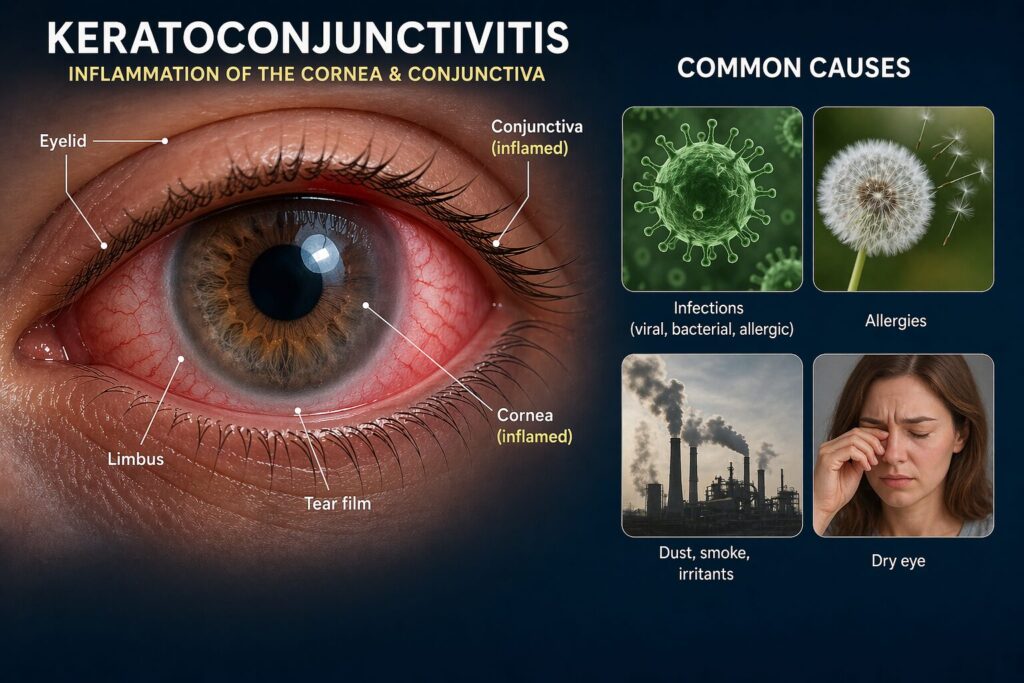
Microsporadial eye infections are mainly caused by eukaryotic, obligate intracellular parasites that act as parasites, causing acute microsporidial keratoconjunctivitis. The infection primarily affects the cornea and conjunctiva, leading to inflammation and irritation of the eye. The spores causing keratoconjunctivitis are commonly found in contaminated water, soil, dust and environmental debris. Contamination in these rises sharply during the monsoon season due to higher humidity, which highly supports the parasitic growth.
People who are at high risk of developing microsporidial keratoconjunctivitis are:
- Young adults and children
- People exposed to outdoor environments (sports, farming)
- Swimmers using poorly maintained pools
- Individuals with minor eye trauma
- Immunocompromised patients such as HIV-positive patients, organ transplant recipients and patients on long-term steroid or chemotherapy treatment.
An increase in microsporidial keratoconjunctivitis has been recorded across the Indian subcontinent and is of major concern among immunocompromised individuals. A retrospective observational study by the Department of EyeSmart EMR and AEye at Hyderabad, India, examined the increasing trends of microsporidial infections among Indians, especially during the monsoon season. The study also revealed that there is a positive correlation between the environmental factors and reported cases of infection.
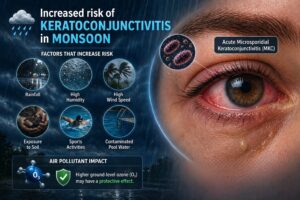
Some of the known factors increasing the risk of microsporidial keratoconjunctivitis are:
- Rainfall
- Humidity
- Windspeed
Other air pollutants, such as ground-level ozone, particulate matter PM10 and PM2.5, nitrogen dioxide, and carbon monoxide, were not seen to correlate with the rising trend of infection caused by the parasite.
Protective effects of Ozone against eye infection
An important key finding of this study highlighted the protective effect of ground‑level ozone against infection. Ground-level ozone is a colourless and highly reactive gas formed by chemical reactions between oxides of nitrogen and environmental volatile organic compounds (VOCs) in the presence of sunlight. It is also a powerful oxidant which potentially damages microbial structures, disrupts their proteins and membranes and reduces the survival of pathogens in the environment. Ozone thus contributes to lowering the microbial load in the ambient air and reduces the spread of airborne or surface contaminants. Although harmful to human eyes and lungs at high levels, its mild antimicrobial effect may still aid in protection against eye infections.
Common symptoms
Symptoms usually appear suddenly and may affect one or both eyes:
- Redness of the eye
- Watering (excess tearing)
- Mild to moderate pain or discomfort
- Foreign body sensation (feels like something in the eye)
- Blurred vision
- Light sensitivity (photophobia)
Clinical Signs of Microsporidial Keratoconjunctivitis
On examination, doctors may notice:
- Multiple coarse, raised epithelial lesions on the cornea
- Conjunctival congestion
- Mild eyelid swelling
- Sometimes superficial punctate keratitis
Diagnostic tools for Keratoconjunctivitis
Microsporidial Keratoconjunctivitis is often misdiagnosed as viral conjunctivitis due to its clinical resemblance. Some of the diagnostic tools that aid in its detection are:
- Clinical examination using a slit lamp
- Laboratory confirmation through:
- Modified trichrome staining
- Microscopic identification of spores
- PCR (in advanced settings)
Treatment and Management
Few of the treatment that helps speed recovery and reduce discomfort are:
- Lubricating eye drops
- Topical antibiotics (to prevent secondary infection)
- Sometimes corneal debridement (removal of infected epithelial layer)
- Avoidance of steroid eye drops unless prescribed carefully
Recovery usually occurs within 1–2 weeks, though mild symptoms may persist longer.
Prevention of infection
It is fun to enjoy every season, especially monsoon, but a few preventive steps could save our eyes from microsporidial keratoconjunctivitis
- Avoid swimming in unclean or poorly maintained pools
- Maintain proper eye hygiene
- Use protective eyewear during outdoor activities
- Wash hands frequently and avoid touching the eyes
- Seek early medical care if symptoms appear, especially during the monsoon
Policy and Public Health Planning
Public health authorities can use these findings to:
- Improve water and sanitation monitoring
- Develop guidelines for parasite screening
- Allocate resources toward diagnostic infrastructure