Cucurbitacin D Suppresses Colorectal Cancer Cell Growth Through Multiple Signalling Pathways in Preclinical Research
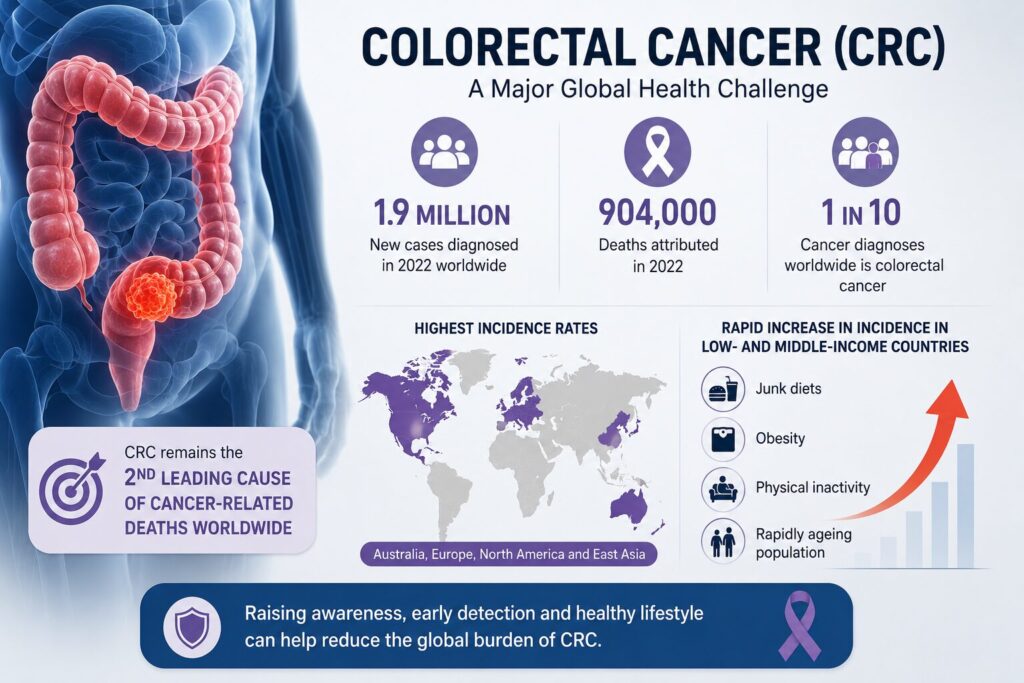
Colorectal cancer (CRC) remains second leading causes of cancer-related deaths worldwide. As reported, aorund 1.9 million new colorectal cancer cases were diagnosed in 2022 which attributed to approximately 9,04,000 deaths. Globally, approximately, 1 in 10 cancer diagnoses worldwide is colorectal cancer. Highest incidence rates are reported in Australia, Europe, North America and East Asia while in low- and middle-income countries there is rapid increase in incidence due to junk diets, obesity, physical inactivity and rapidly ageing population.
How Network Pharmacology Revealed a Promising Multi-Target Anti-Cancer Strategy
Despite advances in surgery, chemotherapy, targeted therapy, and radiation treatment, challenges such as drug resistance, recurrence, and severe side effects continue to limit treatment success. As a result, researchers are increasingly exploring natural compounds with multi-target therapeutic potential.
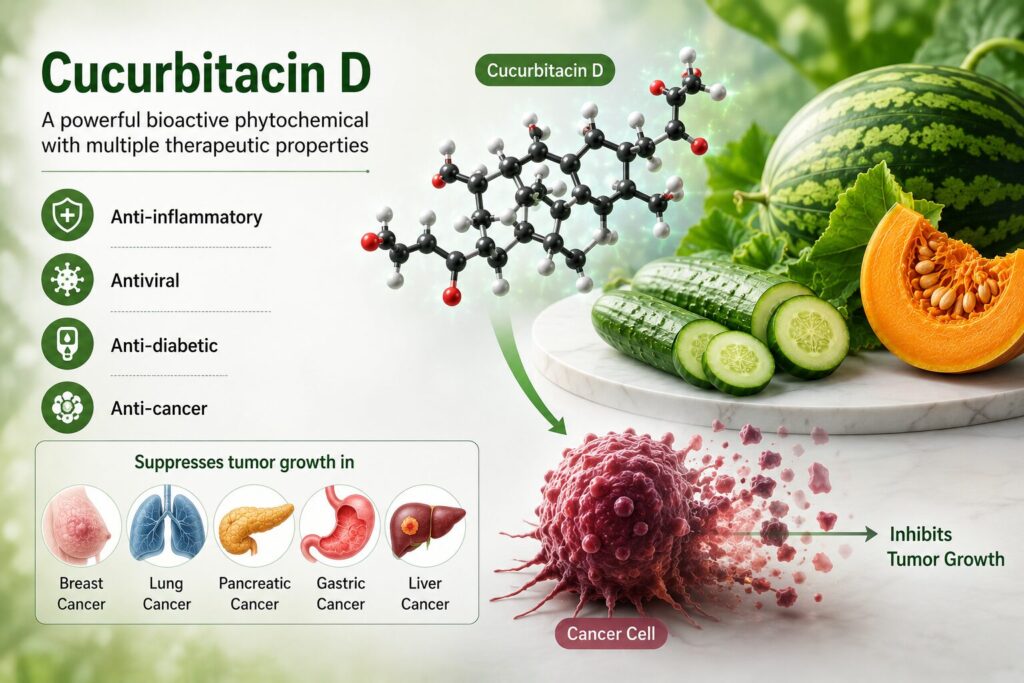
Moving ahead in finding promising therapeutic solution against colorectal cancer, scientists at Department of Science in Korean Medicine and Natural Products Research Institute investigated the anti-cancer properties of Cucurbitacin D (CuD), a naturally occurring compound found in plants from the Cucurbitaceae family, including cucumber, pumpkin, and watermelon. Using a combination of laboratory experiments, network pharmacology, molecular docking, and protein expression analysis, the researchers uncovered how Cucurbitacin D may inhibit colorectal cancer growth and trigger cancer cell death.
What is Cucurbitacin D?
Cucurbitacin D is a bioactive phytochemical known for its anti-inflammatory, antiviral, anti-diabetic, and anti-cancer properties. Previous studies have demonstrated its ability to suppress tumor growth in various cancers, including breast, lung, pancreatic, gastric, and liver cancers. However, its precise mechanism of action against colorectal cancer had remained largely unexplored before this research.
Cucurbitacin D as an anti-cancer molecule
- Cucurbitacin D reduces Cancer Cell Viability
When tested on multiple human colorectal cancer cell lines, Cucurbitacin D reduced colorectal cancer cell viability in a dose-dependent manner along with visible cellular damage, including cell shrinkage, membrane blebbing and increased cell detachment.
- Cucurbitacin D induces of programmed cell death
Flow cytometry analysis revealed significant increases in both early-stage and late-stage apoptotic cell populations following treatment with Cucurbitacin D. This indicates that the compound actively triggers programmed cell death rather than merely slowing growth.
- Multi-Target Mechanism of Action of Cucurbitacin D
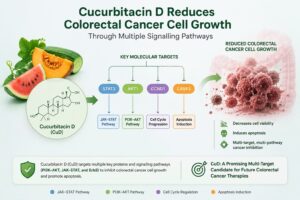
Application of network pharmacology, identified molecular targets associated with both Cucurbitacin D and colorectal cancer. The study identified 66 overlapping targets, suggesting potential mechanisms through which Cucurbitacin D may act against colorectal cancer.
Network analysis
Using STRING and Cytoscape software, the researchers built a protein interaction network to identify the most influential target proteins.
Four key hub proteins namely; STAT3, AKT1, CCND1 (Cyclin D1) and CASP3 (Caspase-3) emerged as central regulators, that play critical roles in cancer progression, survival, and apoptosis. Unlike many conventional drugs that focus on a single molecular target, Cucurbitacin D appears to influence multiple cancer-related proteins simultaneously.
The identified targets perform distinct functions:
- STAT3: Controls tumor growth, inflammation, angiogenesis, and immune evasion.
- AKT1: Regulates cell survival and metabolism.
- Cyclin D1: Drives cell cycle progression and cancer proliferation.
- Caspase-3: Executes programmed cell death.
By acting on all four targets, Cucurbitacin D may overcome some limitations associated with single-target therapies.
- Gene Ontology and KEGG Pathway Enrichment
When analyzed, the biological processes and pathways connected to the identified targets were:
- PI3K-AKT signaling pathway
- JAK-STAT signaling pathway
- ErbB signaling pathway
- Colorectal cancer pathway
- Proteoglycans in cancer pathway
These pathways are widely recognized for driving tumor growth, metastasis, angiogenesis, and treatment resistance.
- Interaction of Cucurbitacin D with identified targets
To validate the computational findings, molecular studies examined how strongly Cucurbitacin D could bind to the four key proteins. Computational docking and Western Blot analysis confirmed that Cucurbitacin D altered the expression of the identified target proteins within colorectal cancer cells, thus, validating the computational predictions experimentally.
Why Targeting Multiple Pathways may be Important?
Cancer cells often rely on multiple molecular pathways to support continued growth, survival, and adaptation. For this reason, compounds capable of influencing more than one cellular process are of scientific interest.
In this study, Cucurbitacin D was associated with changes in cancer-cell growth, survival, and molecular signalling. These findings suggest that the compound may have a multi-target effect in the experimental model.
However, the presence of multiple molecular effects does not automatically mean that the compound will be more effective as a treatment. Additional research is needed to determine which pathways are most important, whether the effects can be reproduced in other colorectal cancer models, and how the compound interacts with normal cells.
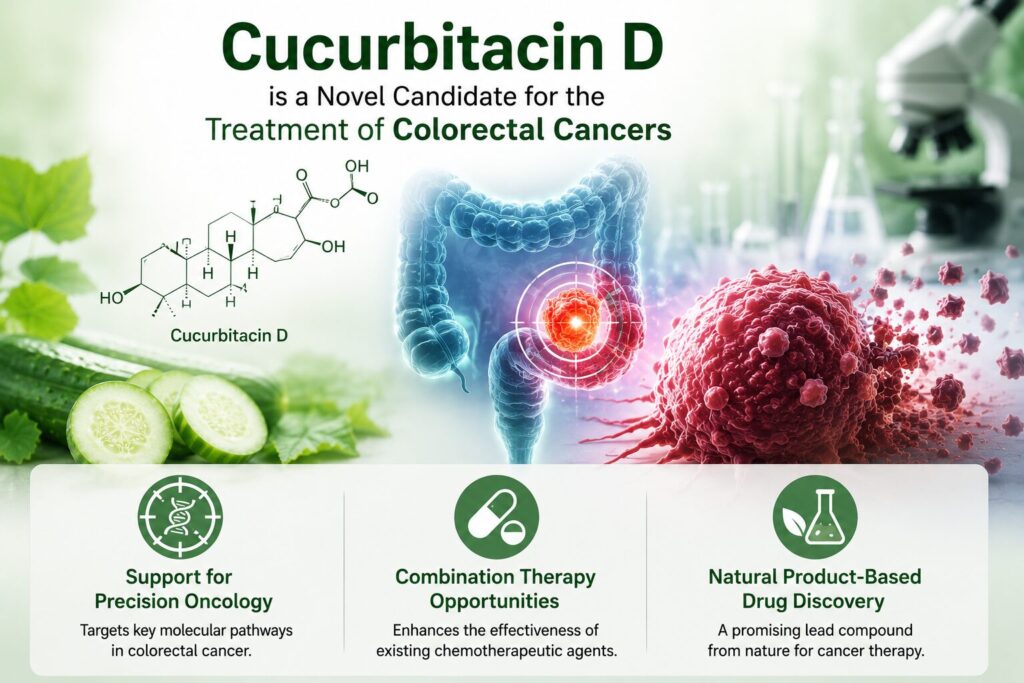
Cucurbitacin D is a novel candidate for the treatment of colorectal cancers
Cucurbitacin D is part of a broader area of research investigating naturally derived compounds for their potential effects on cancer cells, including recent studies examining Hibiscus extract and breast cancer growth.
Thus, the study provides strong evidence that Cucurbitacin D serve as a promising lead compound for future anti-cancer drug development. Its ability to target multiple signaling pathways may help reduce the risk of resistance commonly observed with current therapies.
Support for Precision Oncology
The identification of specific molecular targets such as STAT3 and AKT1 offers opportunities for developing more personalized treatment strategies, particularly for patients whose tumors exhibit abnormal activation of these pathways.
Combination Therapy Opportunities
As Cucurbitacin D affects several cancer-driving pathways simultaneously, it could potentially be combined with existing chemotherapy or targeted therapies to improve treatment outcomes while minimizing resistance.
Natural Product-Based Drug Discovery
The research highlights the growing importance of natural compounds in oncology. Network pharmacology provides a powerful framework for identifying bioactive molecules that interact with complex disease networks rather than isolated targets.
Researchers are also investigating a range of molecular and natural compounds that may influence cancer-cell signaling and growth through different mechanisms.
Future Insights
While the results are highly encouraging, this research pave the way for additional studies to:
- Evaluate effectiveness in animal models.
- Assess long-term safety and toxicity.
- Determine optimal dosing strategies.
- Improve bioavailability through advanced drug delivery systems such as nanoparticles or liposomes.
As further preclinical and clinical studies emerge, Cucurbitacin D may become an important component of next-generation strategies for combating colorectal cancer.