NIR-II Nanoprobes are transforming cancer diagnostics & treatment
Near-Infrared II Imaging Technology
Medical imaging is continuously evolving to enable healthcare professionals diagnose diseases at an early stage, monitor treatment outcomes more effectively, and perform highly precise surgical interventions. In the latest breakthroughs, Near-Infrared II (NIR-II) imaging technology has emerged as a powerful tool for biological detection and medical diagnostics. The technology has been immensely applied across oncology, regenerative medicine, inflammation monitoring, and vascular imaging.
What Is NIR-II Imaging Technology?
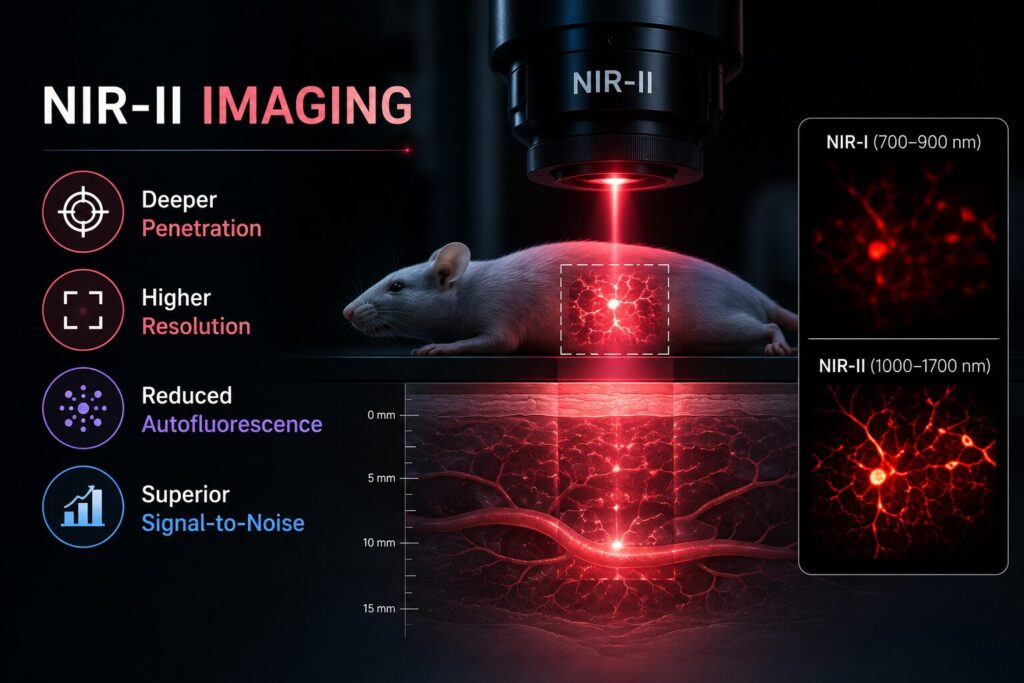
NIR-II imaging operates within the wavelength range of 1000–1700 nm, offering substantial advantages over conventional Near-Infrared I (NIR-I) imaging (700–900 nm). Traditional imaging methods often face limitations due to tissue scattering, autofluorescence, and shallow penetration depths. NIR-II imaging overcomes these challenges by providing:
- Lower tissue autofluorescence
- Higher signal-to-noise ratio
- Greater tissue penetration depth
- Improved spatial resolution
- Enhanced image contrast
These characteristics make NIR-II imaging highly suitable for real-time biological detection and precision medicine applications.
NIR-II Imaging Probes
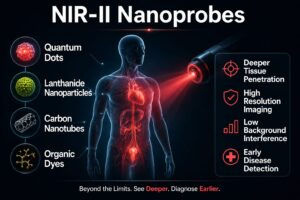
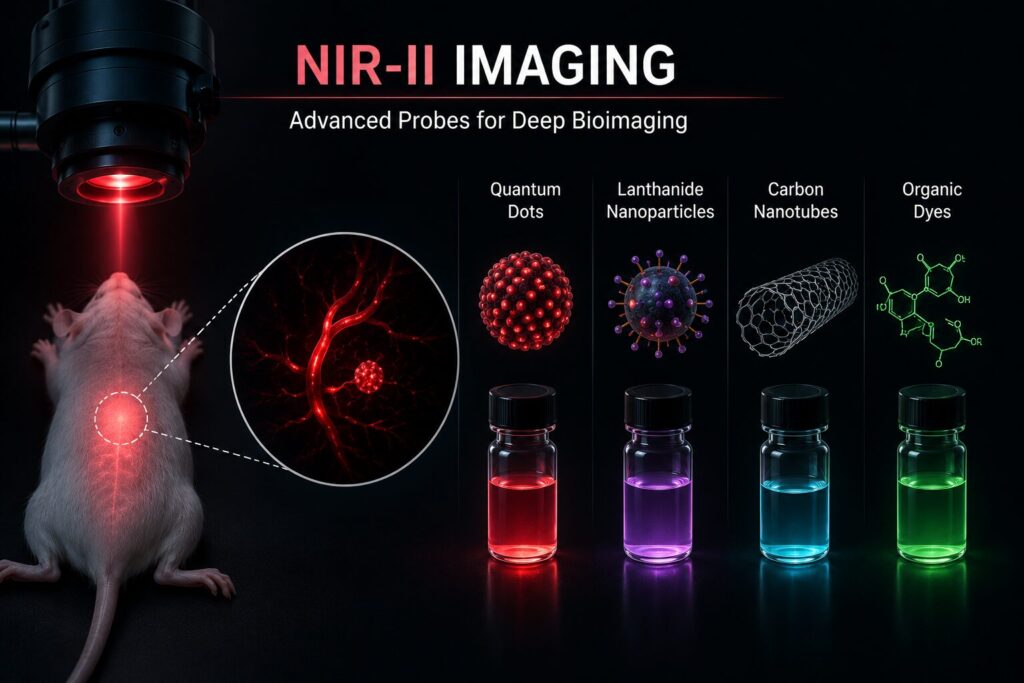
There are four major categories of nanoprobes:
- Semiconductor Quantum Dots (QDs)
Quantum dots are nanoscale semiconductor materials known for:
- High fluorescence quantum efficiency
- Concentrated emission spectra
- Strong imaging capabilities
Among these, Ag₂S quantum dots demonstrated lower toxicity compared with traditional cadmium- or lead-based quantum dots while maintaining strong NIR-II fluorescence performance.
- Single-Walled Carbon Nanotubes (SWCNTs)
SWCNTs offer:
- Excellent photostability
- Large Stokes shifts
- Deep tissue penetration
However, researchers identified limitations related to low photon conversion efficiency and biocompatibility concerns.
- Down-conversion Lanthanide Nanoparticles (DCNPs)
DCNPs possess:
- Narrow emission profiles
- Deep soft-tissue penetration
- Excellent photostability
- Large Stokes shifts
These features make them valuable for high-resolution biological imaging, although long-term safety remains an area for further investigation.
- Organic Fluorescent Dyes
Organic probes are especially attractive because they offer:
- Low toxicity
- Easy chemical modification
- Large-scale manufacturability
- High biocompatibility
Researchers highlighted organic NIR-II dyes such as IR-1061 and CH1055 as promising candidates for future clinical translation.
Applications of NIR-II Imaging Technology
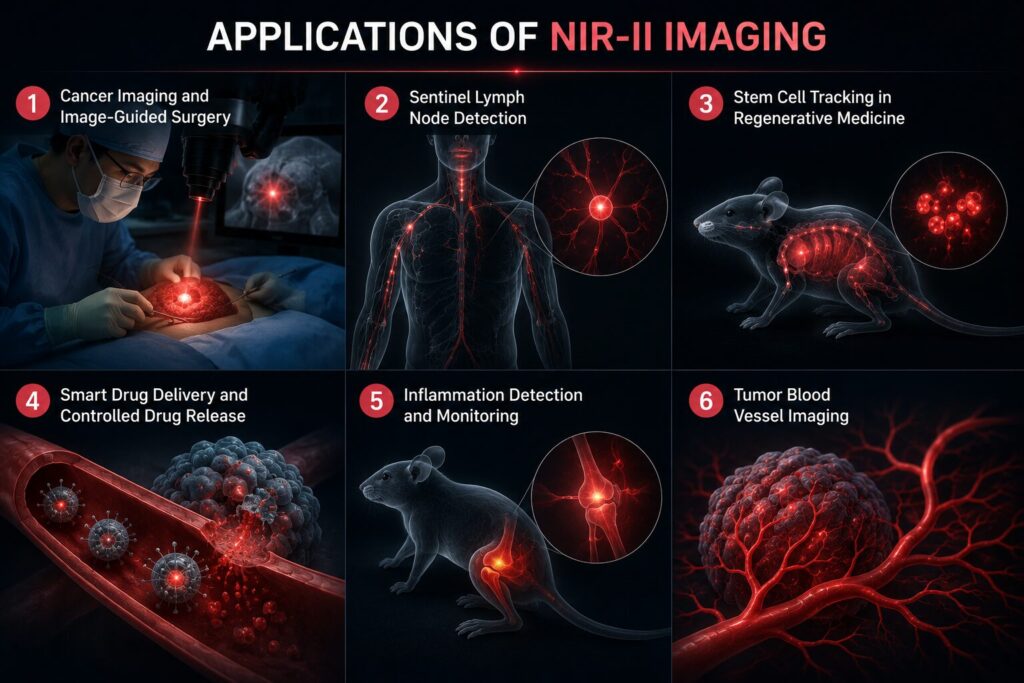
- Cancer Imaging and Image-Guided Surgery
Some of the significant findings in oncology involved the use of NIR-II probes for tumor visualization and surgical guidance.
Targeted NIR-II fluorescence probes have been developed which are capable of identifying metastatic ovarian cancer with greater accuracy than conventional indocyanine green (ICG)-based imaging. A complementary DNA-mediated self-assembly strategy allows the probes to remain within tumor tissues for approximately six hours, creating an optimal surgical window. This approach enables surgeons to visualize and remove even very small metastatic lesions with:
- Improved tumor margin identification
- Enhanced detection of metastatic lesions
- Greater precision during cancer surgery
- Reduced risk of residual tumor tissue
These benefits can significantly improve surgical outcomes and reduce recurrence rates.
- Sentinel Lymph Node Detection
Dual NIR-II imaging systems are capable of simultaneously identifying primary tumors and cancer-invaded sentinel lymph nodes.
A combination of donor-acceptor-donor fluorescent probes and PbS quantum dots enables visualization of both tumors and metastatic lymph nodes with exceptional clarity. Compared with conventional tracers, these probes demonstrate superior photostability, brightness, and imaging quality, providing:
- Non-radioactive alternative to lymphoscintigraphy
- Safer lymph node mapping procedures
- Improved cancer staging
- Better surgical planning
This advancement may reduce dependence on radioactive diagnostic methods currently used in oncology.
- Stem Cell Tracking in Regenerative Medicine
One of the major applications of NIR-II imaging is to monitor transplanted stem cells.
A multimodal imaging platform combining NIR-II fluorescence imaging with bioluminescence imaging has been developed that successfully track the location, survival, and differentiation of transplanted human mesenchymal stem cells using Ag₂S quantum dots, in real time for up to 30 days. In addition, PbS quantum dots are used to monitor stem cell migration and retention during tendon repair therapy, revealing critical information about treatment effectiveness. The provide:
- Real-time monitoring of stem cell therapies
- Improved treatment optimization
- Enhanced regenerative medicine outcomes
- Better understanding of stem cell behavior inside the body
These capabilities are particularly valuable for treating musculoskeletal injuries, cardiac disease, and tissue regeneration disorders.
- Smart Drug Delivery and Controlled Drug Release
NIR-II-has also found its application in the therapeutic nanoplatforms designed for precision drug delivery.
A hydrogen sulfide-responsive nanoplatform is capable of releasing anticancer drugs only when activated by NIR light. The system simultaneously provides tumor imaging and controlled drug release, significantly suppressing tumor growth while minimizing side effects.
Researchers have also created PEGylated Indium Selenide (InSe) nanosheets which are capable of causing NIR-II-triggered drug release and photothermal therapy, demonstrating powerful synergistic effects against cancer cells. These have improved:
- Precision cancer treatment
- Reduced systemic toxicity
- Targeted drug activation
- Improved therapeutic outcomes
- Inflammation Detection and Monitoring
NIR-II imaging has shown remarkable potential for detecting inflammation deep within biological tissues.
An aggregation-induced emission (AIE) nanoprobes capable of crossing the blood-brain barrier and accumulating at sites of brain inflammation has been designed. These probes achieved signal-to-noise ratios significantly higher than traditional imaging agents such as ICG.
A 1550 nm-emitting nanoprobe is designed that enables high-resolution imaging of lymphatic inflammation with exceptional sensitivity and anatomical detail, allowing:
- Early inflammation diagnosis
- Neurological disease monitoring
- Autoimmune disease assessment
- Improved inflammatory biomarker detection
Such capabilities may support earlier intervention in chronic inflammatory conditions.
- Tumor Blood Vessel Imaging
Tumor angiogenesis plays a crucial role in cancer growth and metastasis. NIR-II imaging enables researchers and clinicians to monitor vascular changes with unprecedented detail.
Nd³⁺-doped nanoprobes are capable of visualizing tumor blood vessel formation, growth, and necrosis. These probes also supported MRI and CT imaging, creating a multimodal diagnostic platform. Clinicians can successfully track vascular changes throughout tumor progression, offering valuable insights into disease development and treatment response. These application aid in:
- Monitoring tumor progression
- Evaluating treatment response
- Supporting cancer staging
- Detecting vascular abnormalities
These applications can enhance both diagnosis and therapeutic decision-making.
Future Insights
Although NIR-II imaging demonstrates enormous promise, several challenges may be addressed before widespread clinical adoption, like:
- Improving probe stability in biological environments
- Enhancing fluorescence quantum yield
- Reducing long-term toxicity risks
- Developing safer and more biodegradable nanoprobes
- Advancing imaging equipment performance and accessibility
Near-Infrared II imaging technology is redefining biomedical detection by offering deeper tissue penetration, higher imaging resolution, and superior diagnostic accuracy. Innovative nanoprobes and advanced imaging strategies that use NIR-II, have demonstrated practical applications ranging from cancer surgery and stem cell tracking to targeted drug delivery and inflammation monitoring. As probe design, safety profiles, and imaging systems continue to improve, NIR-II imaging is positioned to become a cornerstone of next-generation precision medicine and clinical diagnostics.