New Low-Dose Ebola Monoclonal Antibody Offers Hope for Future Broad-Spectrum Filovirus Therapies
Ebola virus disease (EVD) is being said as one of the world’s deadliest infectious diseases after COVID-19 pandemic. With its outbreak in 2026 May, Ebola have caused high mortality and posing a challenge to long-term public health. To prevent its further spread beyond African subcontinent, scientists are rigorously working to find a potent therapeutic solution against Ebola virus infection.
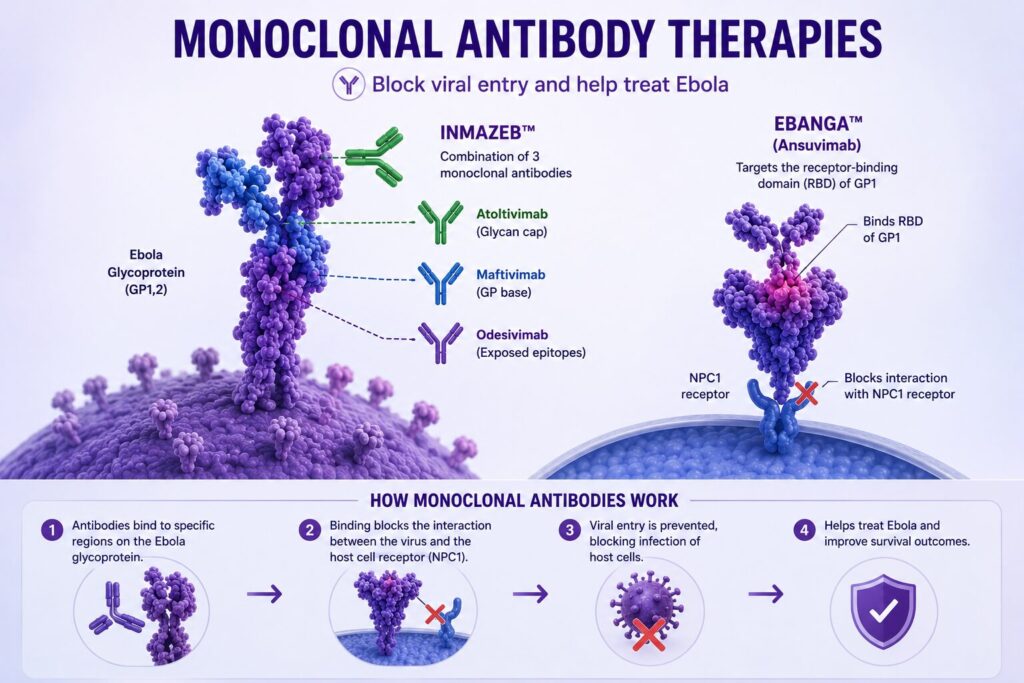
Currently, 2 Ebola vaccines; Ervebo (rVSV-ZEBOV) and Zabdeno and Mvabea have been developed by Merck and Johnson & Johnson that has been used to prevent Zaire ebolavirus strain. On the other hand, U.S. FDA has also approved two monoclonal antibody therapies namely; Inmazeb and Ebanga, developed by Regeneron and National Institute of Allergy and Infectious Diseases (NIAID), against the Ebola virus glycoprotein that blocks the viral entry into the host cell. Inmazeb is a combination therapy, containing three monoclonal antibodies Atoltivimab, Maftivimab and Odesivimab that binds to non-overlapping epitopes on the glycan cap, glycoprotein base and exposed glycoprotein epitopes. While Ebanga targets the receptor-binding domain (RBD) of the Ebola GP1 subunit, blocking the interaction between Ebola virus glycoprotein and the host cell receptor NPC1 (Niemann-Pick C1), preventing viral entry into cells.
These monoclonal antibody (mAb) therapies have significantly improved survival rates, however, there potency against other strains of Ebola, due to high viral loads, advanced disease, and the incidence of viral persistence are still unknown. In addition, high effective doses of these antibodies along with treatment complexity pose a challenge before scientist to discover a more potent and cost-effective alternatives against Ebola virus strains.
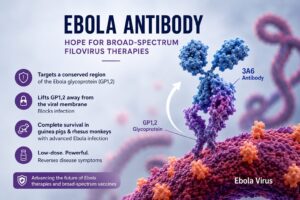
Finding solution to these challenges, scientists from across the globe including U.S.A, Germany, Japan, China, Canada, U.K and Spain have together developed a groundbreaking monoclonal antibody called 3A6, which demonstrated remarkable protection against Ebola in highly viremic animal models at significantly lower doses than existing therapies.
How Advanced Structural Biology Meets Animal Testing
Specific region of the Ebola glycoprotein called the stalk–MPER (membrane proximal external region). Have been targeted for the development of mAb 3A6. This is a highly conserved across multiple Ebola virus species, making it an ideal target for broad-spectrum therapies.
The mAb 3A6 was first isolated from a survivor of the 2013–2016 West African Ebola outbreak, suggesting that natural immune responses may hold the key to next-generation Ebola therapeutics.
- Structure elucidation of Ab 3A6
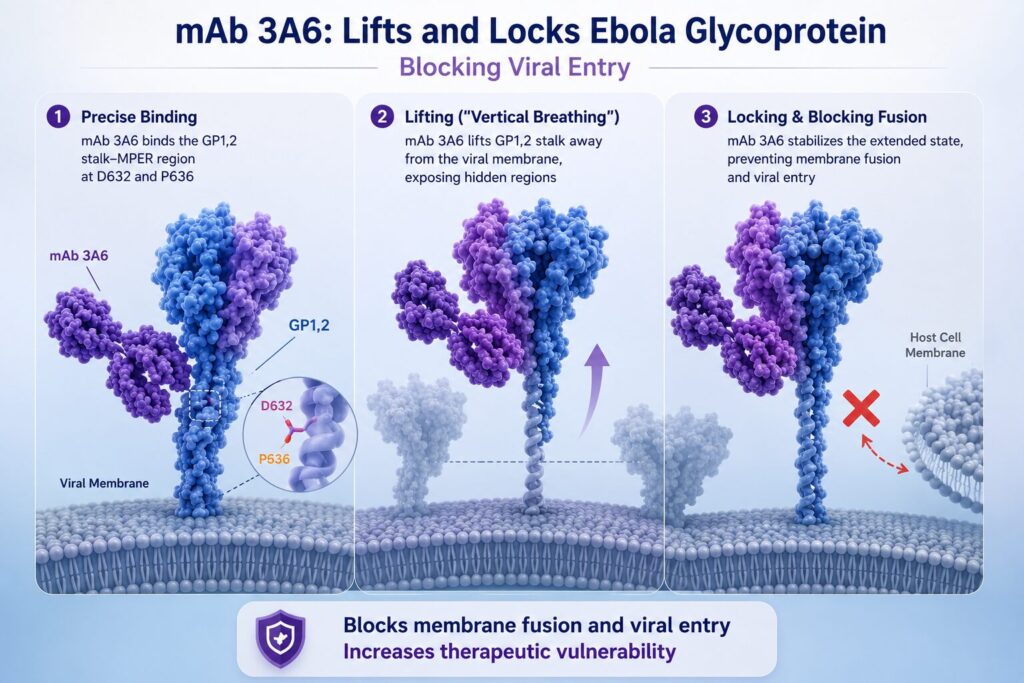
In the study, X-ray crystallography determined that mAb 3A6 antibody binds Ebola virus GP1,2 stalk–MPER region at D632 and P636 amino acids, maintain the specific angularity, providing enhanced potency.
In addition, Cryo-Electron Tomography (Cryo-ET) provided an exceptional finding that mAb 3A6 temporarily elevates GP1,2 stalk away from the viral membrane, exposing the hidden and inaccessible regions, described as a type of “vertical breathing” of the glycoprotein structure. mAb 3A6 stabilizes this extended state, preventing the virus from completing the membrane fusion process needed for infection, thus increasing the therapeutic vulnerability of viral membrane glycoproteins.
Further, alanine-scanning mutagenesis with other molecular techniques, validated the significant importance of D632 and P636 amino acids in mAb 3A6 and viral GP1,2 binding and therapeutic effectiveness.
- Therapeutic potential of Ab 3A6
When Guinea Pigs with lethal Ebola infection, were treated with single low-IV dose of mAb 3A6, 100% of the animals survived while mortality was observed in untreated and antibody controls. Similar effects of mAb 3A6 were demonstrated in the Rhesus Monkey Ebola Models treated with 25 mg/kg of mAb 3A6. Post-treatment, 100% survival rates were observed while the Ebola viral loads dropped to undetectable levels by Day 21 along with reversed clinical symptoms. Remarkable, the effectivity of mAb 3A6 was observed at half the dose and one-sixth the total dose used for current monotherapy treatments.
These results have positioned 3A6 as one of the most potent Ebola monoclonal antibodies identified so far.
Future applications of mAb 3A6
This groundbreaking research has opened numerous streams for enormous practical implications.
- Lower-Cost Ebola Treatments
As mAb 3A6 can works effectively at lower doses, future therapies based on this antibody could:
- Reduce manufacturing costs
- Improve treatment accessibility in low-resource regions
- Simplify large-scale outbreak response logistics
This is especially important for developing countries, like currently in Africa where Ebola outbreaks most commonly occur.
- Improved Treatment for Advanced Ebola Cases
- Improved Treatment for Advanced Ebola Cases
Current therapies are less effective in patients with severe disease and high viral loads. The ability of mAb 3A6 to reverse advanced Ebola infection at lower dose suggests it could significantly improve survival rates in critically ill patients infected with Ebola virus
- Development of Broad-Spectrum Filovirus Therapies
- Development of Broad-Spectrum Filovirus Therapies
The stalk–MPER region targeted by mAb 3A6 is highly conserved across multiple Ebola species.
This opens the possibility of developing:
- Pan-Ebola antibody therapies
- Universal filovirus vaccines
- Cross-protective antiviral treatments
Such broad-spectrum solutions would be invaluable for future outbreak preparedness.
- Next-Generation Vaccine Design
The discovery that Ebola glycoproteins adopt flexible “lifted” conformations changes how scientists may approach vaccine engineering. In future, this blueprint may be used for designing vaccines that expose the stalk–MPER region more effectively and stimulate stronger immune responses.
As researchers continue to optimize antibodies like 3A6, this work could ultimately lead to more effective, affordable, and globally accessible Ebola therapeutics.